






 Portuguese
  Spanish


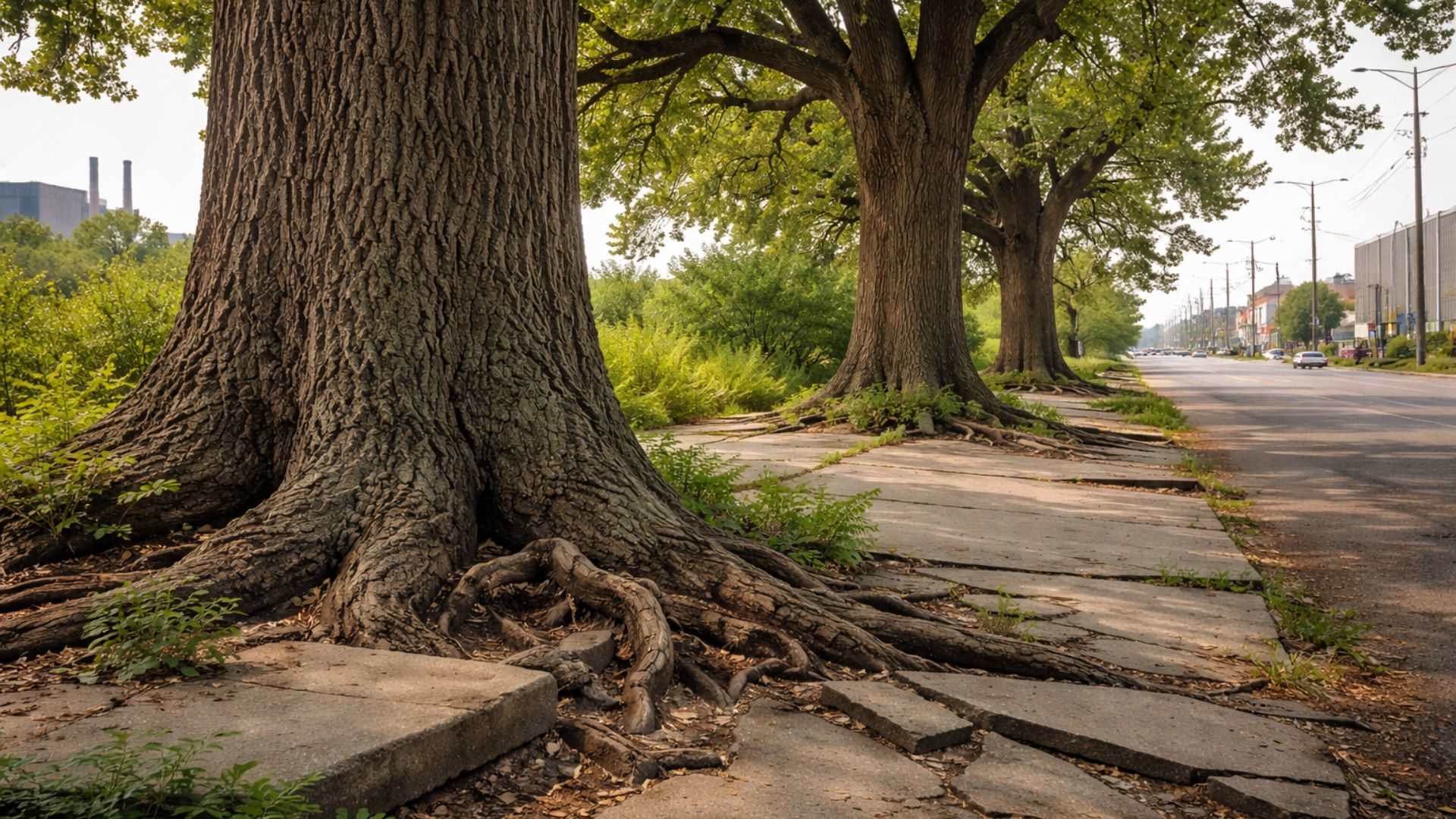


Rare Fragment of Old Forest Resists Urbanization, Preserves Centuries-Old Oaks, and Gains National Recognition for Ecological and Historical Value in the Heart of Metro Detroit, Where Land and Infrastructure Disputes Have Always Pressured Green Areas.
A rare stretch of mature forest, surrounded by avenues, industrial areas, and dense neighborhoods of the Detroit metropolitan area, has received formal recognition from a national network dedicated to ancient remnants.
The piece of woodland is located in Humbug Marsh, within the Detroit River International Wildlife Refuge, and is home to oaks over 300 years old, an uncommon type of ecological continuity in urban landscapes.
The seal came from the Old-Growth Forest Network, an organization that maps and highlights forests that have remained free from commercial logging and continue to be accessible to the public.
-
Neymar’s 14-year-old son, Davi Lucca, launches 3D dinosaur brand “Amigo Dino,” gaining attention on social media for his entrepreneurial spirit.

-
Improper Outlets Can Cause Fires and Damage Devices: How to Identify the Correct 10A or 20A Model for Each Appliance
-
Entrepreneur Who Started at 13 Delivering Flyers by Bike in São Paulo Now Runs a 4,000 m² Culinary Complex in Brazil

-
In China, Workers Use VR Goggles and Body Sensors to Train Humanoid Robots for Tasks Like Folding Clothes and Stocking Stores



In practice, inclusion does not by itself transform the area into a new legal protection category, but reinforces the site’s relevance to public managers, researchers, and surrounding communities, at a time when pressure for construction and land occupation remains a reality in major centers.
Old Forest in the Heart of an American Metropolis
Just south of downtown Detroit, Humbug Marsh makes up a mosaic of woodland, wetlands, and riverbanks that contrasts with the surrounding landscape.
Part of this complex is known as the Humbug Marsh Unit, a section of the federal refuge that features trails and woodland areas where large-diameter trees catch the attention of visitors.
In metropolitan areas, the presence of centuries-old trees tends to be the exception.
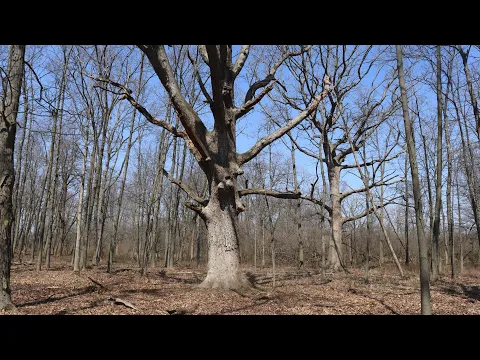

While urban parks often undergo replanting, intensive management, and remodeling, the old forest preserves signs of an ecosystem that has matured over long periods, with cycles of regeneration and natural competition closer to what one expects from a less disturbed woodland.
For this reason, the recognition carries historical weight.
The existence of oaks and other mature species indicates that, despite interventions over time, part of the environment has managed to maintain characteristics of an advanced-stage forest, creating opportunities for research and environmental education in a region marked by urbanization.
The Role of the Old-Growth Forest Network in Preservation
Founded to enhance the visibility of ancient forest remnants, the Old-Growth Forest Network works with a simple goal that is easy to explain and difficult to execute.
To identify at least one protected forest that is open to visitation in every county in the United States that can support ecosystems of this type.
The network operates with partnerships, technical support, and outreach.
Rather than purchasing areas, it recognizes sites that already have some level of formal protection against commercial timber exploitation and are likely to remain preserved in the long term.
In this way, the seal acts as a public marker that there is a rare natural heritage available, something that can strengthen local conservation policies and facilitate community engagement efforts.
By recognizing a stretch within a federal refuge like the Detroit River, the organization also highlights a less obvious aspect.
Mature forests are not exclusive to remote regions.
In some cases, they survive in the city, hidden in landscape patches that have escaped total territorial conversion.
Biodiversity and Environmental Services in an Urban Area
The ecological value of an old forest is not limited to the age of the trees.
Mature environments often concentrate a diversity of plants, insects, birds, and small mammals that benefit from different vegetation strata, the presence of fallen trunks, constant shade, and microhabitats that take decades to form.
In the case of Humbug Marsh, its location along the Detroit River adds another layer of importance.
Wetlands and riparian forests play a direct role in soil protection and sediment filtration, helping to maintain water quality and reduce erosion processes.
Moreover, the refuge is cited by conservation agencies as a significant habitat for fish and wildlife species associated with the river corridor.
Another point of interest is the climate.
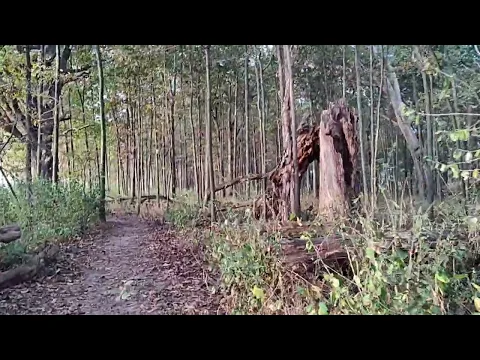
Large trees accumulate biomass for a long time, which means carbon storage in the wood and surrounding soil.
In urban environments, where emissions from transportation and industry are a part of daily life, forest remnants can integrate strategies for climate adaptation and mitigation, although the exact impact depends on the size of the area, the type of vegetation, and the state of conservation.
How Humbug Marsh Escaped Real Estate Pressure
The survival of Humbug Marsh was not the result of a single factor.
Part of the explanation involves historical choices of occupation and moments when economic interest in certain lands was less than in other areas.
Still, there was concrete pressure for real estate development and infrastructure, especially from the end of the 20th century.
In the 1990s and early 2000s, local mobilizations helped block proposals for land transformation, in a debate that involved residents, environmentalists, and federal agencies.
The episode is cited by institutions related to the refuge’s management as a turning point.
In 2004, the site was acquired to be part of the Detroit River International Wildlife Refuge, enhancing institutional protection and monitoring capability.
With its incorporation into the refuge, the area began to feature initiatives focused on research, visitation, and environmental education.
Over time, the site has also been recognized internationally for its relevance as a wetland, reinforcing its status as a natural heritage in a region marked by industrial and urban transformation.
Public Participation and the Future of Old Forests
The recognition of an old forest often gains strength when the community responsibly takes ownership of the space.
Hikers, educators, researchers, and residents can help monitor threats, report damage, encourage guided visitation programs, and increase knowledge about the environmental history of the place.
The Old-Growth Forest Network, in turn, encourages nominations of areas that meet criteria for ecological integrity and permanent protection.
In practical terms, this means mapping sections with very old trees, verifying if there are safeguards against commercial exploitation, and articulating the public debate so that preservation remains a priority.
By bringing people closer to a mature forest within a metropolis, initiatives of this nature tend to transform what could be just a patch of woodland into a concrete reference of natural heritage.
This often changes how managers and visitors perceive the territory, especially when the city is accustomed to losing green areas to new developments.
If a fragment with oaks over three centuries old has managed to stand tall amid highways, factories, and populous neighborhoods, what else do other cities have hidden in their own maps, waiting to be identified and protected?


