






 Portuguese
  Spanish


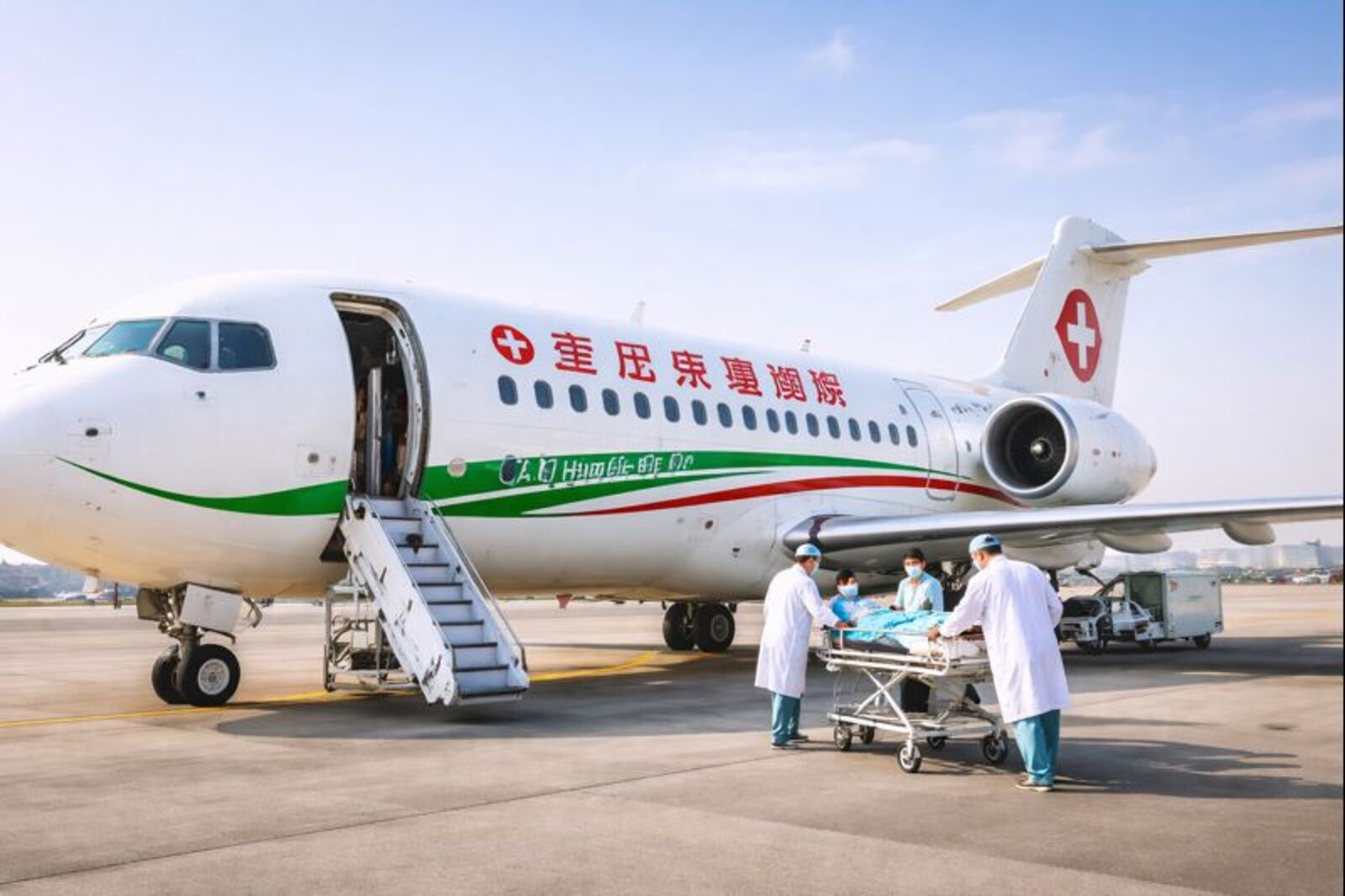


Transformed into an air hospital, the Chinese jet C909 began its first international mission in Laos, with screenings, surgeries, donations, medical training, and sterilized structure for specialized care for the local population
The Chinese aircraft C909, from COMAC, began its first international mission as an air hospital in Laos, arriving in Vientiane on Friday morning for care, surgeries, training, donations, and medical actions that expand the external use of this adapted model.
Mission in Laos
Named C909 MSJ, the jet arrived in the Laotian capital to launch a public health initiative linked to the Air Health Silk Road, mentioned by CCTV.
The initiative includes mobile care, surgical demonstrations, training for local professionals, donation of materials, screenings, and surgeries in ophthalmology and otorhinolaryngology.
-
Chinese Student Builds Humanoid Robot for $2,100 at Age 20, Now Leads Robotics Startup in China

-
Sumatran Rhino: The Rare “Prehistoric Survivor” with Fewer Than 50 Left and a Fascinating Natural History

-
Chinese Humanoid Robots Transition from Labs to Real Factories to Assemble Tablets: AgiBot Deploys G2 Machines at Longcheer, Aiming for 100 Robots in Electronics, Cars, Chips, and Energy by 2026

-
Shopkeeper Buys Notebook at English Bazaar, Discovers Rare 1915 WWI Record Listing 900 Volunteers, 140 Fallen





License and partnership
Recently, the Shanghai Municipal Health Commission authorized the pilot operations of the country’s first specialized medical aircraft.
The municipal government reported that it was the first practice license for an air hospital operated by a domestic medical institution.
The project was developed by COMAC in collaboration with the Fudan University Eye and Otorhinolaryngology Hospital. The aircraft meets the highest Chinese cleanliness standards for hospital surgical rooms.
C909 Data
Previously called ARJ21, the C909 is a regional jet with a maximum takeoff weight between 40.5 and 43.5 tons. Its range varies from 2,225 to 3,700 kilometers, depending on the configuration.
In the commercial version, it can carry between 78 and 97 passengers. The aircraft uses two General Electric CF34-10A turbofan engines, with a thrust of 75.87 kN each, allowing operations at high altitude airports and high temperatures.
Certified by the Civil Aviation Administration of China in 2014, the model has delivered more than 170 units by 2025. The avionics include Collins Aerospace Pro Line 21 systems and FMS-4200.


Structure of the Air Hospital
The hospital variant has a modular cabin divided between areas for specialists, support staff, and intensive care unit.
There are two stretchers for critically ill patients, as well as defibrillators, ventilators, and infusion pumps.
The model can be reconfigured according to the mission, carries additional fuel tanks to extend its range, and supports a maximum payload of 10 tons.
Recent updates allow for surgeries on board in a sterile cabin with a laminar flow system.
With this, the C909 combines transport, clinical support, and surgical structure in the same aircraft, already employed in medical missions in remote regions of China and in countries like Laos.
The adaptation expands the operation of the air hospital in different scenarios and in external health operations.
With information from Revista Fórum.


