Portuguese
  Spanish


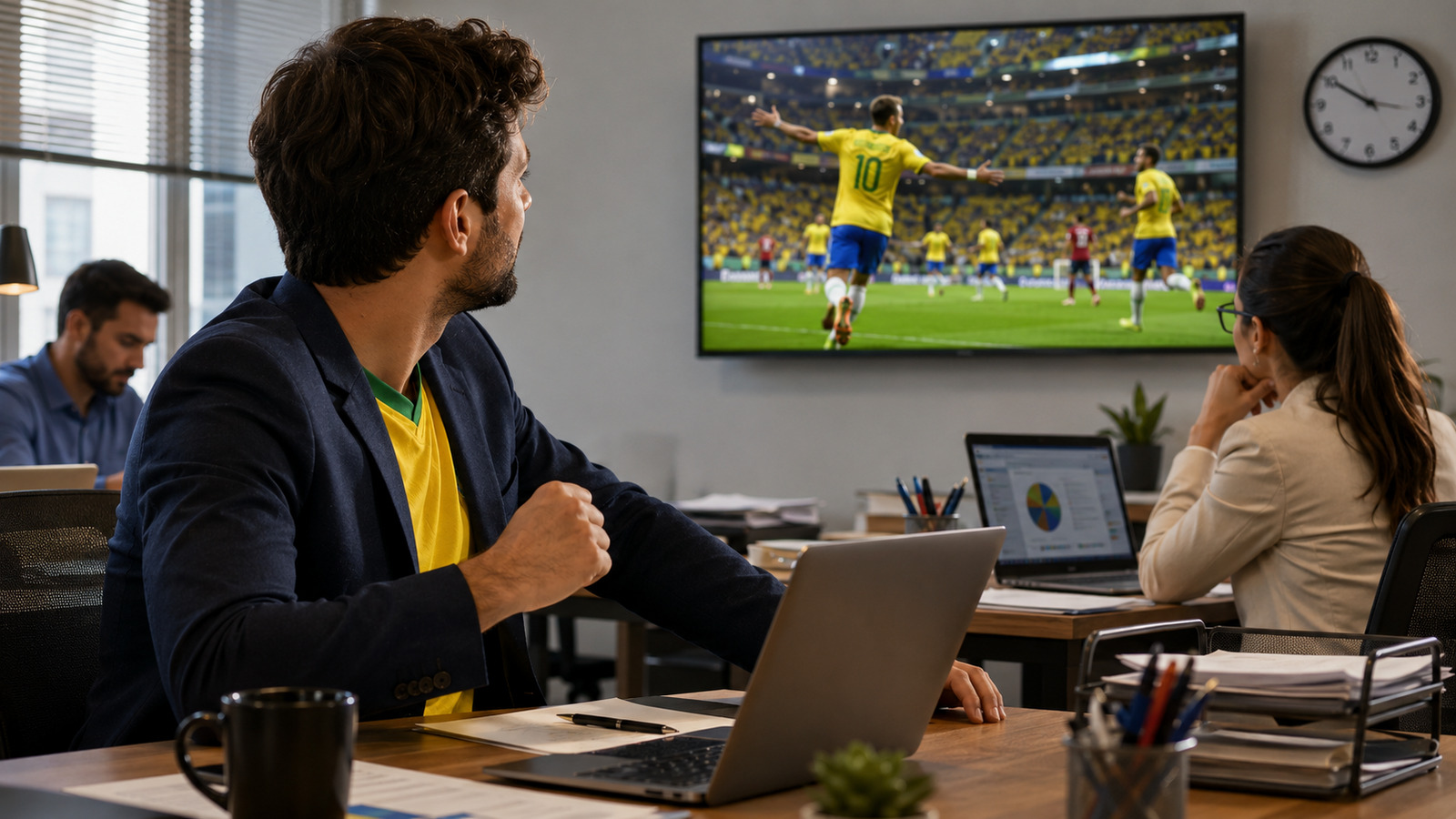

With matches of the Brazilian team also scheduled on weekdays, workers need to negotiate time off or compensations, as the legislation does not make World Cup games a mandatory national holiday
The Brazil games in the 2026 World Cup will have matches on weekdays, but do not guarantee automatic leave for workers, as the legislation does not consider national team matches as national holidays.
Brazil games are not holidays according to the CLT
The confirmation of the schedules has once again stirred workers and companies, especially because some of the matches may coincide with professional routines.
The main question is whether the employer needs to release employees during the Brazilian team’s matches.
-
“Man with Bipolar Disorder Claims ChatGPT Exacerbated Delusions, Leading to Suicide Attempt”

-
U.S. House Approves Bill to Protect Children on Social Media, Limit Addictive Features, and Demand New Measures from Platforms, But Senate Differences Could Stall Progress
-
78-Year-Old Brazilian Farmer Wins Legal Battle for Ownership of 108,000 m² of Land After Decades of Dispute with Federal Government

-
Brazilian Supreme Court Pauses Fines for Workplace Regulation Violations for 90 Days, but Companies Must Still Address Harassment and Overwork



Labor law specialists state that there is no legal obligation for dismissal. Even during working hours, private companies can maintain the normal workday, as World Cup games do not appear in the legislation as a national holiday.
The Brazilian team already has a set schedule in the group stage, which will be held in the United States, Canada, and Mexico. The debut will be against Morocco, on June 13, at 7 PM.
Then, Brazil faces Haiti on June 19, at 10 PM. The last game of the first phase will be against Scotland, on June 24, also at 7 PM.

Companies can make work hours flexible
Although there is no obligation to release teams, many companies tend to adjust routines during the tournament.
Some end the workday earlier, reduce working hours, or allow employees to watch the games in the workplace.
These decisions, however, depend on an agreement between employers and employees. Lawyer Marcel Zangiácomo, partner at the law firm Galvão Villani, Navarro, Zangiácomo e Bardella Advogados, explained that compensation can be required when there is an agreement between the parties.
According to him, the replacement of hours cannot exceed two overtime hours per day. The rule applies to situations where the company releases the worker and later arranges the return of the non-worked period.
The specialist also highlighted that agreements need to be clear. Compensation can occur through a time bank or within a period of up to one year, according to the type of agreement made between the company and the employee.
Written agreements avoid conflicts
The 2017 Labor Reform expanded the possibility of direct negotiations between companies and employees.
As a result, companies started using individual agreements to organize time off, compensations, and temporary changes during the World Cup.
Experts advise that these decisions be formalized in writing. The record helps provide security to both parties and reduces the risk of unexpected charges, salary deductions, or doubts about hour replacement.
In smaller companies, releases may happen just as a way to please employees. But, if there is no document providing for compensation, the employer cannot later demand the return of hours or deduct the salary.
On the other hand, missing work without authorization to watch the Brazil games remains an unjustified absence.
In this situation, the worker may suffer a salary deduction and lose the paid weekly rest.

Essential services will have more restrictions
Some sectors are expected to have less leeway for release during the World Cup. Hospitals, transportation, security, and public service usually need to maintain full operation, even during Brazilian team matches.
Marcel Zangiácomo stated that companies in these sectors cannot compromise essential activities because of the games.
Therefore, supervisors usually analyze each case before authorizing schedule changes or early departures.
Watching the Brazil games without authorization at work can also be interpreted as indiscipline. Even so, dialogue between employers and workers is pointed out as the main way to avoid conflicts.
With clear agreements, companies and teams can organize their routine, follow the national team’s matches, and maintain professional obligations during the 2026 World Cup.
With information from Diário da Região.