Portuguese
  Spanish


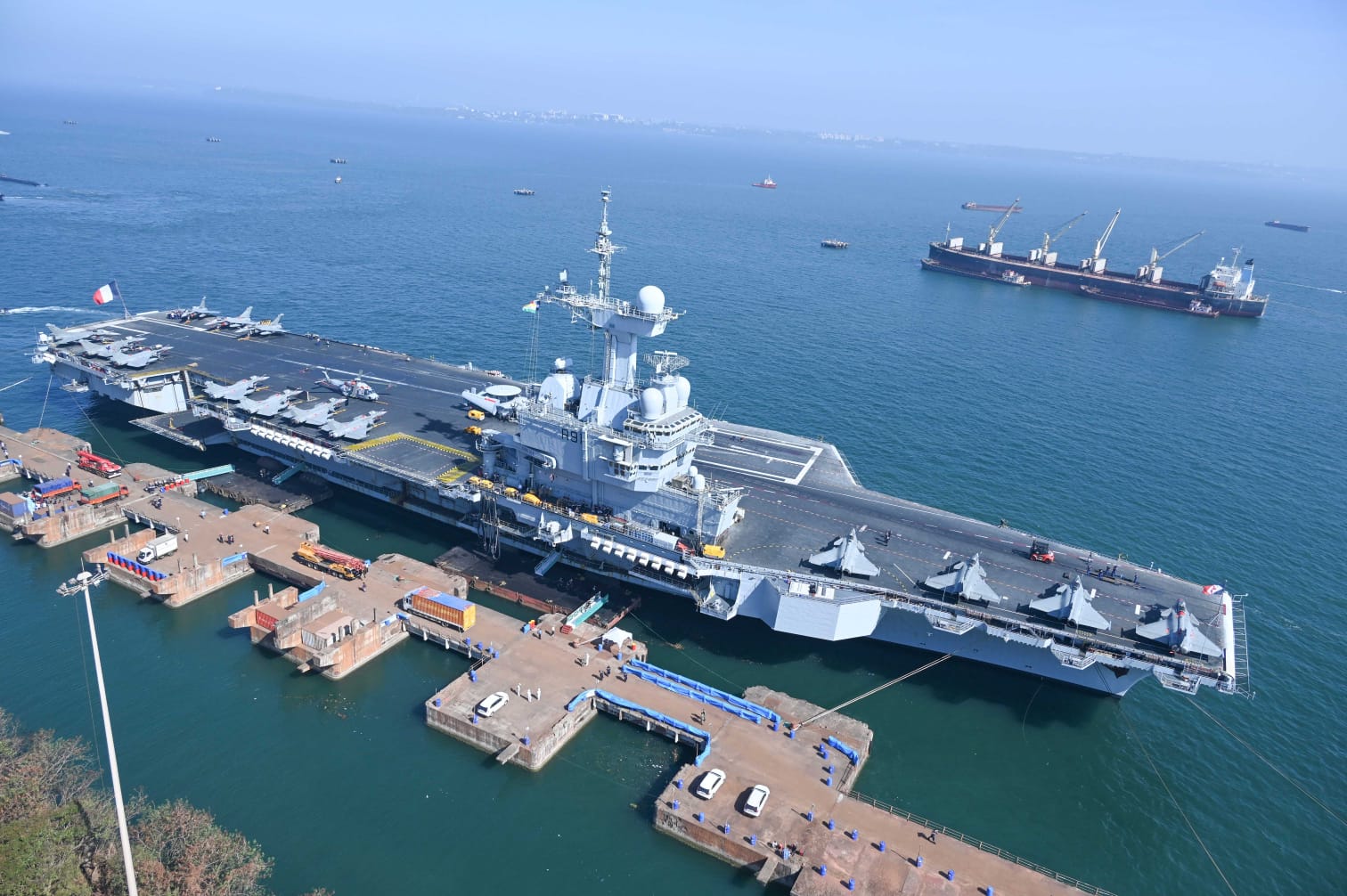
During the Brics Summit 2025 in Rio de Janeiro, the sky of the capital was the stage for an unprecedented air operation, with armed fighters, presidential aircraft, and advanced defense technologies, revealing the strategic power involved in the event.
During the Brics Summit of 2025, held in Rio de Janeiro, a powerful air fleet was mobilized to ensure the safety of international delegations and maintain control of Brazilian airspace.
The operation involved fighters, presidential transport aircraft, and sophisticated surveillance systems — in a joint action between the Brazilian Air Force (FAB) and the invited countries.
More than a demonstration of strength, the event revealed the technological and strategic level that surrounds high-level diplomatic meetings.
-
New Brazilian Frigate Equipped with Advanced Missiles and Radars to Safeguard Strategic Maritime Areas

-
New Brazilian Frigate Equipped with Advanced Missiles and Radars to Protect Strategic Maritime Areas, Including the Blue Amazon and Pre-Salt Reserves
-
China Unveils Laser Weapon Capable of Instantly Neutralizing Military Drones, Marking a Significant Advancement in Air Defense Technology
-
U.S. Navy’s Ticonderoga-class Cruiser Becomes a 9,800-Ton Missile Fortress with Advanced Aegis System Capable of Tracking Hundreds of Targets



With each new edition of the Brics, formed by Brazil, Russia, India, China, and South Africa, security challenges are renewed.
In 2025, the city of Rio de Janeiro hosted one of the most complex meetings ever held, both from logistical and military perspectives.
The presence of heads of state and international leaders imposed on national security the mission of protecting a highly populated urban territory, with multiple air and maritime routes.
Air Force and Diplomacy: Which Aircraft Participated in the Operation?
The diversity of aircraft that crossed the Carioca sky was impressive.
On the Brazilian side, the FAB highlighted aircraft such as the Embraer KC-390, a multifunctional transport aircraft capable of refueling others in flight, and the Embraer E190, adapted for presidential transportation with a high level of security and comfort.
Invited countries also brought their own air support structures, such as the Ilyushin Il-96 from Russia and the modern Comac ARJ21, used by Chinese delegations.
In some past editions, even the famous Air Force One was sent when the United States participated as observers.
These planes not only transport leaders but also function as true command centers in mid-air, with encrypted communication resources and the capability to traverse continents.
According to sources linked to the Ministry of Defense, the selection of models prioritized the balance between intercontinental range, resistance to electronic interference, shielding, and response time in case of incidents.
Additionally, helicopters and drones were also activated for constant patrols near the meeting locations.
Armed Aircraft: The Role of Fighters with Missiles in Brics
The defense of airspace during international events goes beyond passive surveillance.
It includes armed aircraft ready to intercept and neutralize any threat.
During the Brics meeting, the Brics, the Gripen E fighters — the most modern in operation by the Brazilian Air Force — played this role prominently.
Equipped with medium- and short-range air-to-air missiles, they conducted high-altitude flights to monitor sensitive areas and protect the so-called “restricted airspace” of the event.
These fighters come equipped with state-of-the-art sensors, AESA (Active Electronically Scanned Array) radar, electronic warfare systems, and the ability to fly at speeds exceeding Mach 2.
Their performance was reinforced by armored helicopters like the H225M, which remained in strategic points of the city, ready for rapid tactical actions on land or in the air.
Furthermore, according to experts, long-range radars, ground anti-air defense systems, and immediate response protocols, aligned with international safety standards for major events, were also activated.
Rigorous Criteria Define the Aircraft Used
The choice of aircraft involved in summits such as the Brics follows protocols defined by technical, operational, and diplomatic criteria.
Among the factors taken into account are:
- Flight autonomy for intercontinental routes.
- Ability to operate under electromagnetic interference.
- Fast evacuation resources in emergency situations.
- Encrypted communication with ground command networks.
- Safety history and maintenance reliability.
Aerospace companies see these events as a showcase to demonstrate their technological advances.
Therefore, it is common for countries to bring updated or recently incorporated models into their military fleets.
The increasingly advanced onboard technology has allowed these aircraft to act as true “mobile air bases.”
Discover the Main Models Mobilized in Brics 2025
During the meeting in Rio, some aircraft stood out for their roles played and onboard resources.
Check out the main models used:
KC-390 Millennium (Brazil): tactical and logistical transport aircraft, with in-flight refueling capacity, troop transport, and medical evacuation.
Gripen E (Brazil/Sweden): multipurpose fighter with precision armament, state-of-the-art radar, and integrated electronic defense systems.
Ilyushin Il-96 (Russia): long-range aircraft used for presidential transport, with meeting rooms and command systems.
Comac ARJ21 (China): regional jet with safety and comfort technologies, used for transporting authorities and delegation members.
H225M Caracal (Brazil/France): versatile helicopter employed in patrol, rescue, and combat missions.
These equipments formed an aerial security belt around the capital fluminense, alongside the work of special forces, fixed and mobile radars, and integrated control centers.
Technology and Diplomacy in Tune in the 21st Century
The Brics meeting in Rio was not just a political gathering.
It symbolized the advancement of defense technology and the collective effort among nations with distinct geopolitical interests.
Air security played a strategic role in ensuring that the event proceeded without incidents.
Thus, Brazil demonstrated that it has the capacity to lead large international operations, both diplomatically and operationally.
According to the Ministry of Foreign Affairs, events like this project the country’s image on the global stage, strengthening ties with emerging economies and opening doors for bilateral and multilateral agreements.
The success of the operation in Rio de Janeiro reinforces that security and innovation go hand in hand — and that military aviation will continue to play a leading role in times of diplomatic peace and asymmetric threats.