






 Portuguese
  Spanish
  4 min of reading
  0 comments


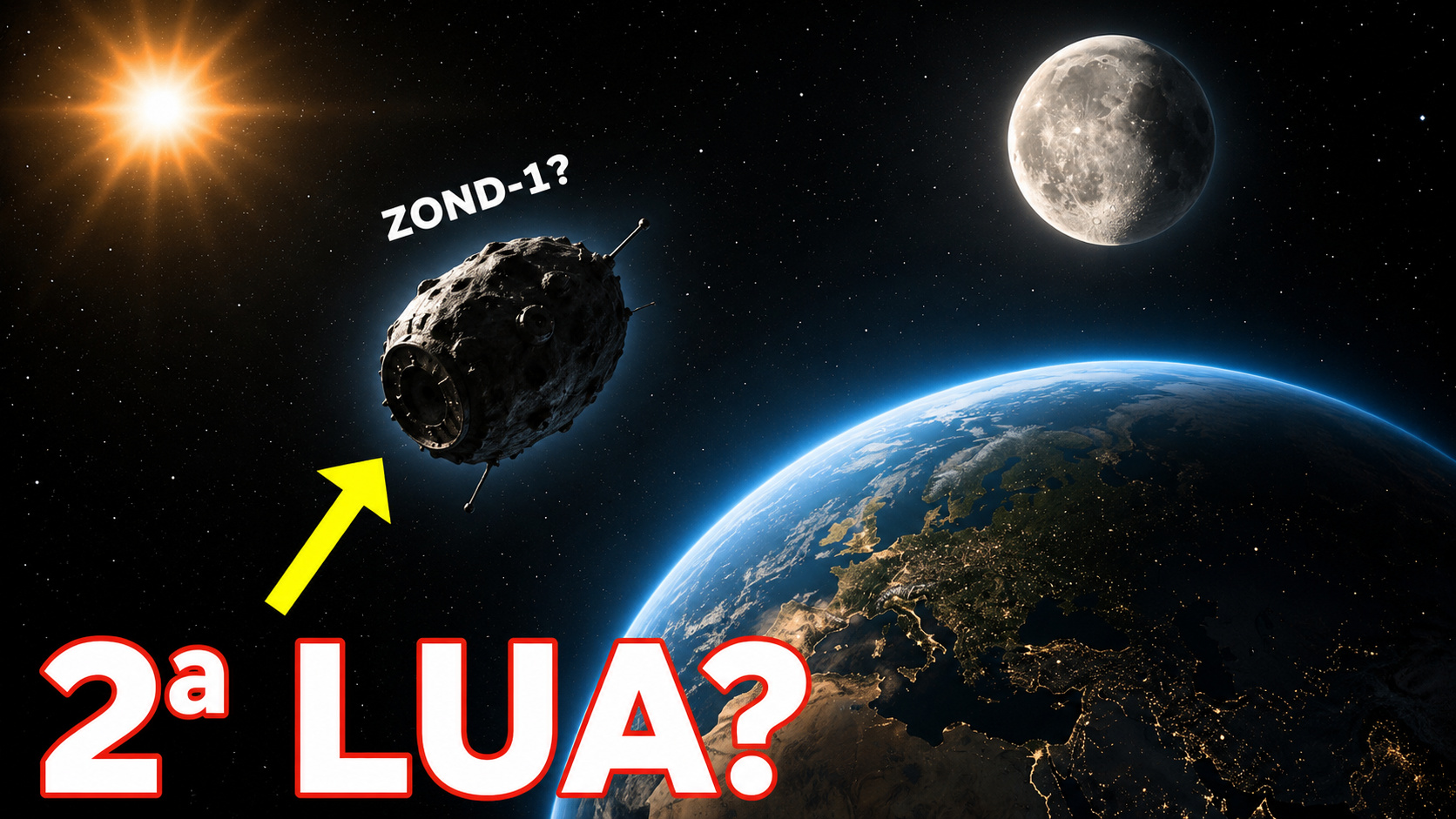
Object 2025 PN7, classified as a quasi-satellite of Earth, may be the Soviet probe Zond 1 lost in 1964, according to a study by Avi Loeb.
An object identified in August 2025 and named 2025 PN7 drew attention for orbiting the Sun in a trajectory very similar to Earth’s, behavior that places it in the category of quasi-satellite, or temporary “mini moon.” But a new analysis by Adam Hibberd and Avi Loeb suggests that it may not be natural: the body could be the Soviet probe Zond 1 or the upper stage of the rocket that launched it towards Venus on April 2, 1964.
The hypothesis is noteworthy because it connects a newly discovered object to the most intense phase of the space race. According to the study, the orbit of 2025 PN7 has specific coincidences with the expected trajectory of a mission that failed before reaching Venus. Meanwhile, NASA records Zond 1 as a Soviet mission launched in 1964 to the neighboring planet and classified as a failure.
The central point is that the idea is still not confirmed. The work itself treats the connection between the object and Zond 1 as a strong hypothesis, but still dependent on additional observations. In other words, 2025 PN7 could be a technological relic of the Cold War, but it could also continue to be just a small natural body in an orbit close to Earth’s.
-
Mini-drones weighing less than 450 grams are launched from military vehicles, can fly for up to 60 minutes without relying on GPS, and promise continuous reconnaissance for troops protected inside armored vehicles.

-
Students from São Paulo create a game for children with ADHD that combines learning, fun, and monitoring by parents and professionals.

-
In California, 1,300 retired Honda and Nissan batteries avoid going to waste and become a giant 25 MWh power plant, revealing how electric cars can continue powering the grid even after leaving the streets.
-
Chinese rocket Kinetica-1 places more than 100 satellites in orbit in 14 flights, carries 15 tons of payload, and leads China’s commercial space market.




What is 2025 PN7 and why was it called a “mini moon”
2025 PN7 was described as a quasi-satellite of Earth, a type of object that does not orbit our planet in the same way as the Moon, but accompanies Earth around the Sun in a very similar trajectory. From an orbital perspective, it temporarily shares Earth’s neighborhood, which gives rise to the popular nickname of second moon or mini moon.


This classification is important because it explains why the object seems so close to our planet without being gravitationally bound to it permanently. The study highlights that the quasi-satellite condition of 2025 PN7 is temporary and that its entry into this orbital behavior occurs in a manner compatible with the time of the Zond 1 launch in 1964.
It is precisely this temporal coincidence that led researchers to consider an artificial origin. Instead of treating the object merely as another natural body with a curious orbit, the analysis asked if it could be a technological fragment launched by humans and forgotten in space for more than six decades.
Why Zond 1 Became the Main Candidate to Explain the Object
Zond 1 was launched by the Soviet Union on April 2, 1964 as part of the effort to explore Venus. According to NASA, the mission appears in the Venusian exploration chronology as a Soviet attempt of the flyby/lander type that ended in failure.
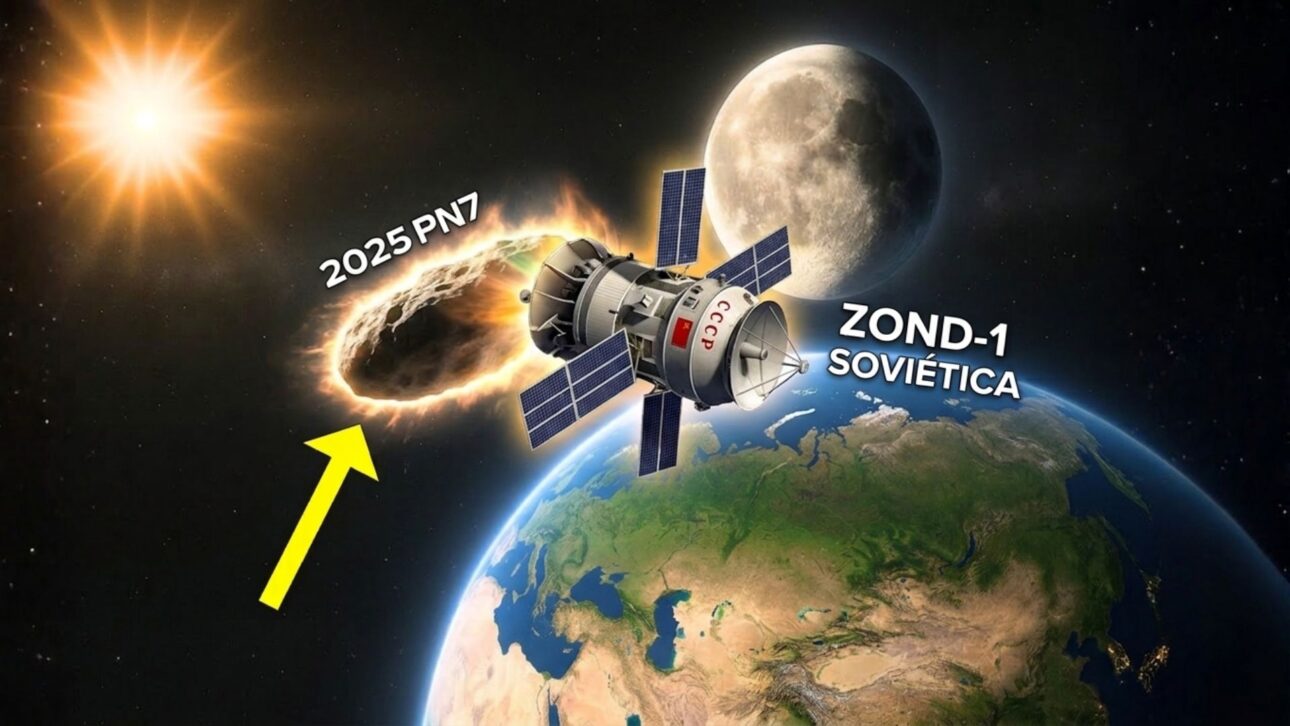
In the study by Hibberd and Loeb, Zond 1 emerges as the most likely candidate because its reconstructed trajectory matches important points of the current orbit of 2025 PN7. The proposal is that the object is either the probe itself or the Blok-L upper stage, the upper stage that propelled it away from Earth.
The hypothesis gains strength because the mission was lost just before fulfilling its original objective. If the spacecraft failed to follow the ideal plan of encountering Venus and remained in a long-term solar orbit, it could have returned to Earth’s vicinity decades later, now disguised as a quasi-satellite.
The Four Coincidences Linking 2025 PN7 to the Soviet Mission
The study highlights four main pieces of evidence. The first is that 2025 PN7 had its closest approach to Venus in July 1964, precisely when Zond 1 should have reached the planet. The second is that the evolution of its heliocentric longitude over time closely follows the reconstructed trajectory for the Soviet probe.

The third coincidence is temporal: the object began to exhibit its behavior as a quasi-satellite of Earth around the time of the Soviet mission’s launch. The fourth is in the absolute magnitude, used as an indirect clue of brightness and size, which appears compatible with what would be expected from an artifact like Zond 1 or its upper stage.
None of these points, in isolation, settles the issue. But the work argues that the combination of the four makes the hypothesis serious enough to warrant direct observational verification, rather than being treated merely as speculative curiosity.
The test that can confirm if the object is natural rock or human technology
The research itself points the way to resolve the doubt: obtain a spectroscopic measurement of 2025 PN7. This type of analysis examines the light reflected by the object to identify the surface composition.
If the body is a natural asteroid, the spectrum should reveal a typical signature of rocks and minerals. If it is a piece of human technology, the spectrum may show manufactured materials, such as metals and artificial coatings, incompatible with a natural object from the Solar System.
This is the decisive point of the debate. Until this observation is made, the idea that 2025 PN7 is Zond 1 remains a well-founded hypothesis, but still unproven. The mystery will only be resolved when the composition of the object can be measured directly.









Be the first to react!