






 Portuguese
  Spanish


On the 14th flight, on June 15, 2026, the Kinetica-1 sent eight satellites from the Dongfeng base, totaling 105 satellites and more than 15 tons of cargo. Among them, the Wenwu-01, the first Chinese satellite dedicated to cultural heritage. Market leadership, however, is reported by CAS Space itself.
The Chinese rocket Kinetica-1, from the private company CAS Space, took off on June 15, 2026, and became China’s first commercial model to place more than 100 satellites in orbit. According to CAS Space, which provided the data to the Global Times, the mission was a success and sent eight satellites to predefined orbits, marking another step in the country’s race for the launch market.
The launch was the 14th flight of the rocket and reinforces the company’s accelerated pace. The Kinetica-1 Y14 took off at 11:44 AM from the Dongfeng space innovation pilot zone in northwest China, and so far, the solid propellant vehicle has sent 105 satellites to orbits, with a total payload mass exceeding 15 tons. For expert Wang Yanan, editor-in-chief of Aerospace Knowledge magazine in Beijing, the milestone indicates that the Chinese commercial space sector has largely completed its first stage and is entering a phase focused on increasing payload and reducing costs.
The flight that took Kinetica-1 to over 100 satellites
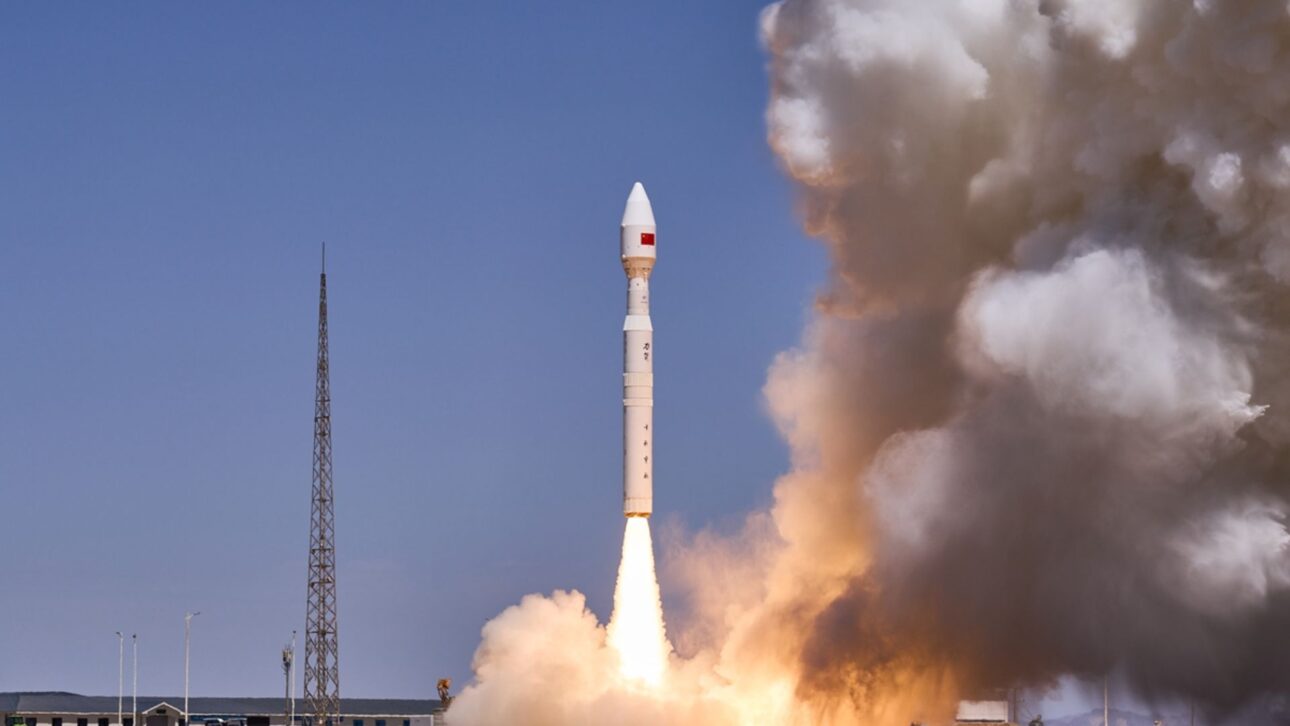
The mission made history in the Chinese commercial sector. With the takeoff on June 15, 2026, the Kinetica-1 sent eight satellites to predefined orbits on a successful flight, the 14th of the model, and the solid propellant rocket became China’s first commercial one to surpass the mark of 100 satellites in orbit, reaching 105 satellites and a total payload above 15 tons.
-
Iraq floats and sinks under an arm of the Euphrates 10 giant concrete boxes of 46,000 tons and 125 meters each to assemble a 2.4 km submerged tunnel and open a new land route between Asia and Europe.

-
Scientists use more than 20,000 artificial birds and solar speakers to “trick” seabirds, reactivate nesting routes, and revive a colony on an island that seemed abandoned.

-
She spent 73 years breathing inside an iron lung, survived the aftereffects of polio, and became the last woman in the United States dependent on the equipment before dying at 78 years old.
-
Brazilian students created a $1 filter using pine bark, cotton, and 3D-printed parts to clean cassava wastewater, reduce the toxicity of a hazardous waste, and transform contaminated water into biofertilizer.




The launch also accelerates the year’s schedule. It completed the third consecutive Kinetica-1 mission in the second quarter of 2026, as the company rushes to meet a high-frequency launch schedule. CAS Space claims that the rocket remains the leader in China’s commercial launch services market share, although this leadership data comes from the company itself.
Eight Remote Sensing Satellites and the Wenwu-01
The payload of this mission is aimed at Earth observation. The eight satellites launched are high-resolution optical remote sensing equipment, described with ultra-high resolution, high integration, and artificial intelligence capabilities. The company expects these satellites to provide multi-dimensional and high-precision image data to support remote sensing applications and related industries.
One of the satellites has a unique function. The Wenwu-01, developed jointly by the National Cultural Heritage Administration, NCHA, and Chang Guang Satellite Technology Co., is presented as the first Chinese remote sensing satellite dedicated to cultural heritage protection. According to the NCHA, it will connect to more than 130 satellites of the Jilin-1 constellation to generate high-precision and time-series data, enhancing the monitoring of historical sites in the country.
The Control Technology Developed by CAS Space
The rocket runs on the company’s proprietary software. CAS Space independently developed the launch test and control software and also a universal flight control software platform. The first coordinates the entire ground test and launch process, while the second manages in-orbit operations, allowing precise and real-time control of attitude, trajectory, and propulsion systems.
This technical mastery supports the launch pace. It is this software autonomy that helps the company maintain a high flight cadence and put more satellites into orbit each quarter. Real-time control of trajectory and propulsion is what allows adjusting the insertion of each satellite into the planned orbits, reducing the margin of error in missions.
A Commercial Space Sector in Full Expansion in China
The Kinetica-1 is not alone in this race. LandSpace, a commercial aerospace company from Beijing, also placed two satellites into orbit in a recent launch with the Zhuque-2E Y6 rocket, and one of them belongs to the SPACESAIL constellation, which announced a few days ago that it surpassed 200 satellites.
The number of commercial space companies in China exceeded 600 by the end of 2025, and the sector raised about 18.6 billion yuan, or approximately US$ 2.75 billion, in 2025, an increase of 32% over the previous year, with more than 10 companies planning to go public in 2026, according to CCTV News.
However, money should separate those who stay from those who leave. For Wang Yanan, commercial capital is an important catalyst for the sector, given the long research cycles, high investment needs, and technological barriers, making continuous market support essential.
He projects a phase of consolidation, where companies with core technologies and strong engineering capabilities gain ground, while short-term speculative capital tends to be gradually eliminated.
The Chinese rocket Kinetica-1, from CAS Space, became China’s first commercial model to place more than 100 satellites in orbit, reaching 105 satellites over 14 flights and more than 15 tons of accumulated payload, in the June 15, 2026 launch that carried eight remote sensing satellites, including the Wenwu-01, aimed at cultural heritage.
The company claims to lead the country’s commercial launch market, in a heated sector, with more than 600 companies and about 18.6 billion yuan raised in 2025. Even so, these numbers come from the companies themselves and what has been reported to the press, and expert Wang Yanan foresees consolidation ahead, with the exit of weaker and speculative participants.
And you, do you think China will dominate the global commercial satellite launch market, or will competition still balance this space race? Share your opinion and exchange ideas with other readers on the topic, respecting different views.


