Portuguese
  Spanish


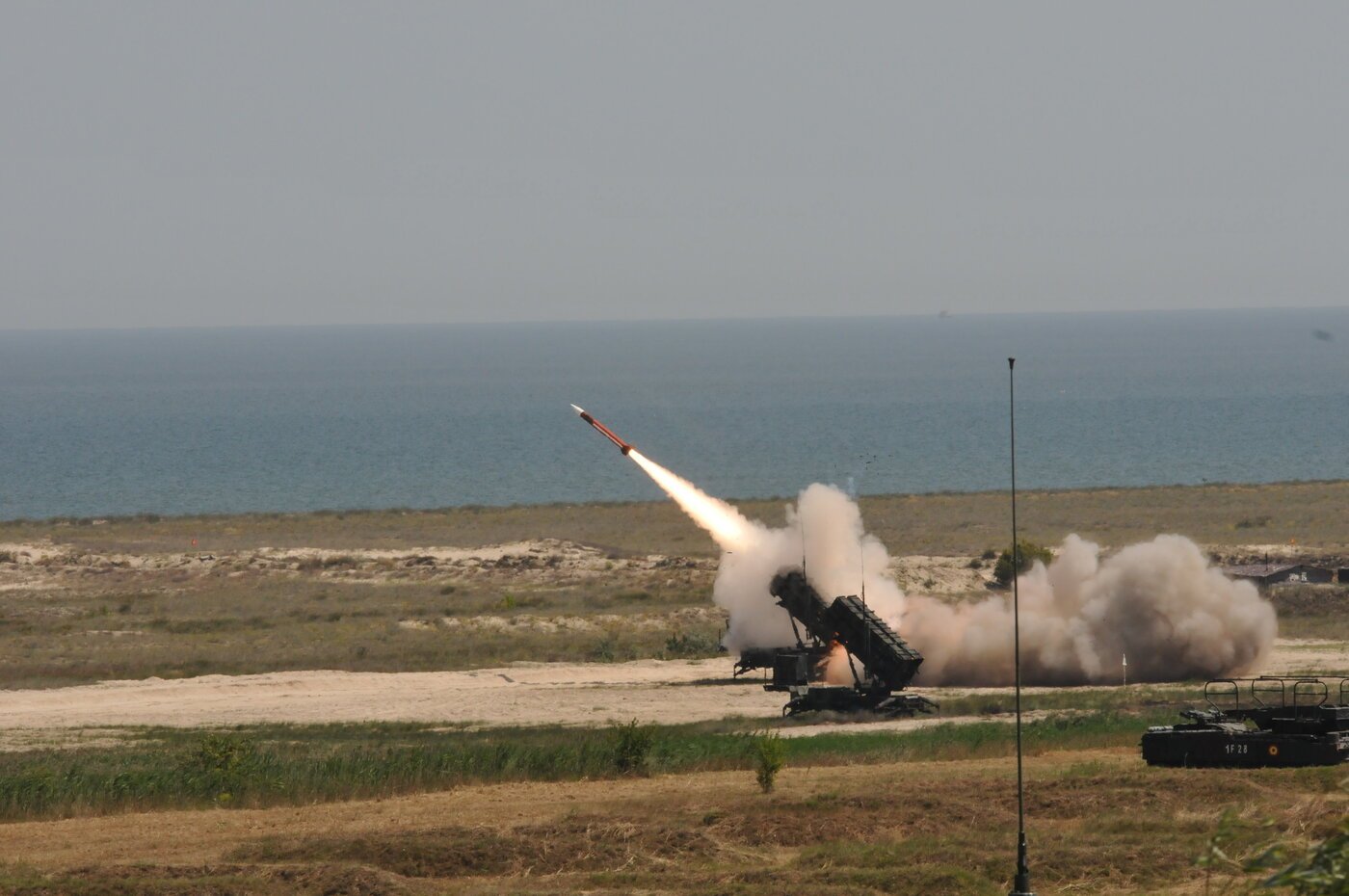
Security cameras in Riyadh and in Saudi coastal cities captured flashes in the night sky — they were Patriot and THAAD interceptors shooting down Iranian cruise missiles at speeds exceeding sound, in one of the largest real defensive operations ever documented in the Middle East outside a conventional war theater.
What happened and why the whole world is watching
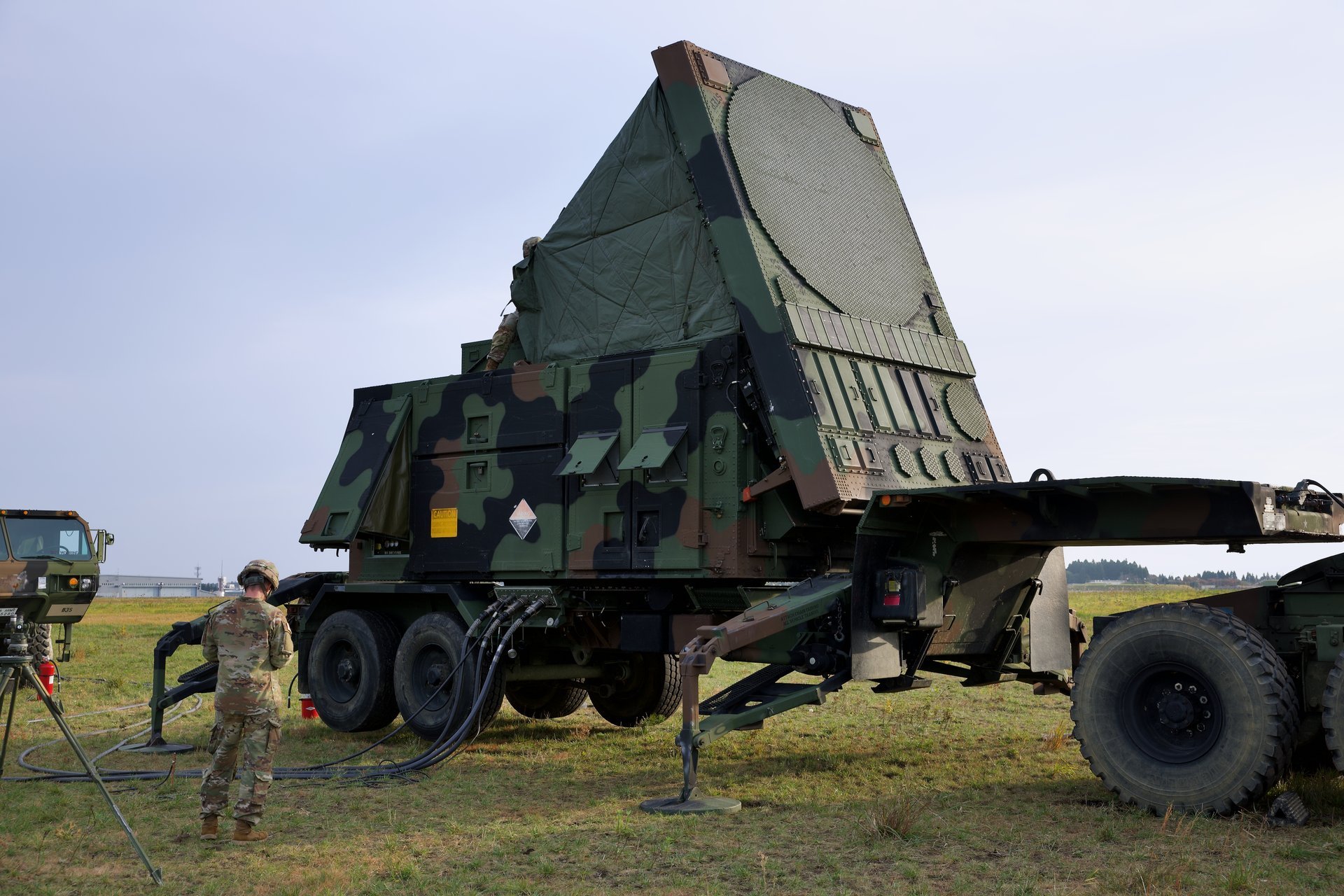
The Islamic Revolutionary Guard Corps — IRGC — launched a salvo of modified Shahed cruise missiles and medium-range ballistic rockets towards Saudi territory. Saudi Arabia’s air defense forces activated their Patriot PAC-3 batteries and the THAAD system — Terminal High Altitude Area Defense — in a coordinated response that lasted less than eight minutes from the first alert to the last interception.
The result: multiple confirmed interceptors, debris falling in unpopulated areas, and zero reported civilian casualties. For military analysts, it was the largest real test of the Saudi layered defense system since the attacks on the Abqaiq and Khurais oil fields in 2019, which exposed serious vulnerabilities.
Since 2019, Saudi Arabia has spent over 90 billion dollars on defense equipment — most of it in contracts with Raytheon, Lockheed Martin, and European manufacturers. What happened that night was proof that at least part of that money bought real combat capability.
-
Europe Opens Military Satellite Hub in Cologne, Transforming Continental Defense

-
The United States launches autonomous drone ship capable of hunting submarines and firing missiles
-
Poland’s Massive Tank and Artillery Purchases Make It Europe’s Largest Land Army Overnight
-
Indonesia Recovers Underwater Spy Drone, Sparking Debate: Is It a Machine or a Warship?


The difference between the Patriot of 1991 and the Patriot of 2026
The Gulf War of 1991 turned the Patriot into a symbol of missile defense for the global public. The problem is that the system at the time had a very questionable hit rate — later analyses indicated significant failures against Iraqi Scud missiles. Today’s PAC-3 is almost a different system.
The PAC-3 MSE interceptor uses active radar homing guidance and two-stage propulsion, with the ability to destroy the target by direct impact — hit-to-kill — instead of proximity detonation. The interception rate in controlled tests exceeds 90%. In real combat, with electronic countermeasures and unpredictable trajectories, the number is always lower — but what we saw in Saudi Arabia suggests real operational effectiveness.
The THAAD complements the Patriot by covering higher altitudes: while the Patriot operates up to 24 kilometers altitude, the THAAD reaches 150 kilometers, creating a layered barrier capable of intercepting everything from theater rockets to short-range ballistic projectiles.
What Iran will do now
The IRGC’s response to the tactical failure is likely not to retreat. The Iranian doctrine of saturation — launching so many simultaneous projectiles that the layered defense is overwhelmed — will be tested on a larger scale.
The closest precedent is the direct Iranian attack on Israel in April 2024, when Tehran launched more than three hundred drones and missiles. Israel, with support from the USA, UK, France, and Jordan, intercepted more than 99% of the projectiles. The lesson Iran learned: it needs more saturation or hypersonic projectiles that current systems cannot intercept.
Saudi Arabia knows this. That’s why the kingdom is negotiating access to the Israeli Iron Dome system and evaluating the Stunner hypersonic interception missiles, developed by Rafael Advanced Defense Systems.
I confess that watching the images of this interception gave me that strange feeling of seeing technology working exactly as designed — and at the same time remembering that behind each flash in the sky there is a chain of engineering, intelligence, and human decision that determines whether the city below will survive.
The arms race that is reshaping the Gulf
Saudi Arabia is not alone in this race. The United Arab Emirates operates THAAD and Patriots. Kuwait, Qatar, and Bahrain have Patriot systems. Israel has the Iron Dome, David’s Sling, and Arrow-3. The Middle East is becoming the world’s most expensive and most real laboratory for multi-layered missile defense.
For the American defense industry, it’s a market for decades — and for Brazil, which is developing the amphibious Guarani and advancing the modernized ASTROS II, it’s a reference for what integrated multi-layered defense systems can do when money and urgency are aligned.
The question is no longer whether missile defense works. It’s how many layers you can sustain — and for how long the budget can hold.
Read also: the Spanish missile shield in the Mediterranean | Europe ordered the Israeli light cannon.
Do you think the demonstrated effectiveness of the Patriot and THAAD will accelerate the arms race in the Gulf, or will it serve as a deterrent? Leave your opinion below.