Portuguese
  Spanish


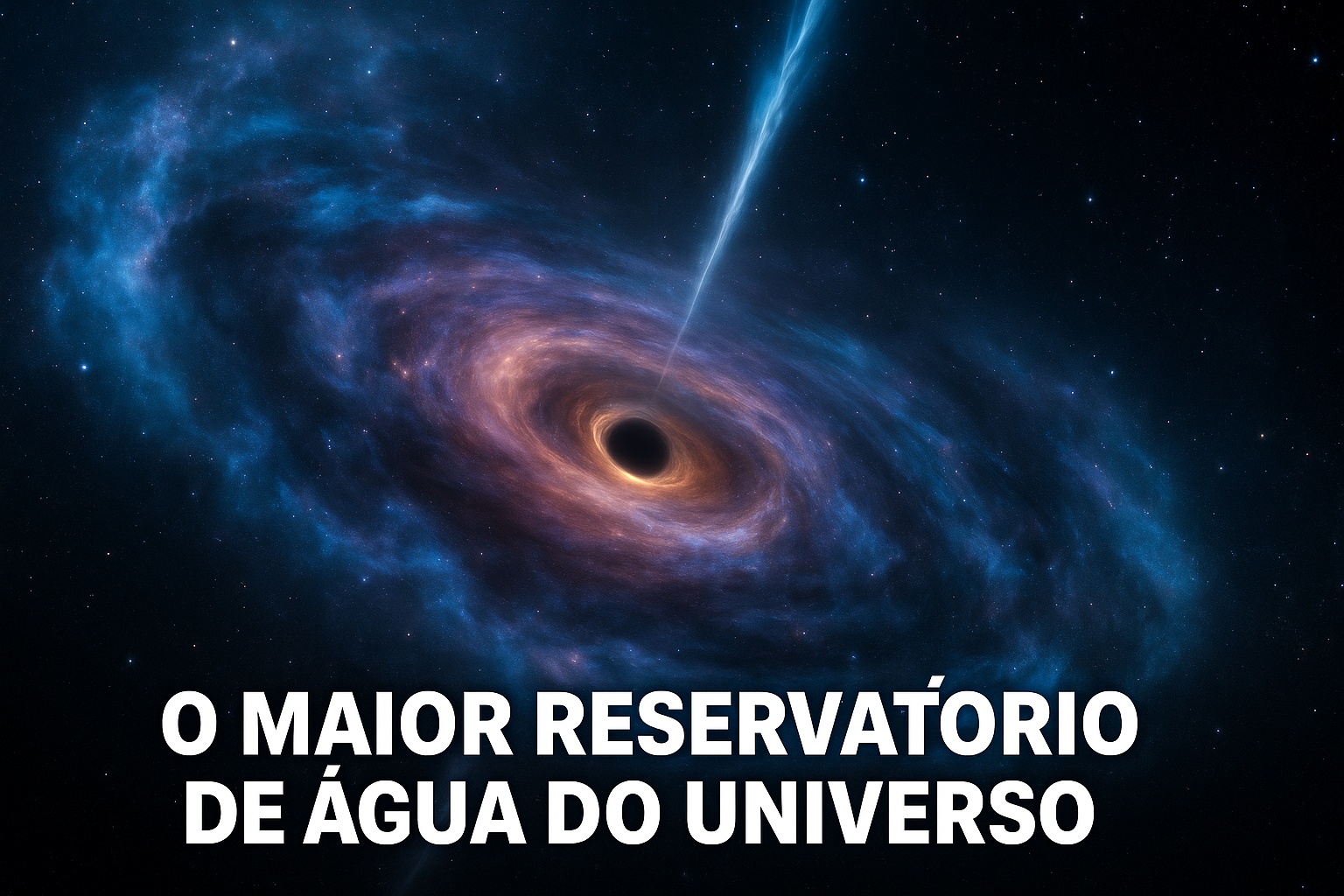


Astronomers Discover Cosmic Cloud With 140 Trillion Times More Water Than Earth’s Oceans Orbiting A Black Hole 12 Billion Light-Years Away.
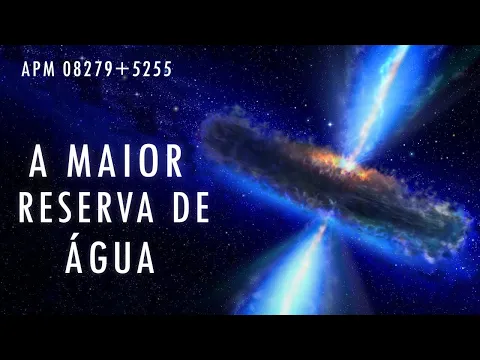
The universe has just revealed one of the most impressive secrets ever observed by modern science. In a distant galaxy, 12 billion light-years from Earth, astronomers detected a colossal reservoir of water vapor, the largest ever found in the cosmos. This immense cloud contains the equivalent of 140 trillion times all the water present in Earth’s oceans, orbiting a supermassive black hole that consumes energy at an unimaginable rate. The discovery was made by two independent groups of astronomers using the Herschel space telescope and the WM Keck observatory in Hawaii. The target is a quasar, a type of active galactic nucleus, named APM 08279+5255, whose central black hole has a mass equivalent to 20 billion suns. Around it, gases and dust swirl at speeds close to the speed of light, producing energy 1 trillion times greater than that emitted by the Sun.
In the midst of this turbulence, the telescope captured something unexpected: a clear spectral signature of water vapor in quantities so immense that they defy any earthly comparison.
A Cloud of Water Larger Than Entire Galaxies
To get an idea of the scale, the amount of water observed is so vast that it could cover the entire Earth with a liquid layer 1 kilometer deep and there would still be practically everything left. This cosmic vapor cloud stretches for hundreds of light-years, forming a giant mist around the black hole, fueled by the extreme heat and radiation emitted by the quasar.
-
World’s First Lithium-Sulfur Battery Factory Launches, Promising to Double Range Without Relying on China

-
AI Data Centers Now Feature Built-In Nuclear Power Plants and Have Ordered Non-Existent Reactors
-
In India, thousands earn about $2.50 an hour cooking and cleaning with a phone strapped to their heads, as every move is recorded to train humanoid robots for jobs they might one day replace.

-
Nuclear Fusion Study Proposes Transforming Mercury into Gold Using Tokamak Neutrons, but Real-World Application Remains Uncertain





Scientists estimate that the temperature of this vapor is around –53 °C, a surprisingly “warm” value by cosmic standards. This means that, despite the distance and reduced density, there is enough energy to keep water molecules in a gaseous state for billions of years.
This is the first time astronomers have detected such an abundance of water in such an ancient region of the universe, a time when it was only 1.6 billion years old. In other words, water existed in astronomical quantities when the cosmos was still in its infancy, long before the formation of the Solar System.
The Role of Water in the Evolution of the Universe
The discovery is not just symbolic — it changes how astronomy understands the formation of galaxies and planets. Until recently, it was believed that water, composed of oxygen and hydrogen, could only emerge in large quantities after the third generation of stars when heavy elements were widely available.
But the cloud detected in APM 08279+5255 shows the opposite: water was already present long before, suggesting that the conditions to form complex molecules and, in theory, the fundamental building blocks of life may have arisen much earlier than previously thought.
Moreover, the colossal amount of water vapor indicates that hydrogen and oxygen were being abundantly produced by massive stars and rapidly dispersed through space.
This reinforces the hypothesis that the chemistry of the universe was fertile from its earliest billions of years, and that the presence of water may be a constant in countless planetary systems.
A Discovery Hidden in a Monstrous Quasar
The quasar APM 08279+5255 is one of the brightest objects ever observed. The black hole at its center sucks in matter at such a violent rate that the surrounding gas heats to millions of degrees, emitting intense radiation in all directions.
It is precisely this chaotic environment that allows for the detection of water: the heat and light from the black hole interact with the molecules, causing them to emit a specific spectral signature, identifiable by radio telescopes.
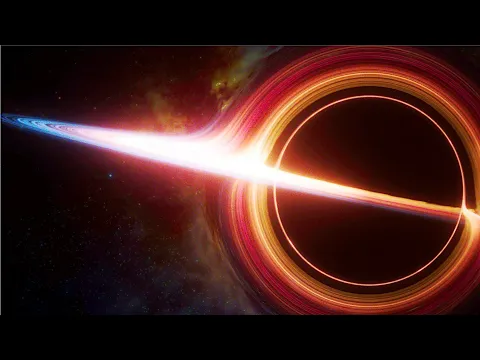
Astronomers observed this signature using wavelengths of 1 mm — an invisible range to the human eye but essential for detecting chemical compounds in space. The team led by Matt Bradford from the Jet Propulsion Laboratory (NASA) and Alberto Bolatto from the University of Maryland confirmed that the cloud contains about 100,000 times more water vapor than the entire planet Earth.
And the most remarkable thing: all of this is spinning at tens of millions of kilometers per hour around a black hole that alone emits as much energy as the entire Milky Way multiplied by a thousand.
The Cosmic Significance of the Universe’s Largest Water Reservoir
The discovery of the gigantic cosmic reservoir reinforces that water is a common and fundamental substance on a universal scale. Far from being rare, it appears from the earliest stages of the universe, associated with the most energetic and violent regions.
According to the researchers, this also helps explain why comets, asteroids, and icy planets are so rich in water — they may have inherited this element directly from the primordial material that formed galaxies like ours.
Symbolically, the finding shows that the presence of water — and, by extension, the possibility of life — is a natural consequence of cosmic evolution, and not a localized exception in the Solar System.
The Frontier of Astronomy and the Future of Space Missions
With the advancement of telescopes like the James Webb, launched by NASA and ESA, it will be possible to observe in even greater detail the chemical composition of these distant clouds. The goal is to map other similar reservoirs and understand how water was distributed throughout the primitive universe.
Each new detection helps rewrite cosmic history and answer one of humanity’s oldest questions: Is life a chance occurrence or an inevitability in a universe filled with water and energy?
If water — the essential element of biology — already existed in such abundance over 12 billion years ago, perhaps the answer is closer than we think.