Portuguese
  Spanish


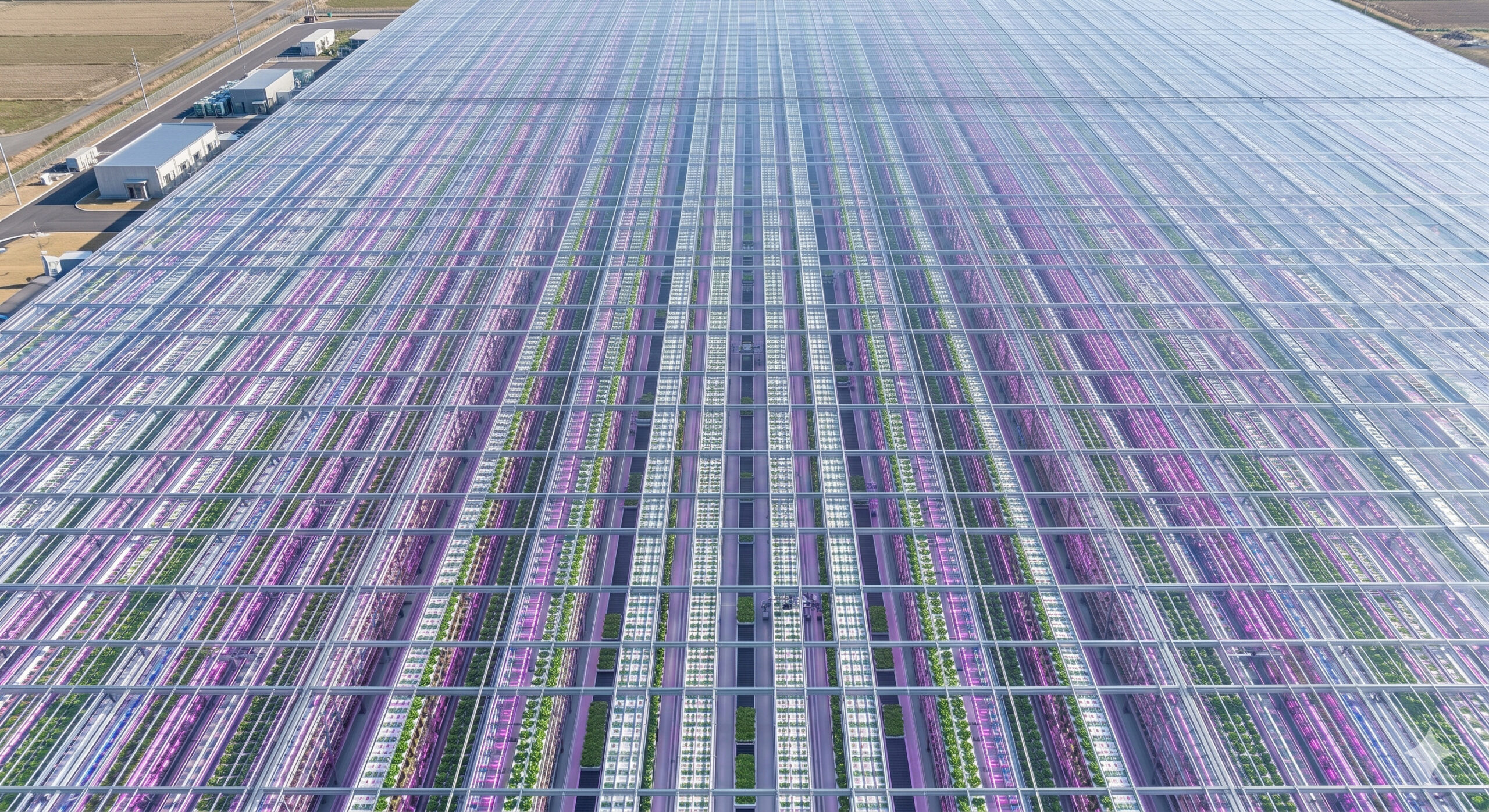

30 thousand heads of lettuce per day under LED light, without soil, without pesticides and without seasons, factories in Japan produce on an industrial scale while the field takes up to 90 days and faces aging agricultural labor
The average age of a farmer in Japan is 67 years. Most do not have successors. The children have migrated to urban centers like Tokyo, Osaka, and Nagoya, while the countryside ages and continuously loses workforce. At the same time, structural factors such as shrinking margins, unstable weather conditions, and geographical limitations intensify the problem. With about 73% of the territory covered by mountains, along with the frequent occurrence of typhoons and extreme weather events, traditional agricultural production faces increasing challenges. In this context, the country adopted a radical solution: to transfer part of the food production to controlled environments, within industrial structures. According to AFP/Phys.org, Smithsonian Magazine, Vertical Farm Daily, and South China Morning Post, Japan already has over 200 vegetable factories operating under artificial light, and the largest of them produces 30 thousand heads of lettuce per day without exposure to sunlight.
Vertical farm of Spread in Kyoto transforms industrial shed into intensive food production
The factory of Spread Co., located in an industrial zone near Kyoto, illustrates this transformation. Externally, the building maintains the appearance of a conventional shed. Internally, it houses a highly controlled production system.
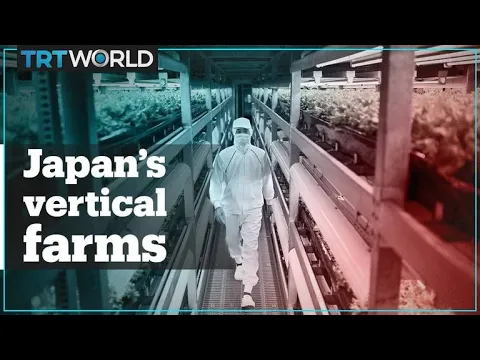

Stainless steel shelves extend from floor to ceiling, organized in multiple levels, with stacked growing trays.
-
With Nearly 60% Desert, Israel Desalinates Seawater and Recycles 90% of Wastewater to Build a Billion-Dollar Agricultural Powerhouse in Dates and Cotton

-
74-Hour Barbecue in Brazil Sets World Record: 3.4 Tons of Meat, 10,500 Meals Served

-
Man Takes on Swarms in Singapore, Saves 6 Million Bees and Encourages Locals to Choose Conservation Over Pesticides
-
In Brazil’s Arid Northeast, Vineyards Now Produce Wine Grapes Year-Round, Accounting for 98% of the Country’s Grape Exports


Lighting is provided by LEDs, operating continuously. Temperature, humidity, and air quality are rigorously controlled, creating an environment isolated from external interferences.
The model eliminates traditional agricultural variables such as weather, soil, and seasonality, replacing them with precise technical control.
Reuse of electronics factories accelerates indoor agriculture expansion in Japan
One of the factors that drove the expansion of vertical farms in Japan was the reuse of existing industrial structures.
Companies like Fujitsu, Toshiba, and Panasonic have converted old semiconductor factories into agricultural production units. These facilities already had clean rooms, environmental control, and adequate electrical infrastructure, significantly reducing deployment time and costs.
This transition demonstrates how the deindustrialization of certain sectors has been partially converted into new productive capacity in the food sector.
Productivity per square meter surpasses the field by up to 130 times with vertical cultivation
The productivity of vertical farms shows a significant difference compared to traditional cultivation.
In the field, one square meter produces an average of about 5 heads of lettuce per year, depending on environmental conditions.
In the first unit of Spread, this number reaches 300 heads per square meter per year. At Techno Farm, located in Keihanna Science City, production reaches 648 heads per square meter per year, equivalent to about 130 times conventional productivity.
This gain results from the use of three-dimensional space, with multiple levels of cultivation, and continuous operation throughout the year.
Water consumption reduced by up to 99% with closed hydroponic cultivation system
Another critical differentiator of vertical farms is the efficient use of water. While traditional cultivation requires large volumes of irrigation, Techno Farm uses about 110 milliliters of water per head of lettuce, which represents approximately 1% of the consumption observed in the field.
The system operates in a closed circuit. Water evaporates, is captured, condensed, and reused, reducing losses and increasing water efficiency.
In a global scenario where agriculture accounts for about 70% of freshwater consumption, this model stands out as a high-efficiency alternative.
Reduction of losses and absence of pesticides elevate quality and standardization of production
In traditional cultivation, losses can exceed 30% due to pests, diseases, and climatic events. In vertical farms, this rate drops to about 3%.
The controlled environment prevents the entry of external agents, reducing the need for pesticides and ensuring uniform growth conditions. As a result, production shows high standardization and lower variability.
The low microbiological load allows the product to be consumed directly, without the need for washing, extending its shelf life and food safety.
Automation and artificial intelligence reduce costs and increase operational efficiency
Automation plays a central role in the Japanese indoor agriculture model. At Techno Farm, robots transport trays between different growth stages, replacing manual operations. Sensors continuously monitor variables such as temperature, humidity, lighting, and nutrients.
The integration with artificial intelligence systems allows for real-time adjustments, optimizing productivity and reducing waste. This model has reduced labor costs by approximately 50%.
Annual production exceeds 11 million units with an economically viable model
Spread produces about 11 million heads of lettuce per year, distributed to over 2,200 supermarkets in Japan.
Despite the price being about 20% to 30% higher than conventional lettuce, the product finds demand due to its consistent quality and absence of pesticides.
The company achieved profitability in 2013, a significant result in a sector where approximately 60% of vertical farms still operate at a loss.
Vertical farms help recover agricultural production in areas affected by natural disasters
The technology has also been applied in regions affected by natural disasters. After the earthquake and tsunami in 2011, which compromised agricultural areas in the Miyagi region, a vertical farm was implemented to restore production. The model allowed for immediate cultivation, without dependence on soil or local water quality.
This application demonstrates the capacity of indoor agriculture to act as a resilient solution in extreme scenarios.

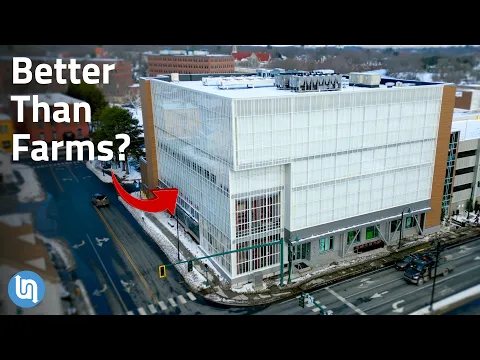
The integration between production and consumption is also advancing in urban areas. In Tokyo, commercial buildings have begun to incorporate vertical farms on their upper floors. Vegetables grown in these spaces are used directly in restaurants within the same building. This model reduces the need for transportation and brings production closer to the end consumer.
Global expansion of vertical farms advances with projects in various countries
The Japanese model is already starting to be exported to other countries. Projects are under development in the Middle East, where climatic conditions limit traditional agriculture. Spread’s goal includes expanding the technology to over 100 cities globally.
The proposal is to bring food production to regions with water scarcity, extreme climates, or lack of agricultural labor.
Controlled environment agriculture has also been applied in extreme locations. In Antarctica, research stations are already growing food in enclosed environments. On the International Space Station, astronauts produce vegetables in compact systems.
These examples demonstrate that food production can be dissociated from traditional natural conditions.
Transition from industrial factories to agricultural production redefines infrastructure use in Japan
The conversion of industrial factories into agricultural units represents a significant structural change. Facilities previously dedicated to the production of electronic components are now producing food, utilizing the same technological base for environmental control.
This transition reinforces the integration between industry and agriculture in the context of labor shortages and economic changes.
The advancement of vertical farms raises questions about the future of food production. With greater water efficiency, high productivity, and climate independence, this model presents clear advantages. At the same time, its viability on a large scale still depends on energy costs and technological adaptation.
In your view, does this model tend to complement or profoundly transform global agriculture in the coming decades?