Portuguese
  Spanish


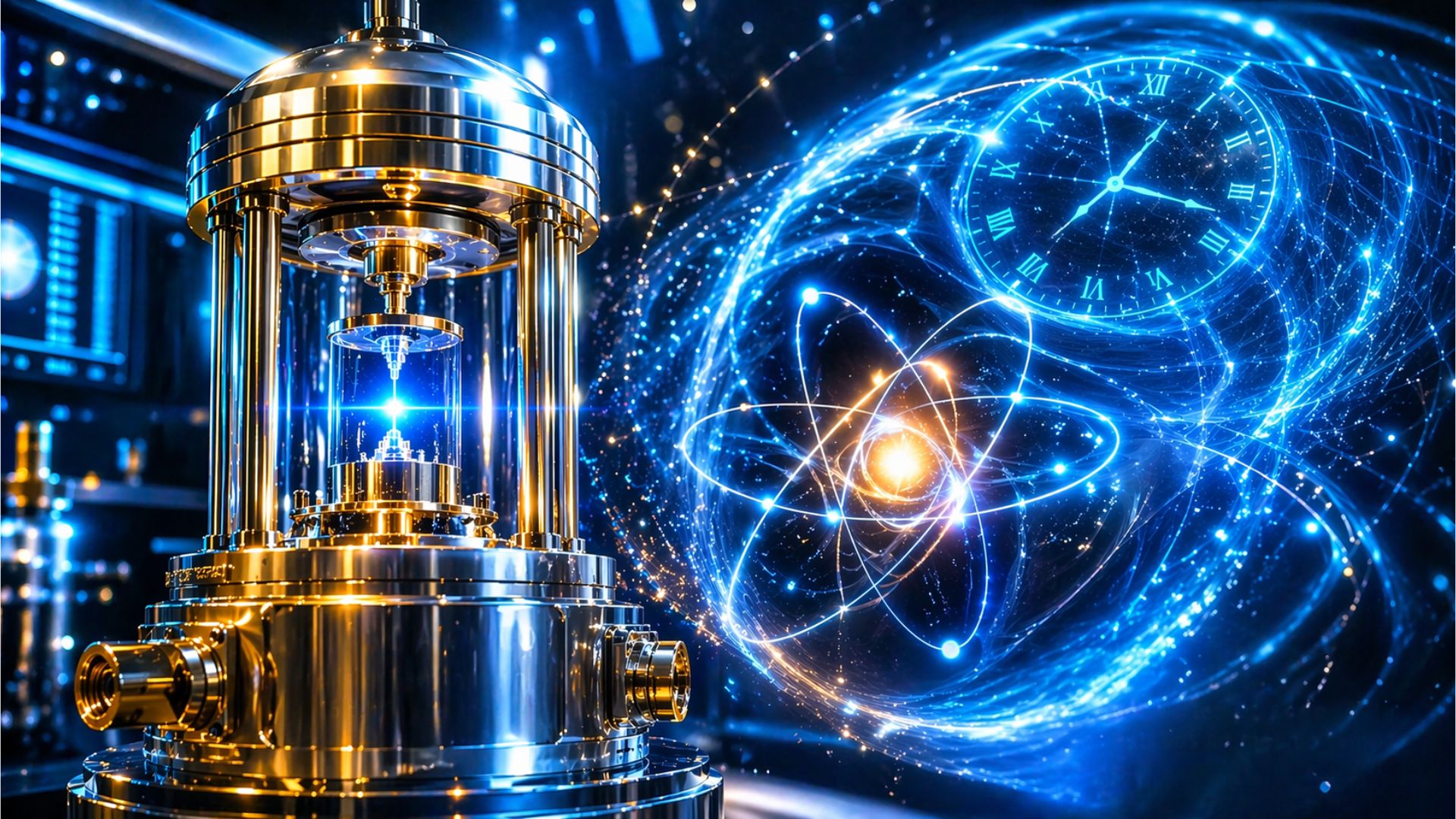


Atomic Clock advances in modern physics by enabling scientists to investigate the behavior of time at the quantum level, with precise measurements that expand theoretical tests and drive new scientific technologies
The advancement of the Atomic Clock is presenting science with a possibility of potential: to investigate, in the laboratory, whether time itself can exhibit quantum characteristics. A study published in the journal Physical Review Letters on Monday (April 20) indicates that optical atomic clocks — considered the most precise instruments in physics — may allow this type of experiment for the first time.
The proposal is not merely theoretical. For the first time, scientists indicate that there is sufficient technology to measure possible extremely subtle variations in the behavior of time. This represents an important leap within modern physics, as it transforms an abstract hypothesis into something testable.
In practice, the study suggests that the so-called quantum time may cease to be just a speculative idea to become an object of experimental investigation. If this progresses, the impacts could reach from fundamental theories to high-level technological applications.
-
Six Helicopters to Drop 550 Tons of Poison on Island Near Antarctica to Eradicate Mice Threatening Albatrosses and 19 Seabird Species.

-
Russia Unveils Poseidon: A 20-Meter Nuclear Torpedo-Drone with 10,000 km Range, 185 km/h Speed, and 100-Ton Capacity Threatening Coastal Cities with Radioactive Waves
-
Brazilian Innovator Converts Old Car into Electric Vehicle Using Laptop Batteries and Forklift Motor, Achieves Nearly 90 km/h in Urban Settings

-
Samsung Unveils Smart Oven with Built-In Camera, AI Food Recognition, and Real-Time Monitoring via Smartphone.




Atomic Clock and the technological leap that redefines measurements in modern physics
The Atomic Clock is currently the most precise standard for measuring time. It operates based on the frequency of transitions of atoms, such as cesium and strontium, which vibrate at extremely stable rhythms. This stability allows for measurements with such high precision that errors of one second would only occur after billions of years.
In modern physics, these devices are already essential. They support technologies such as satellite navigation systems, telecommunications, and global data synchronization networks.
With the evolution of optical atomic clocks, precision has reached a new level. This enables the detection of minimal variations that were previously completely imperceptible. It is precisely this capability that opens up opportunities to investigate the behavior of time on yet unexplored scales.
Moreover, recent advancements did not occur by chance. They are the result of decades of research in optics, atom control, and the development of highly sensitive laboratory instruments.
“`html
Why scientists investigate the behavior of time on a quantum scale
For scientists, understanding time goes far beyond measuring hours and seconds. Time is one of the pillars of physics, but its nature is still not completely understood.
In everyday life, the behavior of time seems continuous and predictable. However, quantum mechanics presents a completely different scenario. In this field, particles can exist in superposition, occupying multiple states at the same time.
The hypothesis under study suggests that the same could happen with time. That is, under certain conditions, quantum time could exhibit fluctuations, discontinuities, or probabilistic behaviors.
This idea is not new, but it has always been difficult to test. What changes now is the real possibility of experimental observation, thanks to the advancement of the Atomic Clock.


Quantum time and the possibility of temporal superposition
The concept of quantum time is one of the most challenging in current science. It proposes that time may not be a continuous line, but rather something that can assume different states simultaneously, just as subatomic particles do.
In practice, this means that the behavior of time could vary on extremely small scales, something impossible to perceive in daily life. This variation, if detected, would have profound implications for modern physics.
Among the main possibilities studied are:
- Minuscule fluctuations in the passage of time
- Interferences between different temporal states
- Changes in fundamental physical constants
These effects would be extremely subtle. Therefore, only instruments like the Atomic Clock are capable of investigating this type of phenomenon.
“`
How the Atomic Clock Allows Testing Theories Previously Limited to the Theoretical Field
The great differential of the Atomic Clock is its ability to measure time with almost absolute precision. This allows scientists to conduct experiments that were previously impossible.
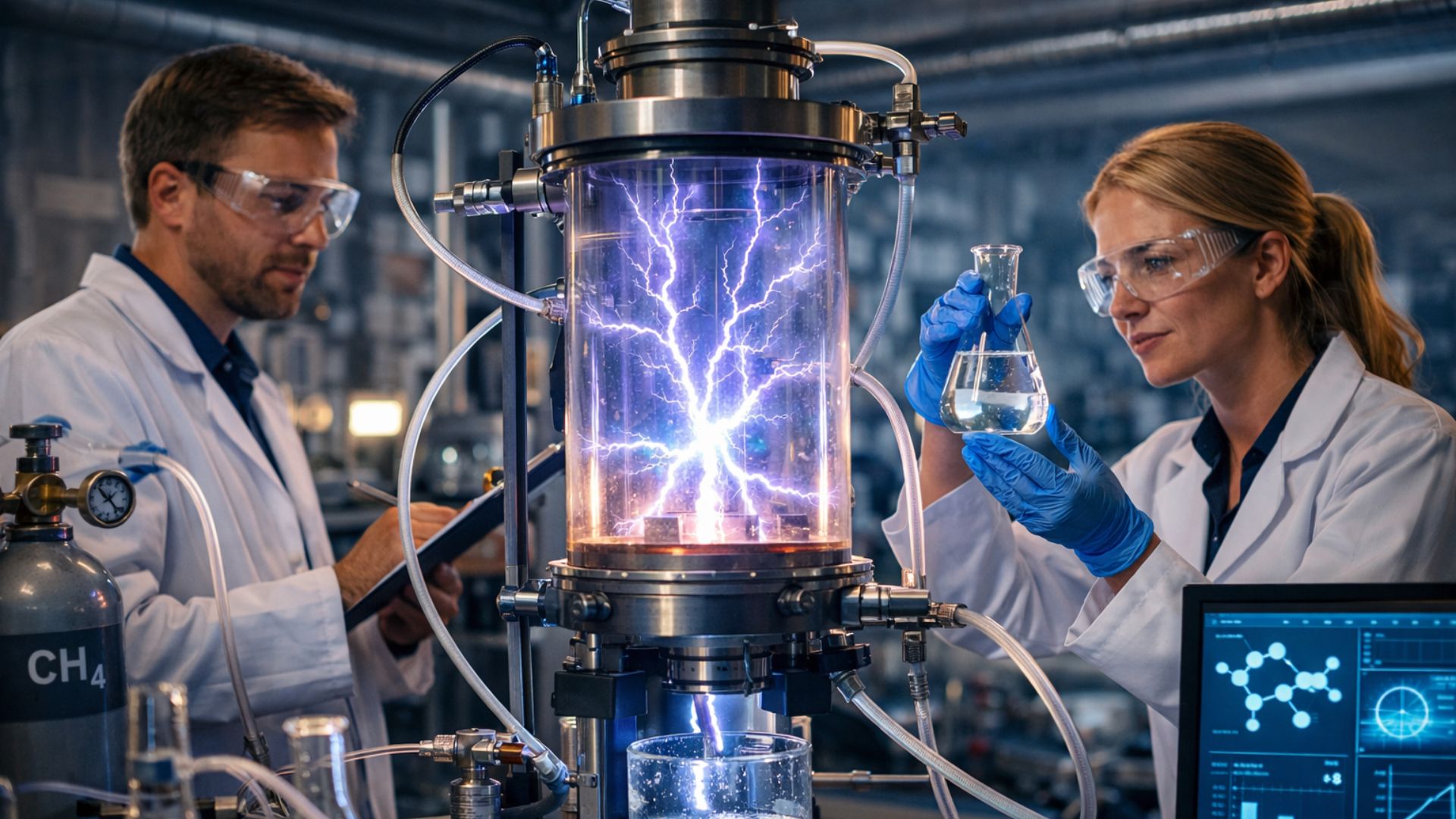
The scientists use optical clocks to compare frequencies under extremely controlled conditions. Small discrepancies may indicate unknown effects, possibly related to quantum time.
This type of approach represents an important shift in science. Instead of relying solely on mathematical models, modern physics now has experimental evidence to validate or refute hypotheses.
Among the main objectives of these tests are:
- Identify inexplicable variations in time
- Test the limits of current theories
- Search for signs of new physical laws
This transition from theoretical to experimental is considered one of the most relevant points of the study published on the 20th.
The Search for Unifying Theories in Modern Physics Gains New Impetus
One of the biggest challenges of modern physics is to unify two fundamental theories: quantum mechanics and relativity. Each describes the universe with extreme precision, but in different contexts.
Relativity explains the behavior of time and space on large scales, while quantum mechanics operates at the microscopic level. The problem is that these two theories have not yet been fully integrated.
The Atomic Clock emerges as a promising tool in this scenario. By investigating the behavior of time at the quantum level, it may provide important clues for this unification.
If quantum time is experimentally confirmed, it may indicate that the two theories are more connected than previously thought.
Practical Impacts That Go Beyond Scientific Theory
Although the main focus is fundamental research, the impacts can extend to practical applications. The advancement of the Atomic Clock has already transformed various fields, and new discoveries may further expand this reach.
Among the possible benefits are:
- Even more precise navigation systems
- Sensors capable of detecting gravitational variations
- Advances in quantum computing
- Improvements in global communication networks
The scientists emphasize that, even if quantum time is not confirmed, the technological development needed to test it is already generating concrete benefits.
This shows how modern physics often produces indirect advances that impact everyday life.
Limitations, scientific caution, and next steps in research
Despite the enthusiasm, the scientists themselves adopt a cautious stance. The study published in Physical Review Letters does not claim that time is quantum. It merely demonstrates that this hypothesis can be tested.
Detecting variations in the behavior of time requires extreme levels of precision and experimental control. External factors, such as vibrations, temperature, and electromagnetic fields, can interfere with measurements.
Moreover, interpreting the results is a challenge. Not every observed variation necessarily indicates the presence of quantum time.
Therefore, the next steps include:
- Repeating experiments under different conditions
- Comparing multiple atomic clocks
- Refining theoretical models
This process may take years, but it is essential to ensure the reliability of the conclusions.
What this discovery represents for the future of science
The advancement of the Atomic Clock shows that science is entering a phase where fundamental questions can be tested directly. This changes the way modern physics evolves.
Investigating the behavior of time ceases to be merely a philosophical or theoretical question and becomes a concrete experimental field. This expands the role of scientists and opens new research possibilities.
If quantum time is detected, it could redefine basic concepts about reality. If not, it will also be an advance, as it will help to delineate the limits of current theories.
In any case, the study published on the 20th marks an important moment. It shows that, with the right technology, even the most complex mysteries can begin to be explored practically, bringing science closer to answers that previously seemed distant.