






 Portuguese
  Spanish


In a report published by O Antagonista on 06/25/2026, the contactless card appears as a dominant habit in in-person purchases, but it requires checking the amount, attention to the limit without a password, notifications in the app, and caution with card machines, duplicate charges, or artificial haste when paying.
The contactless card has become part of the routine for millions of Brazilians at the checkout of supermarkets, pharmacies, bakeries, transport, and stores. Just tap the card, phone, or watch on the card machine, wait for the approval signal, and proceed with the purchase in a few seconds.
The convenience, however, also creates a point of attention. When the payment happens too quickly, many people only realize later if the amount was wrong, if there was a duplicate charge, or if the purchase was approved without a password within the limit allowed by the issuer’s and card machine’s rules.
Why the contactless card became so common
The rise of the contactless card has a simple explanation: it eliminates steps. In small purchases, the consumer does not need to insert the card, wait for the chip to be read, and enter the password. The transaction happens when the card or device is near the card machine.
-
Why Air Conditioning Remains Scarce in Millions of European Homes Despite Deadly Heatwaves, While Nearly 90% of U.S. Homes Have It

-
7.1 Magnitude Earthquake in Venezuela Shakes Buildings in the Brazilian Amazon: Residents Report Panic as Civil Defense Monitors Aftershocks Far from Epicenter in Morón
-
São Paulo Beach Ranked Among World’s Best, But Access Requires Challenging Hike

-
Brazilian TV Host Disguised as Homeless in São Paulo’s Drug District Recognized and Nearly Attacked During Filming



This process uses NFC, short for near field communication. The technology allows data exchange over short distances, making the payment quick and convenient. The problem is not in the proximity itself, but in the distraction that speed can cause.
In practice, the consumer often taps the card without carefully looking at the screen. In an environment with a queue, haste, or noise, this habit can lead to errors in the amount, repeated charges, or confirmation of a purchase different from what was agreed.
Therefore, the main rule is simple: before tapping, check. The gesture takes a few seconds but prevents a convenience created to save time from becoming a headache after the purchase.
Limit without password requires attention at the checkout
One of the most sensitive points of the contactless card is the limit for purchases without a password. According to the report by O Antagonista, purchases up to R$ 200 can be made without entering the password, although it may be requested before this amount for security reasons.
This does not mean that any charge will be automatically approved. Transactions go through rules from the bank, the card network, the card machine, and the card issuer. Even so, the limit without a password requires extra care, especially in case of loss, theft, or distraction at the checkout.
The most important advice is to check the amount before tapping the card. After approval, it is worth checking the notification in the bank app, especially when the purchase seems different from what was agreed or when the card machine is out of sight.
The habit of looking at the screen before tapping is small, but it acts as an extra layer of protection. It prevents the rush of service from replacing the consumer’s verification.
Data shows that tapping has become a dominant behavior
Contactless payment is no longer a novelty and has become standard in many in-person purchases. According to a report by Abecs cited by O Antagonista, contactless payments moved R$ 504.8 billion in the first quarter of 2026.
The data also shows the extent of the change: contactless represented 74.8% of in-person card transactions during the period. In other words, most in-person card purchases already use this type of technology.
This growth helps explain why the topic deserves attention. The more people use the feature, the greater the need to create simple security habits. The technology has become common, but consumer care remains indispensable.
The increased use also attracts fraud attempts based not necessarily on sophisticated technology, but on behavior. Many situations exploit haste, distraction, excessive trust, or lack of checking the amount on the screen.
Frauds can exploit haste, not just technology
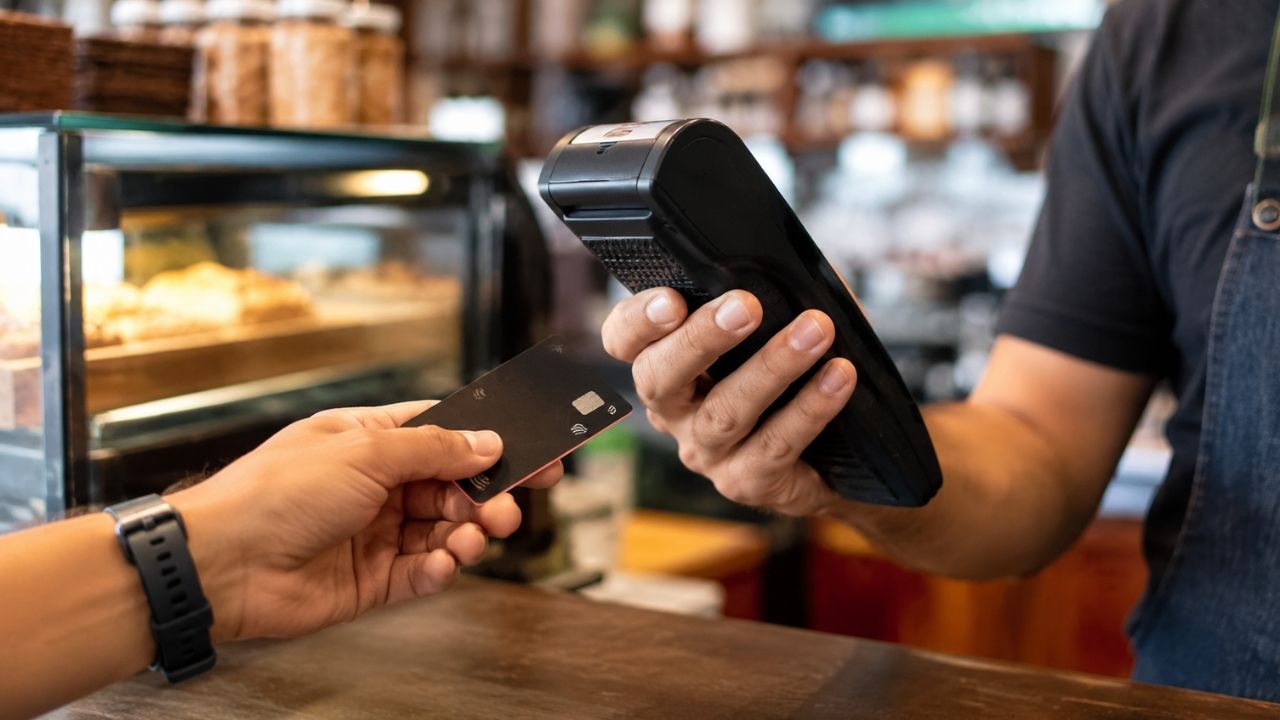
A common mistake is to imagine that the risk of a contactless card always depends on a highly technological fraud. In many cases, the problem is simpler: the person does not look at the amount, the card machine is turned away, or the attendant conducts the transaction too quickly.
The report cites situations such as wrong amount, duplicate charge, lost card, and pressure to tap quickly. Each of these situations requires a different response, but they all have something in common: they can be reduced with verification and monitoring through the bank app.
If the machine is turned away, ask to see the screen. If two similar notifications appear, check for duplicate charges. If the card is lost, block it immediately through the app or bank channels. If the amount is not recognized, dispute the charge.
Artificial urgency is a warning sign. When someone insists that the payment be made too quickly, without time to verify the amount, the consumer should pause and check before approaching the card.
Bank app helps track purchases
One of the simplest ways to use the contactless card more securely is to enable real-time notifications in the bank app. This way, each approved purchase appears on the phone right after the transaction.
This feature helps identify duplicate charges, unexpected amounts, or unauthorized transactions. In case of card loss or theft, the notification can also speed up the consumer’s response.
Another useful measure is to check if the bank allows adjusting limits or disabling the contactless feature. Many apps offer this control, which can be interesting for those who use the feature infrequently or prefer to reduce risks in certain situations.
The goal is not to abandon the technology, but to use the convenience with caution. The best combination is contactless with verification: check the amount, approach, wait for confirmation, and monitor the notification on the phone.
Machine needs to be visible before confirmation
The most important moment of the purchase happens before confirmation. It is at this stage that the consumer should look at the machine’s screen and verify if the amount matches the contracted product or service.
If the screen is distant, turned towards the attendant, or hidden, it is ideal to ask to check. This precaution is valid for any purchase, but becomes even more important with the contactless card, because the transaction can be completed in a few seconds.
It is also advisable to request a receipt when in doubt. The receipt helps compare time, amount, and establishment, and facilitates any dispute with the bank if something seems wrong.
In small purchases, many people skip this step thinking the amount is low. But precisely small purchases can be approved without a PIN, making attention to the amount even more relevant.
Convenience does not eliminate responsibility in payment
Tap-to-pay has made payment faster, but it does not remove the responsibility of checking. The consumer still needs to observe the amount, establishment, notifications, and transactions on the statement.
The technology was created to make life easier, not to replace attention. The tap-to-pay card is useful when the consumer maintains control over what they are paying and knows how to act if something goes wrong.
Among the safest habits are checking the amount before tapping, activating alerts in the app, quickly blocking the card in case of loss, disputing unknown purchases, and avoiding handing over the card out of sight.
The difference between convenience and problem can be in two seconds of checking. This small interval before tapping the card helps avoid bigger troubles later.
The quick gesture that deserves to become a conscious habit
The tap-to-pay card does not need to be seen as a villain. It speeds up purchases, reduces steps, and facilitates routine in busy places. The warning is in automatic use, without looking at the screen and without following the purchase confirmation.
With the growth of technology, the consumer’s attention becomes part of the payment itself. Checking the amount, following notifications, and knowing how to block the card are simple actions that reduce risks without giving up convenience.
The quick gesture at the machine can continue to be convenient, as long as it is not done on autopilot. In times of increasingly immediate payments, care also needs to be quick but cannot disappear.
Do you usually check the amount before using tap-to-pay or do you only look after the purchase has already been approved? Leave your opinion in the comments.


