Portuguese
  Spanish


Presented in San Francisco in June 2026, the body scanner from Midjourney Medical uses ultrasound in a pool to generate images in about 60 seconds, without radiation or contrast; for now, it targets body composition and wellness, while seeking clinical validations and regulatory approval in the United States from the FDA.
The body scanner presented by Midjourney Medical attracted attention by proposing a body scan in about 60 seconds underwater, using ultrasound instead of radiation, contrast, or strong magnetic fields, as occurs in other medical imaging technologies.
The innovation was announced in June 2026, in San Francisco, and gained attention for combining artificial intelligence, ultrasound sensors, and a spa-inspired experience. Despite the visual impact, the equipment should not yet be treated as a substitute for MRI or as a definitive medical exam, as it depends on clinical validations and regulatory approval.
How the body scanner works underwater
The proposal from Midjourney Medical is to place the person in a water structure, similar to a small pool, while a set of sensors reads the body using ultrasound. The company calls the technology Ultrasonic CT, but the system does not use X-rays like a traditional CT scan.
-
In the US, researchers attached iPhones to a $25 grabber, turning 22 homes into a database to teach robots to open drawers and handle objects like humans.

-
IBM Breaks 1-Nanometer Barrier with 0.7 nm Chip Featuring Nearly 100 Billion Transistors and 3D Architecture, Promising AI Revolution

-
Apple Raises MacBook and iPad Prices as Memory Costs Surge by Up to 98%, Losing Edge Over Rivals and Highlighting AI Boom’s Impact on Consumers
-
China Establishes State Centers to Train Humanoid Robots, While the West Lags Behind with Makeshift Solutions



In practice, the body scanner uses sound waves to penetrate tissues and collect information from different angles. This data is processed by computers to form three-dimensional images of the body’s interior, with the promise of making the scan faster and more comfortable.
Water plays an important role in this process because it facilitates the transmission of ultrasound waves. In conventional exams, gel helps conduct sound between the device and the skin. In Midjourney’s concept, immersion expands this interface and allows sensors to capture information around the body.
The visual appeal is strong: instead of entering a closed machine, the person would be positioned in an aquatic environment, with the reading done in approximately one minute. This format explains why the innovation was compared to an “ultrasound MRI,” although there are still important technical differences between the technologies.
Promise targets comfort, speed, and preventive exams
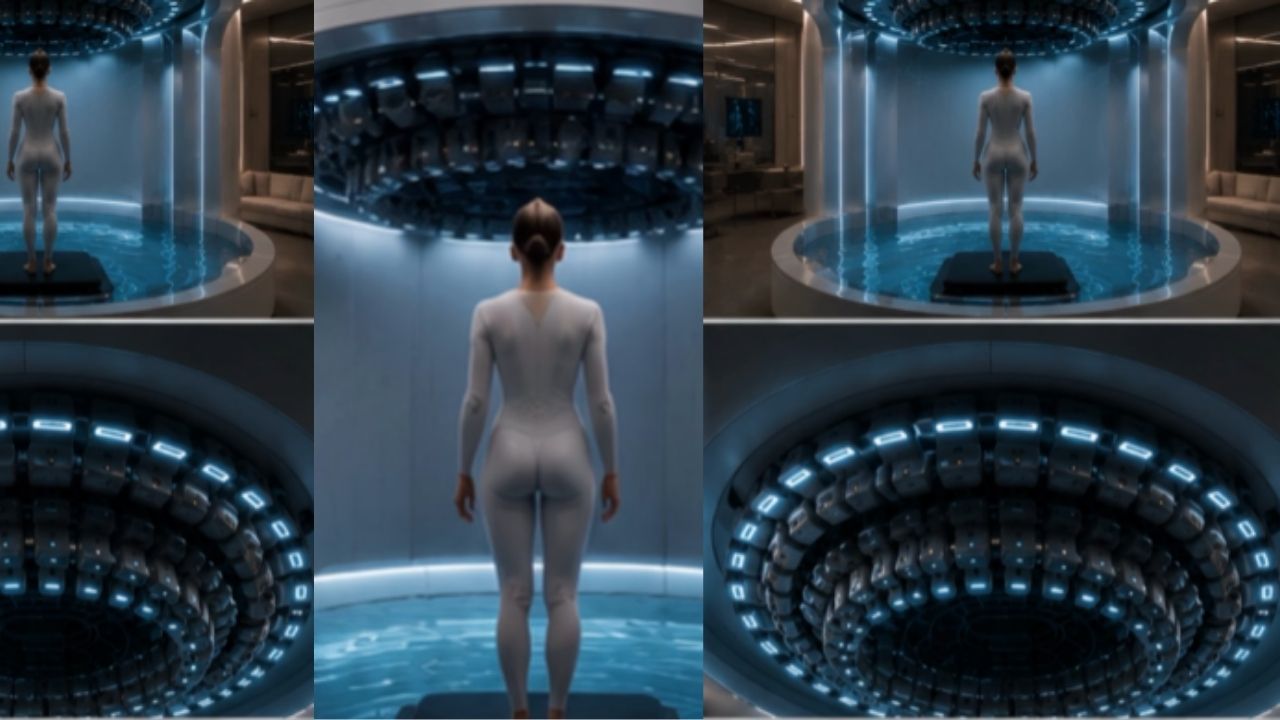
The main promise of the body scanner is to reduce barriers that keep many people away from imaging exams: time, discomfort, claustrophobia, cost, and fear of more complex procedures. The idea of performing a scan in 60 seconds, without radiation and without contrast, makes the proposal attractive to the general public.
The founder of Midjourney, David Holz, presented the project as an attempt to make body monitoring more accessible and frequent. The company also suggests that, in the future, the technology could help people better understand their own health and monitor internal changes more regularly.
However, speed does not mean automatic diagnosis. Medical exams depend on clinical context, professional evaluation, comparison with symptoms, patient history, and scientific validation. A beautiful or detailed image is not enough to confirm disease, dismiss risk, or replace medical follow-up.
Therefore, the equipment should start with a focus on body composition and wellness use, not as a broad diagnostic tool. This distinction is essential to prevent the reader from understanding the novelty as an immediate substitute for traditional exams.
Technology still needs to undergo validations
The most important point of the news is that the body scanner still needs to prove, in independent studies, what it can really identify safely. The proposal is promising, but medical technologies only gain strength when they demonstrate accuracy, clinical utility, and safety in different patient groups.
The absence of diagnostic approval from the FDA, the United States regulatory agency, means that the equipment should not yet be presented as a definitive medical exam. Initially, the trend is for the technology to be used for body composition maps, wellness follow-ups, and data generation that can be discussed with healthcare professionals.
This caution is necessary because full-body scans can generate incidental findings. In other words, the exam may point to changes that do not always represent disease, but that lead to anxiety, new tests, costs, and doubts for the patient.
Medical imaging specialists often remind that every exam needs to answer a clinical question. If the scan is done without a clear indication, it increases the risk of finding signs that are difficult to interpret or creating a false sense of security.
Partnership with Butterfly Network forms the basis of the project
Midjourney became globally known for its image generation tools with artificial intelligence, but the new project enters a very different field: medical hardware and ultrasound. For this, the company works with technology associated with Butterfly Network, a company known for ultrasound devices on a chip.
The body scanner presented by Midjourney uses integrated ultrasound modules to capture signals in various directions. The ambition is to transform a large amount of sound data into internal body images using advanced computational processing.
This point helps explain why the project draws so much attention. It mixes sensors, heavy computing, three-dimensional reconstruction, and an AI company trying to enter a highly regulated sector. The combination is bold, but it also increases the need for rigorous testing.
Medicine does not work like the app market, where a product can be launched, adjusted, and quickly corrected based on usage. When it comes to human body imaging, every promise needs to be proven before becoming clinical routine.
Midjourney Spa aims to bring exams to a wellness environment
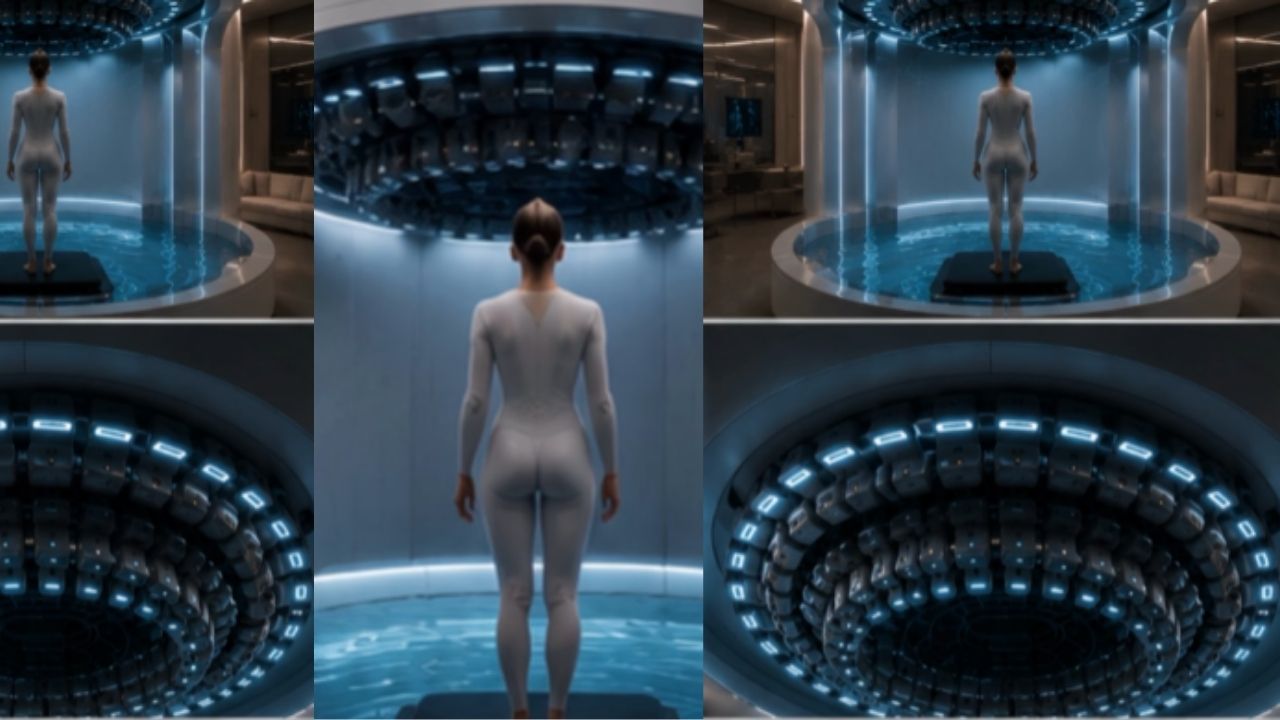
One of the company’s most curious plans is to install the first equipment in spaces called Midjourney Spa. The proposed plan includes an experience that mixes gym, sauna, cold bath, and body scanning by ultrasound in a wellness environment.
The first space is planned for San Francisco by 2027. The idea reinforces the strategy of presenting the body scanner as something closer to a comfortable experience than a traditional hospital exam.
This format may attract people who avoid clinical environments or are afraid of closed machines. At the same time, it also raises important questions about the boundaries between wellness, preventive medicine, and diagnosis. Not everything that seems like an exam should be understood as a complete medical evaluation.
Therefore, communication with the user will be decisive. The public needs to know exactly what the scanner can show, what it cannot yet affirm, and when to seek a doctor to interpret any relevant results.
Why the comparison with MRI requires caution
The comparison with magnetic resonance imaging is the most striking point of the disclosure, but also the most delicate. MRI is a consolidated technology, used in numerous clinical contexts, with protocols, indications, and decades of validation.
Ultrasound, on the other hand, is safe, accessible, and widely used, but has limitations depending on the region of the body, depth, quality of the acoustic window, and purpose of the exam. An ultrasound body scanner can be very useful in some applications, but that does not mean it can replace all imaging exams.
Areas such as the brain, spine, small tumors, deep lesions, or subtle changes may require specific methods. Each technology views the body in a different way, with advantages and limitations. The strength of the new equipment will depend on the data it can deliver in practice.
The most correct approach is to treat the novelty as an initial phase technological bet, not as the end of MRI. The promise exists, but the path from prototype, spa, medical validation, and broad clinical use can be long.
What this technology says about the future of exams
Even with caution, the project shows an important trend: imaging exams can become faster, integrated with digital data, and less uncomfortable for the patient. The pursuit of prevention, continuous monitoring, and personalized medicine is pushing companies to create simpler solutions to use.
In this scenario, Midjourney’s body scanner enters as a symbol of a new phase, where artificial intelligence, sensors, and advanced computing try to reduce the friction between patient and exam. The proposal to perform a reading in 60 seconds underwater sums up this movement well.
The challenge is to balance innovation and responsibility. A health technology needs to be accessible, but also needs to be accurate. It needs to be comfortable, but also needs to be interpreted rigorously. It needs to generate curiosity, but without promising cure or diagnosis before validation.
If it advances with studies, regulatory approval, and transparent use, the equipment can open new conversations about prevention. Until then, the news should be read as a technological promise in development, with high potential and important questions still open.
When an exam feels like a spa, medicine gains a new question
Midjourney Medical’s body scanner draws attention because it transforms the imagery of the medical exam. Instead of a cold room, a closed machine, and long minutes of waiting, the company proposes water, sensors, ultrasound, and a reading in about 60 seconds.
A idea may especially appeal to people who are afraid of resonance or are looking for less invasive preventive exams. Even so, comfort does not replace scientific validation. The equipment needs to demonstrate, in independent studies, where it works well, where it has limitations, and how its results should be interpreted.
The novelty also opens a discussion about the future of preventive medicine. If exams become faster and more accessible, will it be possible to monitor the body more frequently? Or could the excess of data generate anxiety and unnecessary investigations?
Would you take a full-body exam in a pool, in just 60 seconds, or do you still prefer to wait for the technology to prove its effectiveness before trusting this type of scanner? Leave your opinion in the comments.