






 Portuguese
  Spanish


In the south of Minas, in Três Pontas, the Cocatrel’s Cafeína Group became the largest group of women in coffee in the world: there are 2,179 female coffee growers who generated R$ 111.4 million in four years, export special coffee to 25 countries, and have a 103-year-old ambassador.
For a long time, the woman in the coffee field did almost everything and appeared in almost nothing. She was in the picking, in the yard, in the drying, but never in the sales contract. It was to change this scenario that the largest cooperative group of women in coffee in the world was born in the south of Minas. It is called the Cafeína Group, belongs to Cocatrel, in Três Pontas, and already gathers 2,179 female coffee growers who earn a lot and export their own coffee to the entire world.
The numbers were gathered by MundoCoop and impress both by scale and symbolism. The group of women in coffee generated R$ 111.4 million in four years, grew 12.6% in number of members and takes its special coffee to 25 countries. Symbolically leading is a figure that sums up the story: Mrs. Henriqueta, a 103-year-old farmer, ambassador of the group since the beginning. It’s tradition and future in the same cup.
The largest group of women in coffee in the world
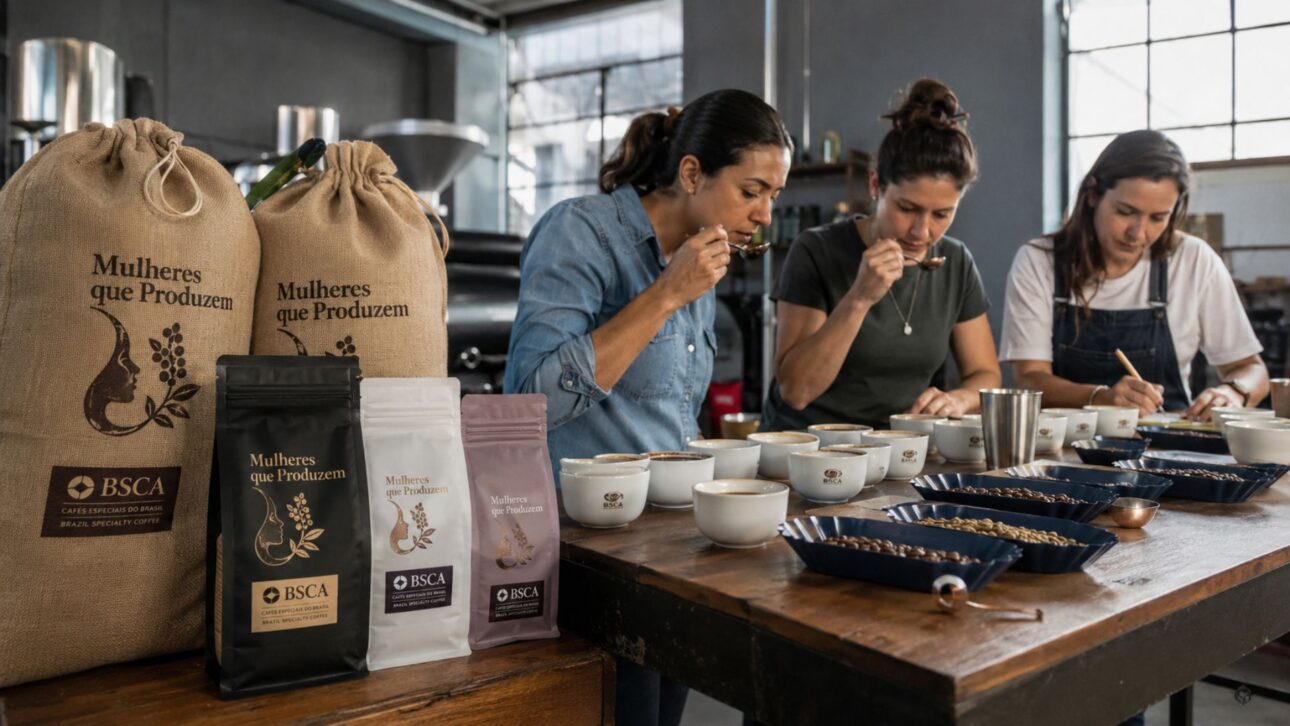
With 2,179 titular members, it is the largest cooperative group of women in coffee on the planet, according to Cocatrel.
-
How Recycling is Becoming a Billion-Dollar Industry and Boosting the Circular Economy in Brazil

-
Brazilian Nurse Invents Award-Winning Chocolate with Homemade Machine, Expands to National Markets

-
Brazil’s Federal Revenue Auction: iPhone 13 for $95, PlayStation 4 for $80, and Volkswagen Jetta for $2,600 Among 232 Lots Available
-
Tech Giant Oracle Lays Off 21,000 Employees and Invests $70 Billion in Artificial Intelligence


These women already represent 23.4% of the approximately 9,300 members of the cooperative, a share that continues to grow.
The group was born in 2019 and matured quickly.
In just a few years, the Cafeína Group spread across five regional centers and reached members in more than 80 cities in the south of Minas, the largest coffee region in Brazil.
It is not a symbolic club, it is a business structure with women at the forefront.
The recent growth confirms the strength of the movement.
In the last period alone, the number of members increased by 12.6%, a sign that more and more female coffee growers want to be a part of and understand the value of their own coffee.
Cafeína has become a reference for female leadership in Brazilian agribusiness.
R$ 111.4 million and a 75% leap
Behind the symbolism, there is real money.
Between 2022 and 2025, the group of women in coffee moved R$ 111.4 million, a volume that places the initiative on the economic map of coffee in Minas Gerais.
It is not a social project that relies on donations, but rather an operation that generates real income for the producers.
The year 2025 was the turning point.
The volume jumped 75% compared to the previous year, going from around R$ 21 million to R$ 37 million in a single year.
It’s the kind of growth that shows that betting on women in coffee is not just beautiful, it’s profitable.
The cooperative’s own store reinforces the movement.
In 2025, it grossed R$ 6.47 million, an increase of 25.1%, totaling R$ 22.1 million since 2022, an important part of the ecosystem that supports the group of women in coffee.
Each of these numbers turns into financial autonomy for those who previously only saw the coffee leave through the door without knowing for how much.
Special coffee that reaches 25 countries
The product that sustains all of this is of export quality.
The coffee growers of Cafeína produce a 100% Arabica special coffee, a blend that carries the Quality in Blend seal from BSCA, the Brazilian Specialty Coffee Association.
In the 2025/26 harvest, this special coffee achieved a score of 83.50 in the BSCA evaluation, a level that opens the doors to the international gourmet market.
Exportation is carried out by a branch of the cooperative itself.
Through CDT, the Cocatrel Direct Trade, the women’s special coffee reaches 25 countries, including Germany, France, United Kingdom, United States, Italy, Spain, Switzerland, Portugal, Jordan, and Russia.
Major buyers, such as the British Pact Coffee, already bring the beans from these producers to European cups.
This global reach changes the scale of what is possible.
When the special coffee from a small producer in southern Minas ends up in a London café with her name on the sack, her relationship with her own crop is transformed.
The international market has become a showcase for the work of these women.
Dona Henriqueta, 103 years old, the ambassador
The most beloved face of the group is over a century old.
The ambassador of Cafeína is Henriqueta Miranda Carvalho Silva, 103 years old, owner of Fazenda Prazeres in Três Pontas, and the group’s godmother since its founding in 2019.
At 103 years old, Dona Henriqueta is the living proof that coffee and the strength of women in the countryside span generations.
She carries the wisdom of someone who has seen the world change.
Lucid and good-humored, Dona Henriqueta drops pearls like “the verb is very important, and so is geography,” and recounts, laughing, that she learned to drive at 40, but “I didn’t like it.”
She is the kind of figure that gives soul to the group and connects today’s coffee growers with the history of those who came before.
Having a centenarian ambassador is not just charming, it’s powerful.
She represents respect for the journey of women in coffee and shows that female leadership in farming is not a passing novelty, but an ancient root that now gains voice and contract.
Tradition and empowerment meet in her figure.
From the yard to the contract: what really changes
The main goal of Cafeína is not to teach anyone how to plant.
“Cafeína was not born to teach women how to plant coffee. They already know. It was born so they would know how much their coffee is worth,” explains Iandra Vilela, a coffee cultivation specialist and coordinator of the women’s coffee group.
The phrase sums up the turning point: the problem was never competence, it was recognition.
The coordinator goes straight to the historical point.
“For generations, women were in the yard, in the picking, in the drying. They were in everything, except the contract,” says Iandra, as also recorded by the Sistema OCB, which highlights the case as a good practice of cooperativism.
Bringing women out of the business invisibility is the heart of the project.
The change appears in the accounts of the producers themselves.
Coffee grower Nilse Lúcia Cardoso, 54 years old, says the group opened her mind: “when you see a group of women whose goal is to support each other, a light goes on,” she said, recalling how she came to understand quality, post-harvest, and the real value of the coffee she produces.
It’s autonomy built through the exchange of knowledge, not through discourse.
Why this matters for Brazilian coffee
The case of Cafeína comes at a symbolic moment.
The UN has declared 2026 as the International Year of the Female Farmer, and few examples translate this agenda as well as a group of women in coffee who earn millions and export to the world.
Brazil is the largest coffee producer on the planet, and having women in charge of the business strengthens the entire chain.
There is a clear economic engine in this story.
Transforming the female coffee grower into the owner of her own specialty coffee adds value to a product that, sold as a commodity, would yield much less, and this difference stays in the hands of the producer.
Award-winning specialty coffee means higher income for the base of the agro pyramid.
And the effect goes beyond the pocket.
When 2,179 women organize, certify the coffee, and export together, they change the face of an entire region and inspire other cooperatives to do the same, from the south of Minas to the rest of Brazil.
Cafeína has become a model of female leadership in agribusiness.
What the Cafeína Group shows
The central lesson is about organization and value.
The Cafeína Group proved that the problem for women in coffee was never knowing how to produce, but rather being recognized and compensated for it, and that cooperation solves both issues.
Combining knowledge, certification, and market access transformed invisible work into a million-dollar business.
Realism is always necessary.
This result is the fruit of seven years of structure, more than 500 training meetings, quality certification, and a dedicated export arm, nothing that can be built overnight.
It is a model that requires a strong cooperative, method, and time, not a trick replicable anywhere without effort.
Even so, the example is illuminating.
From the hands of 2,179 female coffee growers, with a 103-year-old ambassador paving the way, emerged the largest group of women in coffee in the world, earning millions and taking the south of Minas to 25 countries.
It is proof that giving a name and contract to those who have always worked changes everything.
And you, did you know about the strength of women in coffee in Brazil, to the point of knowing that the largest group in the world in the sector was born in the interior of Minas Gerais? Tell us in the comments if you’ve ever had a specialty coffee knowing it might have come from the hands of one of these female coffee growers.


