Portuguese
  Spanish


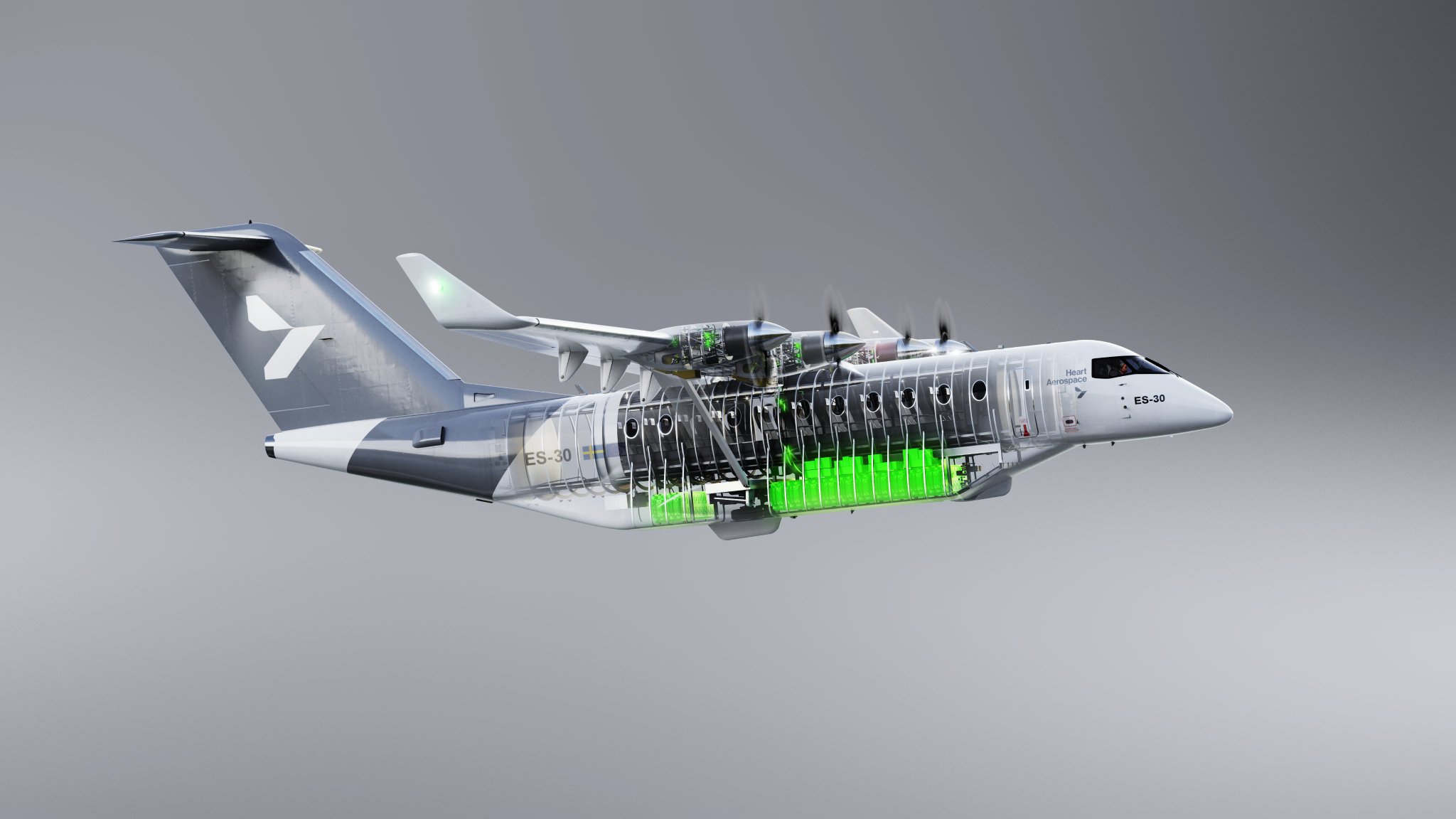

Chinese Company Develops New Semi-Solid Battery Technology With Condensed Electrolyte That Could Bring Electric Aircraft to Market.
As the world gradually moves toward electric cars, it is only a matter of time before electrification reaches the skies, at least for shorter trips. Approaching this milestone with new technology is Contemporary Amperex Technology Co. Limited (CATL), a Chinese battery manufacturer, which announced last Wednesday (19), during the Shanghai Auto Show, the launch of a battery capable of powering electric passenger aircraft.
CATL Aims for Carbon Neutrality by 2035
The semi-solid battery with condensed electrolyte has a density of up to 500 Wh/kg, meaning it has the capacity to store 500 watt-hours of energy for each kg of its weight. The company claims it can achieve mass production of the condensed battery in a short period, with the expectation of starting mass production of a variant focused on automobiles in 2023.
The launch of this new battery technology for electric aircraft breaks the barriers that have long constrained advancements in the battery segment and will open a new scenario for electrification with a focus on high levels of lightness and safety.
-
Spain Launches World’s Largest Floating Dry Dock: 56-Meter Giant Produces Massive Concrete Structures in A Coruña Using Technology Proven in Brazil

-
AI-powered toys that talk, recognize faces, and collect data face scrutiny from Brazilian government over children’s privacy concerns

-
4,000-Year-Old Child’s Skull Unveils Ancient Burial in 7,500-Year-Old Norwegian Rock Shelter, Impressing Archaeologists

-
Norway Defeats Brazil in World Cup but Invests Billions to Preserve the Amazon, Strengthens Amazon Fund, and Joins Brazil in Leading Global Effort Against Tropical Deforestation



CATL is working alongside undisclosed partners to develop electric aircraft. Additionally, the company plans to achieve carbon neutrality in its factories by 2025 and across the entire battery value chain by 2035.
Electric aircraft could help reduce greenhouse gas emissions; however, significant advancements are required for them to become a viable alternative to jet fuel-powered vehicles.
NASA Also Working on New Technology for Electric Aircraft
NASA has been testing electric aircraft over the past 10 years, and other companies are working on hybrid planes, such as Zero Avia’s hydrogen-electric aircraft, which completed a 10-minute flight in January. Rolls-Royce even flew a fully electric plane at 387 MPH in a recent test.
CATL claims it is working with undisclosed partners to create flying vehicles. Currently, CATL is cooperating with undisclosed partners to develop electric passenger aircraft and practicing aerospace-grade standards and tests according to aviation safety and quality requirements.
The company also asserts that it is working to improve the carbon footprint of its batteries and expects to achieve carbon neutrality in its factories by 2025 and across the entire battery value chain by 2035, as previously mentioned. The company plans to focus on mining, battery materials, bulk raw materials, cell manufacturing, and battery systems to achieve this goal.
Benefits of the New Technology
According to the company, as electrification extends from land to sky, aircraft will become smarter and cleaner.
The launch of condensed batteries will usher in an era of universal electrification for maritime, aerial, and ground transportation, opening more possibilities for industry development and advancing the achievement of global carbon neutrality goals at an earlier date. However, it is important to moderate expectations regarding flying EVs.
Any advancement in this direction could help reduce pollutant emissions from the aviation industry, which accounts for approximately 3% of global emissions. However, greater advancements than the new CATL battery will be needed for them to become a viable alternative to currently used jet-fuel aircraft.