





 Portuguese
  English
  Spanish
  2 min of reading


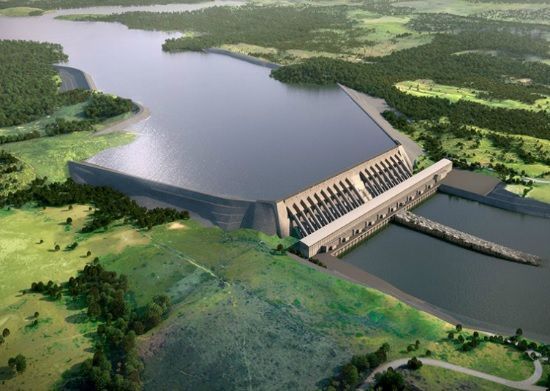
A study conducted by the consulting firm PSR assures that, even with a recovery featuring exponential economic growth after the decline caused by the covid-19 pandemic, Brazil will not need new energy in the system until 2024.
See Also Other News:
- Resume Registration for Many Positions in the Civil and Industrial Construction Sector in RJ and MG by CBSI
- Welder, Borer, Operator and More Called for Job Openings at Skava Minas Mining and Metals
- Offshore Vacancies for Radio Operator, Marine Machinery Mate, Nurse, and Crane Operator on This Day 28
With the studied circumstances, energy consumption will reach an average of 80.5 GW in the last year of the evaluated scenario (2024), compared to the 85.4 GW average that were contracted and a reserve energy of 3.8 GW, resulting in an oversupply of 11% of the capacity.
This oversupply would be the same for the year 2023; however, in other years, the surplus would be even greater, reaching 15% in 2022, 17% in 2021, and 23% in this year, 2020. Given the current scenario, without a rapid economic recovery, PSR estimates that by 2024, consumption will only reach an average of 77.3 GW, leaving the excess supply around 15%.
-
Lula says that the Brazilian naval industry will “thrash” China and Korea, while the government announces billions for barges, pushers, and a new hydro terminal in the Amazon.

-
After nearly three decades and more than 1 million cars produced, Toyota will close the historic Indaiatuba plant on June 30 and concentrate Corolla production in Sorocaba, as part of an R$ 11 billion plan that heavily invests in flex hybrids and even an unprecedented pickup.

-
The number of Brazilian meatpacking plants with suspended meat sales to China rises to five, after the Chinese blocked the JBS unit in Vilhena due to the presence of hormones in the shipments, adding extra pressure on the sector on the eve of the 2026 export quota being exhausted.
-
How much does it cost to live with dignity in Brazil? A study found that in all 79 regions analyzed, the necessary salary was above the minimum of R$ 1,621. In São Paulo, a family of four needs R$ 6,155 per month.



The consultant PSR emphasizes the importance of discussing power procurement, as Brazil has high intermittency in its energy system. This intermittency applies not only to wind and solar generation but also to hydroelectric plants, which suffer from irregular reservoir volumes. An example is the Belo Monte Hydroelectric Plant, where the difference in production from the dry period to the rainy periods reaches 25 times.
For future procurement after the year 2024, PSR advocates that the system must operate with tools that ensure power supply. Furthermore, factors such as the economy and the outcomes of the A-4 and A-5 energy auctions will be significantly influential in reaching this definition.
Bernardo Bezerra, technical director of PSR, also mentions that among the possibilities for power procurement, the best options are those that can be dispatched, such as reversible hydroelectric plants, batteries, and demand response, as they do not add energy to the system but rather change the timing of when energy will be available.







Be the first to react!