






 Portuguese
  Spanish


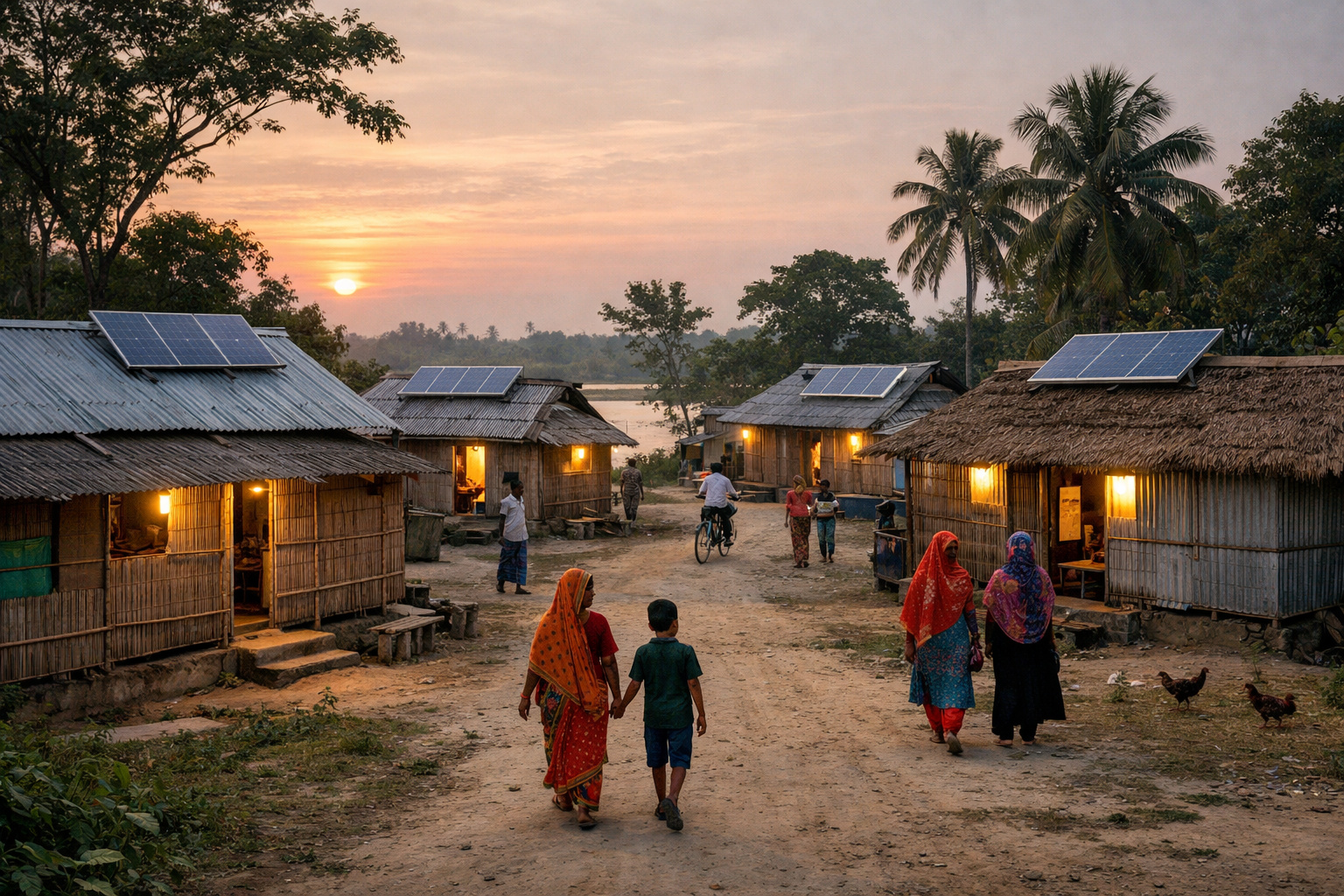


Bangladesh Establishes Itself as a Global Reference by Bringing Clean, Accessible, and Reliable Energy to Millions of People in Rural Areas Historically Excluded from the Traditional Power Grid
Bangladesh has been rapidly and consistently establishing itself as one of the largest global examples of rural electrification based on photovoltaic solar energy. By 2025, the country surpassed the milestone of 6 million home solar systems installed, internationally known as Solar Home Systems (SHS). As a direct consequence, millions of people who previously lived completely off the conventional power grid gained clean, accessible, and reliable energy in their own homes.
Moreover, this progress did not occur in isolation. On the contrary, it is a structured project, supported by public policies, accessible financing, and low-cost technology. In this way, Bangladesh demonstrates that decentralized solar solutions can transform socioeconomic realities in remote and low-income areas, breaking one of the main historical bottlenecks of development: access to electricity.
Current Landscape of Domestic Solar Energy in Bangladesh
The national program for home solar systems began in 2003 and was led by the Infrastructure Development Company Limited, known as IDCOL. Since then, the achievements have placed Bangladesh in a prominent position in the international decentralized renewable energy landscape.
-
James Webb Telescope Uncovers Unexpected Clues on Mysterious Moon, Potentially Redefining Planetary Origins

-
$1.5 Billion Sleipnir Vessel Transforms Ocean into Floating Construction Site with 12 Hybrid Engines and Capacity to Lift 20,000 Tons

-
23 Years After Tragedy, Brazil’s Alcântara Space Center to Launch New Suborbital Rocket in 2026 with South Korean SEBIT Project Targeting Near-Space Tests
-
Entrepreneur Turns Neighbor’s Coffee Grounds Waste into Eco-Friendly Pellets, Earning Up to $40,000 Monthly in Brazil


Currently, consolidated data indicates:
- Over 6 million home solar systems installed in rural areas
- About 20 million people with direct access to electricity
- Estimated annual reduction of 2.5 million tons of CO₂
- Installed capacity of over 220 megawatts (MW)
As a result, the country positions itself as one of the largest success stories in the world for solar-based rural electrification. This model stands out not only for the volume of installations but also for its social scale, positive environmental impact, and financial sustainability of the program over more than two decades.
Technological Expansion and Adoption of Hybrid Solar Systems


In recent years, the government of Bangladesh has begun to advance beyond basic solar systems. Gradually, the focus has shifted to hybrid systems, which combine solar panels with lithium batteries and smarter inverters. This technological evolution has significantly expanded the energy autonomy of the households served.
The new installations now include:
- Solar panels between 50 and 100 watts, replacing the previous models of 20 to 50 W
- Batteries with autonomy between 12 and 24 hours, ensuring continuous supply
- Smart inverters, capable of managing load and optimizing consumption
In this context, solar energy has evolved from providing only basic lighting to supporting refrigeration, communication, small appliances, and productive activities, broadening the socioeconomic impact in rural communities.
“Solar for All 2030” Program and Integration with Community Microgrids
In January 2026, the government officially launched the “Solar for All 2030” program, with even more ambitious goals. Among the primary objectives are:
- Reaching 10 million households served by solar energy by 2030
- Subsidies of up to 40% for low-income families
- Facilitated financing lines, with interest rates between 4% and 6% per year
Concurrently, rural communities have begun to form solar energy cooperatives, allowing for the sharing of surpluses and the creation of community microgrids. These networks already supply small businesses, workshops, and artisanal activities, stimulating local economies and reducing dependence on fossil fuels.
This information was disclosed by specialized media in energy and sustainability, according to technical reports and international articles on rural electrification and decentralized solar energy in Bangladesh, which closely monitor the evolution of the program over the past few years.
In summary, the advancement of domestic solar systems in Bangladesh proves that solar energy is a viable, scalable, and profoundly transformative solution. The case of this Asian country highlights that photovoltaic technology is not a privilege of wealthy nations, but a powerful tool for socioeconomic development, when allied with long-term planning, consistent public policies, and a real commitment to energy inclusion.
Source: Pratyc
If one of the poorest countries in the world managed to electrify rural areas on a large scale with solar energy, Bangladesh, what is preventing Brazil from advancing with similar policies and bringing clean, decentralized energy to millions of families in the Amazon, the semi-arid region, and the interior of the country?


