






 Portuguese
  Spanish


The Chinese project Zhuri, led by Duan Baoyan at Xidian University, aims to capture solar light in space and transmit energy wirelessly via microwaves. In a 75-meter tower, it has already powered several moving targets, but the orbital power plant does not yet exist, and the plan targets 1 megawatt by 2030.
China wants to install a giant power bank in space to harvest solar light continuously, day and night, and has already tested wireless energy transmission on the ground over hundreds of meters to several moving targets. According to CMG, the project is still in the experimental phase, and tests are taking place in a 75-meter steel tower at Xidian University. The idea is to transmit electricity without wires or cables.
According to CMG, the project is called In Search of the Sun, or Zhuri, and is led by Duan Baoyan, a specialist at Xidian University and a member of the Chinese Academy of Engineering. The proposal is to place large arrays of photovoltaic panels in orbit, where they would capture solar light continuously, without atmospheric interference or the day-night cycle. For now, the space power plant does not exist, and the plan envisions a 1-megawatt station by 2030 and a 1-gigawatt station by 2050.
The Zhuri project and the idea of capturing solar light in space
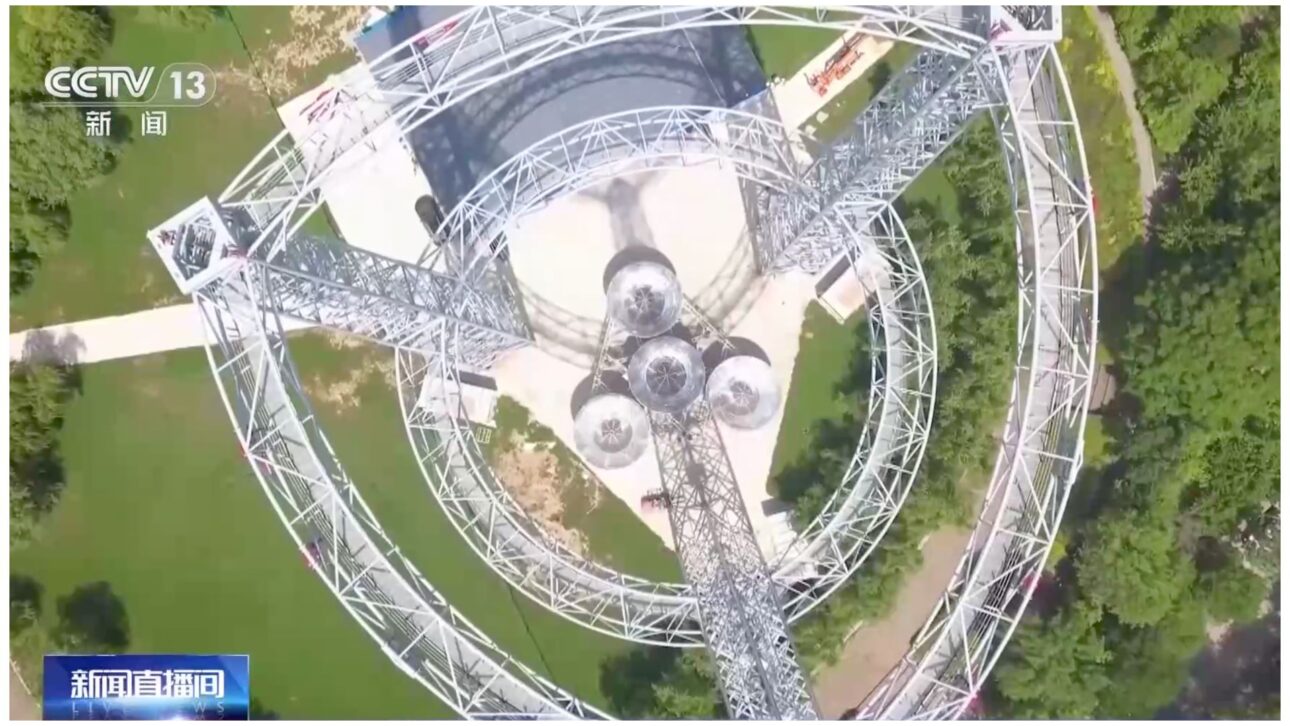
The concept behind Zhuri is old and ambitious. According to information from the CGTN portal released in June, the goal is to build a solar power plant in space and transmit electricity wirelessly to Earth, drones, satellites, or even deep orbit spacecraft. The panels would remain in orbit capturing solar light continuously, free from atmospheric interference and the day-night cycle, like a huge plate floating in space.
-
James Webb Telescope Uncovers Unexpected Clues on Mysterious Moon, Potentially Redefining Planetary Origins

-
$1.5 Billion Sleipnir Vessel Transforms Ocean into Floating Construction Site with 12 Hybrid Engines and Capacity to Lift 20,000 Tons

-
23 Years After Tragedy, Brazil’s Alcântara Space Center to Launch New Suborbital Rocket in 2026 with South Korean SEBIT Project Targeting Near-Space Tests
-
Entrepreneur Turns Neighbor’s Coffee Grounds Waste into Eco-Friendly Pellets, Earning Up to $40,000 Monthly in Brazil


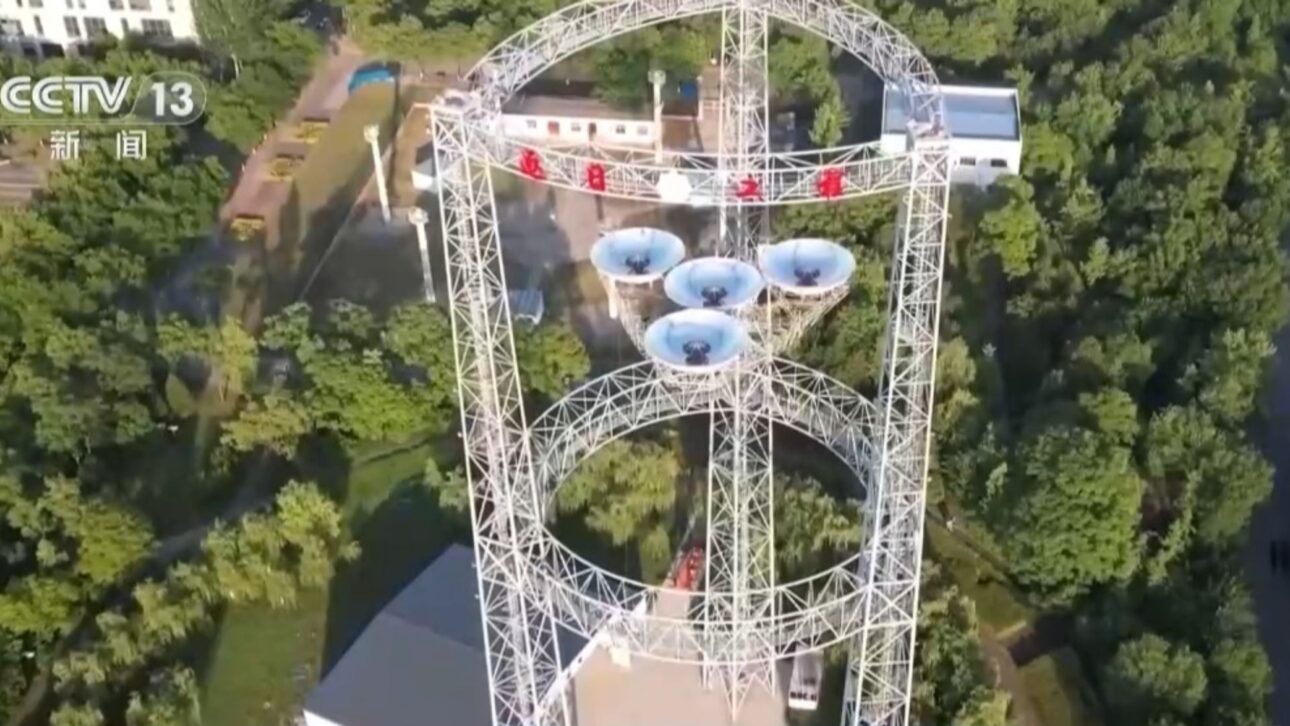
The advantage of space is the amount of energy available. According to Fan Guanheng, associate professor at Xidian University, on Earth the energy flux density is around 200 to 300 watts per square meter, limited by weather and geography, while in geostationary orbit it can reach about 1,360 watts per square meter. He classified the technology as one of the “most promising solutions for our energy challenges.” Still, it is worth remembering that the 75-meter tower is the ground test installation, not a plant already in space.
How Solar Light Energy Would Travel Wirelessly to Earth
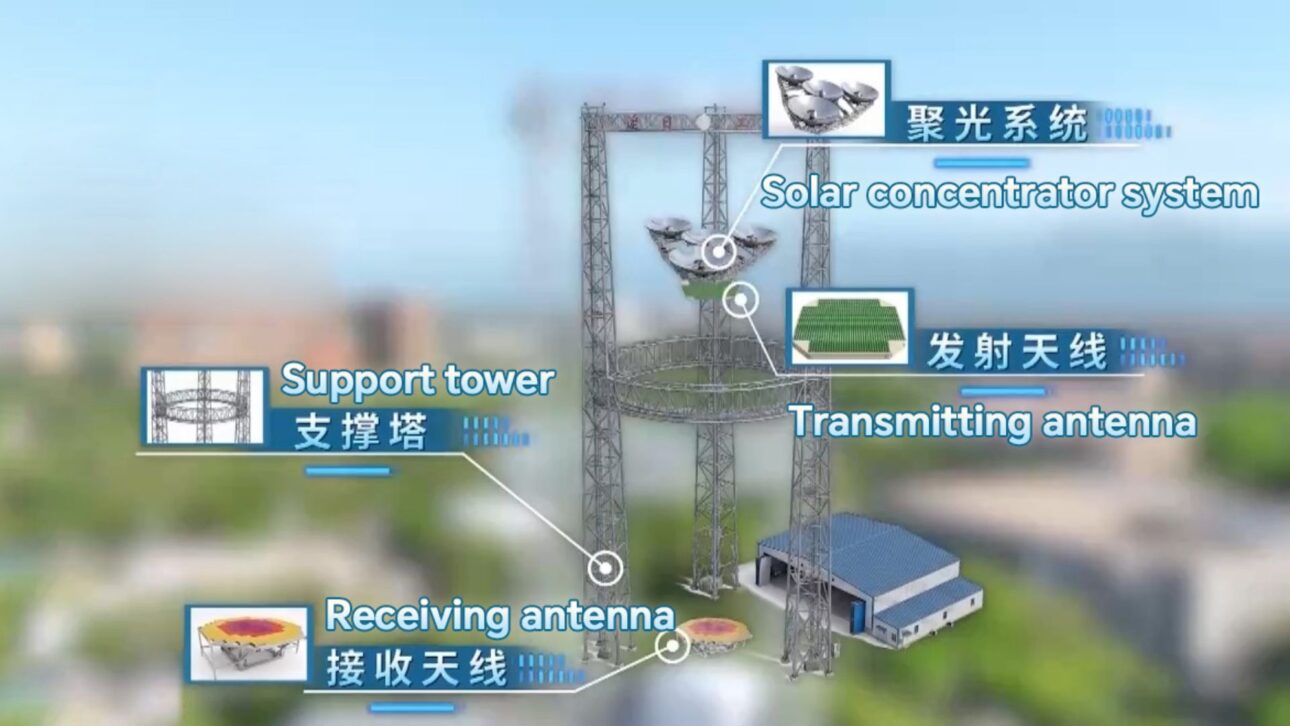
Wireless transmission is done by microwaves. According to CMG, the process has three stages: mirrors concentrate sunlight on photovoltaic panels, which convert it into direct current electricity; this electricity is transformed into microwaves and sent to receiving antennas; finally, the antennas capture the microwave beam and use rectifiers to convert the beam back into direct current for devices.
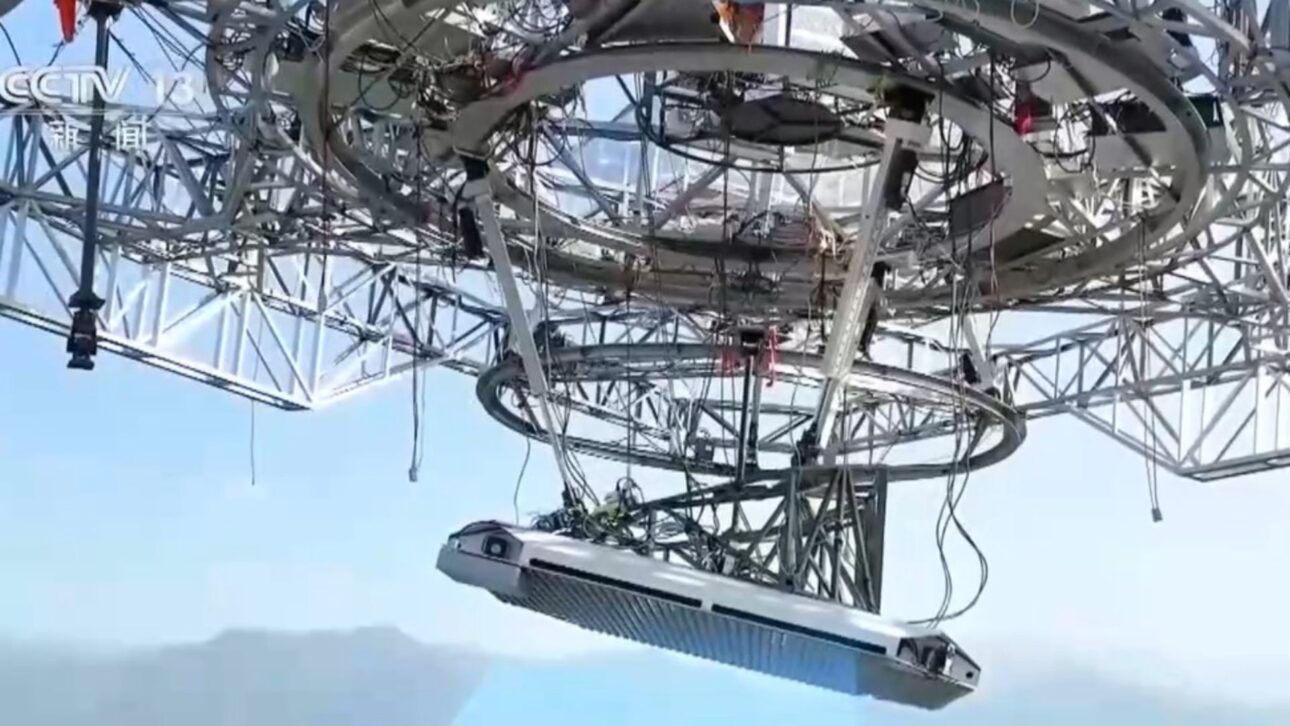
This is the concept the team is validating. According to Qian Sihao, also an associate professor at Xidian University, in the future space solar power plants could transmit energy over distances of tens of thousands of kilometers. For now, however, this transmission from space to Earth is a future goal, and the demonstrations already made are on the ground, hundreds of meters apart.
From Zhuri 1.0 to 2.0 and the Beam that Follows Moving Targets
The great evolution was feeding moving targets. According to CMG, from Zhuri 1.0 to 2.0, the team replaced the transfer to a fixed point with a system that supplies multiple moving targets simultaneously. Previously, the fixed point transfer functioned like an invisible wire connected to a stationary device, and the energy was lost when the target moved, whereas now a single transmitter delivers solar energy to several fast-moving devices.
For this, a high-precision beam control was created. According to CMG, the system operates in a closed circuit: when the receiving antenna sends a guidance signal, the transmitting antenna captures it and, according to Qian, can “calculate the position and orientation of the receiver in real-time,” directing the beam with precision. This demonstration was conducted at the 75-meter tower, at kilowatt levels and hundreds of meters away.
Plans until 2050 and what still needs to be proven
Researchers point out environmental gains and new uses. According to CMG, in Fan’s assessment, a solar power station in space could enable almost uninterrupted energy collection and supply, reduce dependence on fossil fuels, decrease carbon emissions, and enable wireless charging of spacecraft. The next step is an orbital test, and the plan targets a 1-megawatt station by 2030 and 1 gigawatt by 2050.
Even so, it’s necessary to keep our feet on the ground. Space solar energy is an idea studied for decades and never realized on a commercial scale due to high costs, the mass to be launched, assembly in orbit, and the efficiency and safety of energy transmission by beam. The results of Zhuri so far are ground demonstrations, and the orbital plant, transmission to Earth, and the 2030 and 2050 goals still need to be proven. Capturing solar light in space remains, therefore, a promising but unconfirmed bet.
The Zhuri project, led by Duan Baoyan at Xidian University, advances the old dream of capturing solar light in space and wirelessly transmitting this energy via microwaves. On the 75-meter tower, on land, the team has already transmitted energy at kilowatt levels over hundreds of meters and to multiple moving targets, with closed-circuit beam control, which is a real technical milestone. However, the orbital plant, transmission to Earth tens of thousands of kilometers away, and the 1-megawatt by 2030 and 1-gigawatt by 2050 goals are still objectives to be proven.
And you, do you believe that solar energy captured in space will really reach Earth, or do you still bet more on renewable sources on the ground? Share your opinion and exchange ideas with other readers about the future of solar light as an energy source, with respect for different views.


