






 Portuguese
  Spanish
  5 min of reading
  0 comments


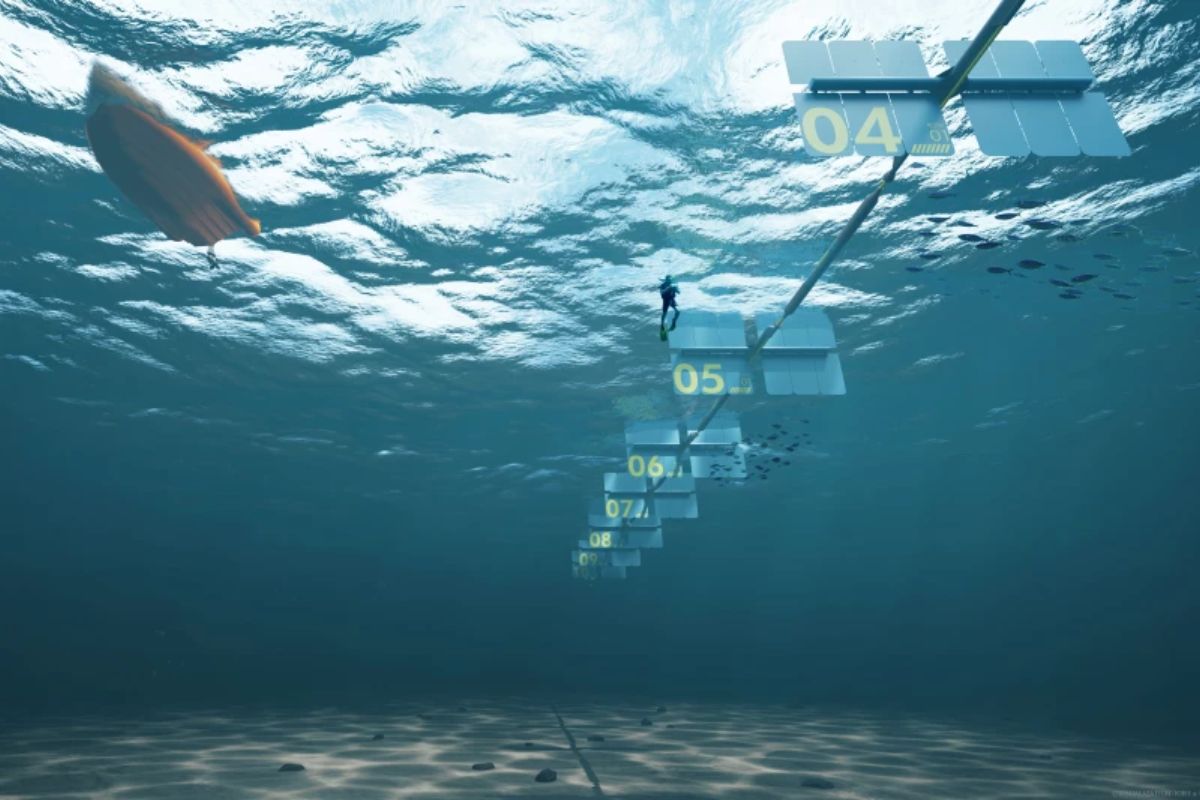
Barbados Closes Partnership with Danish Wavepiston to Test a System That Combines Wave Energy and Desalination in a 50 MW Project Aligned with the Zero Net Emissions Target by 2030.
Barbados wants to turn the sea into a dual source of the future. With a 50 MW project that combines wave energy and desalination, the Caribbean island aims to generate clean electricity and potable water at the same time, reducing dependence on fossil fuels and traditional supply systems. The initiative is led by the agency Export Barbados in partnership with the Danish company Wavepiston, which has been developing its technology for years in real testing environments.
More than a laboratory experiment, the agreement marks the transition from a mature concept to an emblematic field project. The idea is to prove that a modular wave energy system, coupled with reverse osmosis desalination, can be financially viable, robust in open seas, and scalable to other Caribbean islands that also seek water and energy security. If it works in Barbados, the same solution can be replicated in other places on the map.
How Barbados Aims to Transform Waves into Fresh Water and Clean Energy
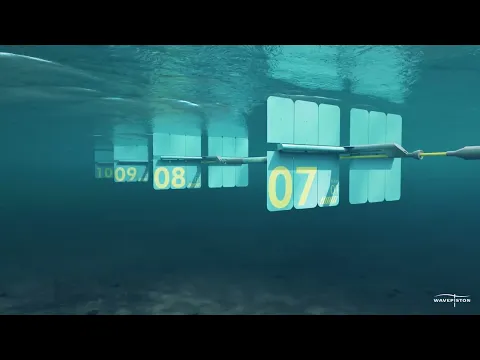
The heart of the Wavepiston technology is simple in form but sophisticated in engineering. A long and flexible cable, about 350 meters long, is anchored in open water and equipped with several energy collectors along its length.
-
Helicopter Drops 180 Tons of Sand and Gravel on Swedish River to Revive Ecosystem Damaged by Decades of Exploitation

-
Brazilian Company Launches Retro Smartphone with 48 MP Camera, T9 Keyboard, and Privacy Features for Social Media-Free Use

-
Self-Taught Chinese Farmer Builds 5-Ton Submarine from Scrap, Launches It in Anhui River
-
Invisible Induction Technology Enables Wireless Power for Blenders, Coffee Makers, and Air Fryers, Reducing Countertop Cables




Each collector carries a small submerged “sail” that moves back and forth as the waves pass.
This movement powers hydraulic pumps integrated into each unit, which pressurize the seawater and send it through pipes to a central conversion station.
This is where the system splits into two strategic paths: part of the pressurized water becomes renewable electricity, and part feeds desalination units to produce potable water.
Unlike some wave energy technologies that generate sharp power spikes, the arrangement of the collectors ensures that each operates slightly out of phase with the others.
In practice, this creates a more stable flow of pressurized water, smoothing out the delivery of energy to turbines and desalination modules, which helps both efficiency and equipment lifespan.
Desalination as a Key Component of Barbados’ Water Security
On an island, energy and water go hand in hand. Barbados has been investing in solar, wind, and batteries to reduce the burning of fossil fuels, but still faces challenges related to the availability of fresh water.
Therefore, desalination integrated with wave energy becomes not just a technical resource but a strategy for water and climate security.
By using the pressure generated by the waves to power reverse osmosis systems, the project reduces the need for large amounts of grid electricity to produce potable water.
Instead of building a traditional desalination plant highly dependent on electricity, Barbados is testing a model in which the renewable source itself provides the necessary hydraulic “force” to push seawater through the filtering membranes.
This arrangement also aligns with the zero net emissions target by 2030. The more desalination relies on clean wave energy, the smaller the carbon footprint of the island’s water systems and the greater the independence from imported fuels.
Why Waves Matter as Much as the Sun and Wind

Barbados is already well aware of the potential of solar energy and tropical winds, but is now aiming at a third piece of the energy puzzle.
Ocean waves carry enormous kinetic energy and, unlike the sun and wind, they do not “sleep” at night nor vary as intensely throughout the day.
For Wavepiston, this is the central point: a wave energy system combined with desalination can operate for many hours in a more constant mode, helping to smooth out fluctuations from other renewable sources and maintain fresh water production at a predictable pace.
The expected result is a more balanced grid, with less reliance on thermal plants acting as “backup” every time the wind calms or the sky clouds over.
The project in Barbados is neither a gigantic wave energy park nor a miniature experiment. It occupies a planned middle ground: large enough to seriously test performance, maintenance, and costs, but still at a commercial demonstration scale.
From this data, the government and the company will be able to decide whether it is worth expanding the system to other points along the coast.
Modular Technology to Grow with Demand
One of the differentiators of the solution is modularity. The cables with collectors can be installed in smaller numbers to serve specific communities, or organized into a larger park, with dozens or hundreds of units feeding the same conversion infrastructure.
This flexibility is important on an island that needs to balance tourism, fishing, navigation, and environmental protection.
Instead of a single rigid structure, the wave energy and desalination system can be expanded or adapted as the demand for clean electricity and potable water increases over the years.
The very mechanical simplicity has been designed to withstand rough seas without collapsing. Lighter components, distributed forces along the cable, and a design that reduces tensile stress help keep installation and maintenance costs under control, which is critical when it comes to operating offshore.
Environmental Impact and the Goal of Becoming a Caribbean Showcase

Any technology installed at sea needs to prove that it does not turn into an environmental problem disguised as a solution. In tests already conducted, the Wavepiston system showed no negative effects on the local ecosystem.
In some places, even an increase in marine life around the structures was recorded, which end up functioning as artificial reefs.
For Barbados, this counts points in the green transition narrative. The country wants to be seen as a living laboratory for renewable solutions, and a project that combines wave energy and desalination without significant negative impacts reinforces the ambition to become a regional center in this technology.
In addition to clean energy and potable water, the initiative aims to generate skilled jobs, strengthen energy resilience, and create opportunities for local technical training.
The partnership with Wavepiston also resonates with the island’s international image, which has already invested in solar, wind, and battery storage at a grid scale.
If the system reaches the 50 MW target and delivers efficient desalination, Barbados could inspire other small island states to adopt similar pathways, reducing climate vulnerability and dependence on imported diesel.
In the end, the message is clear: better harnessing the waves is not just a matter of engineering, but of energy sovereignty, water security, and strategic positioning in a Caribbean that also needs to adapt to climate change.
Do you think projects that combine wave energy and desalination are the future for islands like Barbados, or do you still see more advantages in focusing solely on solar and wind?




Be the first to react!