Portuguese
  Spanish


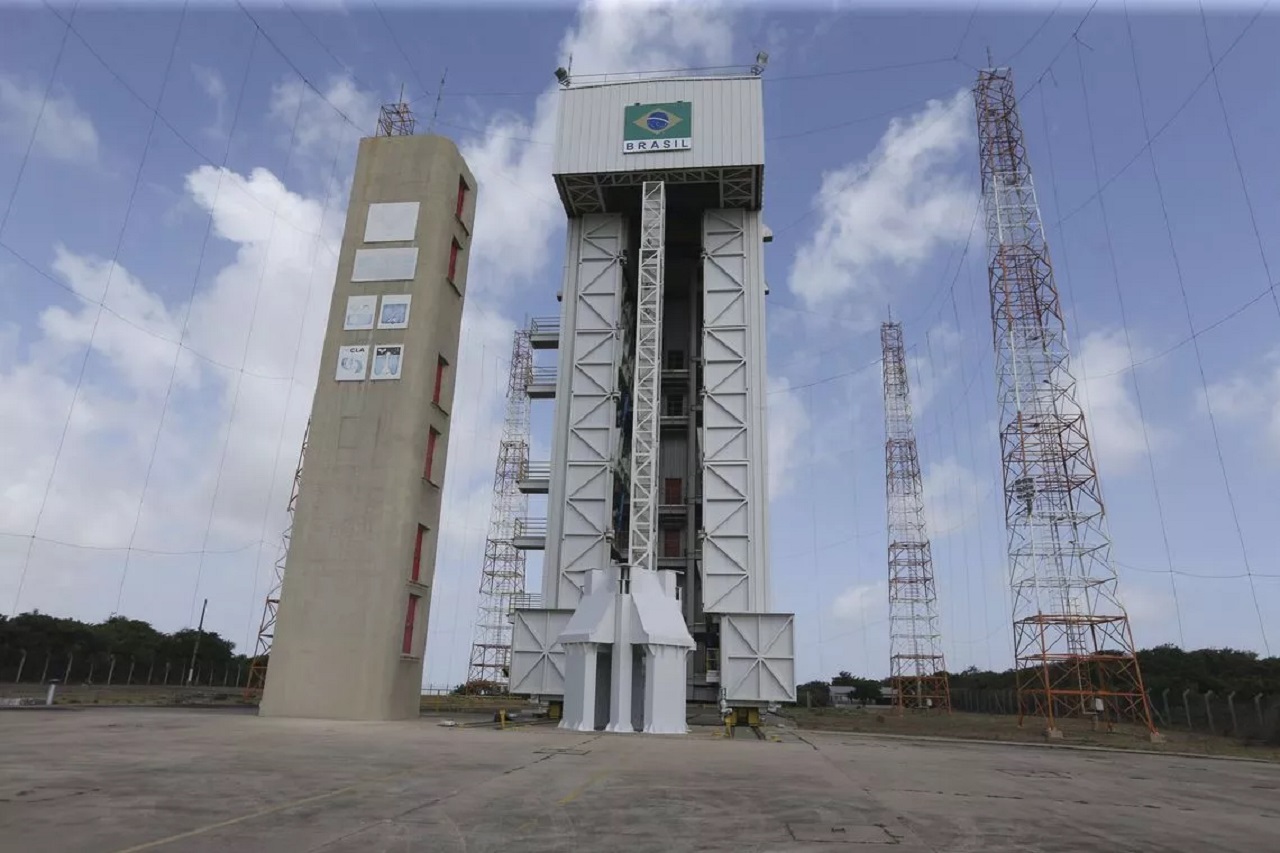

The Alcântara Launch Site Is About to Open a Spaceport in Maranhão with the Promise of Business Expansion and New Technologies.
After more than 20 years of construction at the Alcântara Launch Site in Maranhão, a spaceport, a structure that makes it possible to land and launch crewed or uncrewed vehicles and space modules, is very close to becoming a reality in Brazil. The information was announced by Colonel Carlos Augusto Moura, president of the Brazilian Space Agency (AEB), on Monday (14). According to the president, Brazil has several essential characteristics that allow the spaceport to function.
Read Other Related News
- Chinese “Artificial Sun” Project Focused on Almost Endless Renewable Energy Reaches New Historic Milestone
- WEG Signs Contract with Alcântara Space Center (CEA) for Solar Energy Storage
- Brazil Partners with the USA and Foreign Companies from Various Countries Aim to Operate at the Alcântara Space Center (CEA)
- The Alcântara Space Center Is a Good Launch Site, but Will Companies Really Use It?
- Maranhão Government Announces R$ 500 million in Investments to Increase Cargo Movement at the Itaqui Port
The Alcântara Launch Site Is the Best Location for the Spaceport
The site is located 32 km from São Luís, the capital of Maranhão, and has a privileged location, generating savings on launch fuel. According to the President, the Alcântara Launch Site is one of the best locations in the world for conducting space launches, not only because of its geographical positioning but also due to its logistics.
Both national and international companies are interested in utilizing the benefits of the site, and the expectation is that by the second half of this year, companies will already be operating at the Alcântara spaceport in Maranhão. Brazil, in addition to having excellent logistics, has also become a manufacturer of communication and monitoring satellites, such as the Amazonia-1, launched at the start of last year.
-
28-meter, 156-ton titans traveled 20,000 km from China to the port of Santa Catarina: Portonave received 7 fully electric megacranes, part of a R$ 210 million package, to double container handling.

-
They exchanged the idea of a large house for a 35 m² warehouse, spent US$ 12,000 on the structure, and created a tiny house in Colorado with space to live and work.

-
A newly opened terminal in the middle of the Amazon has begun transporting soy and corn through Amapá, eyeing the queue of ships that is congesting the ports in the South.

-
Goodbye to old tiles: renovation technique without construction transforms bathrooms in a few hours, eliminates debris, and reduces costs with coverings using special paints, high-resistance adhesives, and modern finishes that completely renew the space.


The president also highlights that the beginning of operations at the spaceport in the Alcântara Launch Site will bring opportunities and development for the local communities that will benefit from the creation of new necessities. Moura states that every enterprise has the power to radiate benefits locally in both logistics and workforce training. The structure at the Alcântara Launch Site will be the radiating point of the new technology hub both in the region and in the capital of Maranhão.
Why Does Alcântara Have a Strategic Position?
The Alcântara Launch Site in Maranhão is one of the most strategic and privileged in the world due to its financial aspect since launching something into space from the site means savings of up to 30% in fuel. The explanation for this is quite simple: the planet’s rotational speed is higher in areas close to the equator compared to the rest of the Earth, which can be utilized as extra thrust for the rocket or satellite being launched.
Countries Plan to Take the First Woman to the Moon
To mark the 55th anniversary of the first moon mission, the Artemis project has been developed with the goal of taking the first woman to the moon by 2024. According to the president of the AEB, Brazil will have a strategic position in this initiative given that it is a partner of the United States and other countries.
Through the project, Brazil will be able to support scientists, universities, and create new opportunities for Brazilian companies that will operate in the sector, considering that there will be a consistent demand for space traffic after fixed bases are established on the moon.
According to Moura, people will need to build, manage waste, live, eat, among other basic activities. In line with this, Brazil is a major power in food, clean energy, and other resources. The expectation is that there are specific niches that Brazil can focus on, including mining. The Artemis project will open a new chapter in Brazil’s space history.