Portuguese
  Spanish


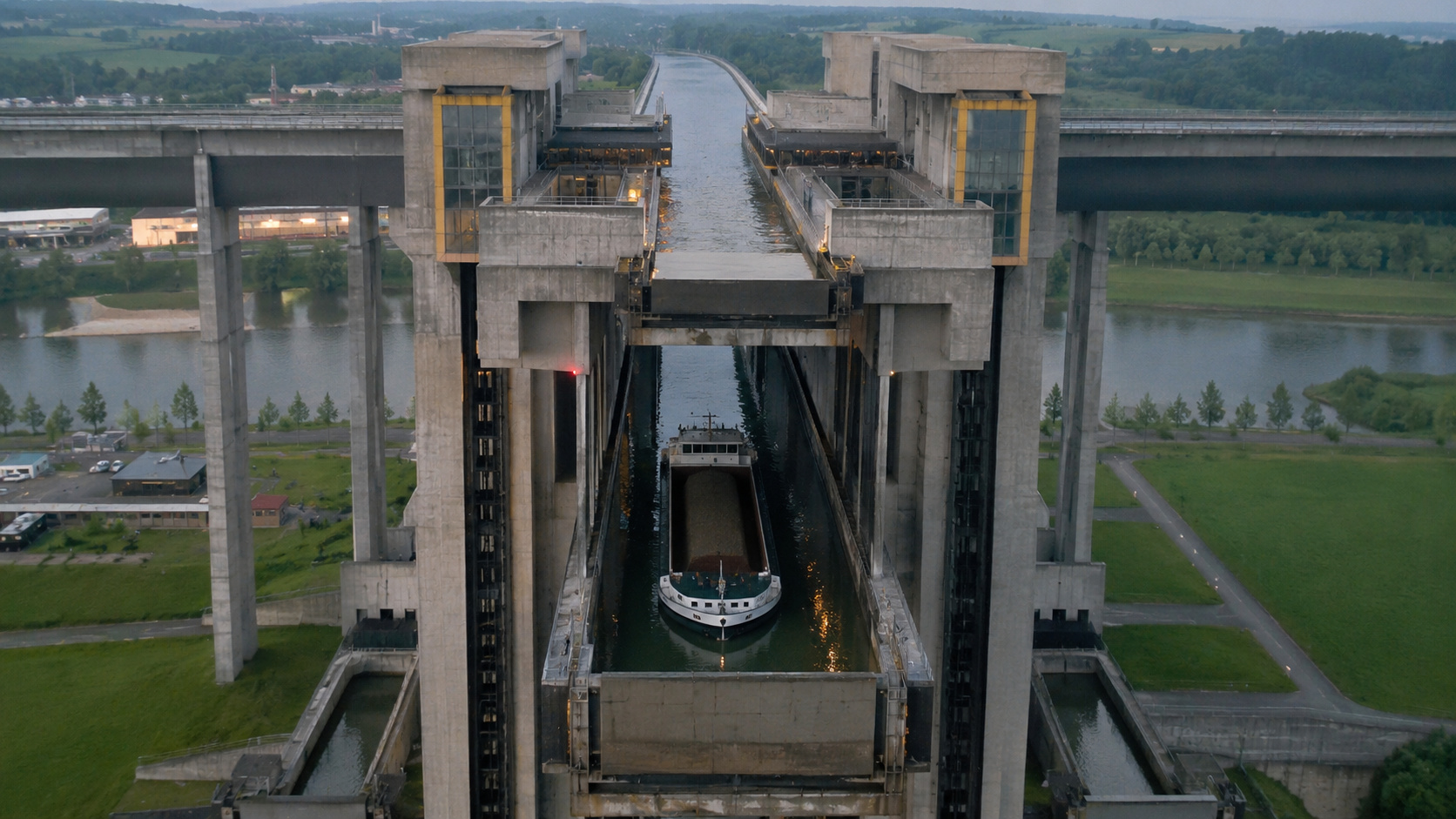

The ship lift in Belgium transports vessels inside huge tanks filled with water to overcome a height difference of 73.15 meters, modernizing navigation on the Canal du Centre and allowing the passage of much larger loads with more efficiency.
How can a ship rise the equivalent of a building over 20 stories high without leaving the water? The answer lies in one of Europe’s most impressive engineering works. The Strépy Thieu ship lift in Belgium was designed to transport large vessels without them having to face a series of locks.
The information was published by SOFICO, the public company responsible for road and waterway infrastructure in Wallonia. The structure is 110 meters high and allows vessels of up to 1,350 tons to overcome a height difference of 73.15 meters, making transport through the Canal du Centre much faster and more efficient.
How an elevator can make a ship rise without taking it out of the water
The operation seems to defy logic, but it happens simply. The vessels enter one of the two large water-filled caissons, which function as huge tanks capable of rising or descending while keeping the ship always floating.
-
Petrobras Secures $2.2 Billion Contract to Build and Operate Four Support Vessels for Brazil’s Offshore Oil Fields

-
While many ports want to grow, Barcelona has decided to do the opposite and will cut cruise terminals from 7 to 5 after pressure from residents, protests, and crowds.

-
The United States wants to tighten control over submarine cables that carry 99% of international internet, silently cross oceans, total more than 400 routes worldwide, and have become a strategic piece in the competition for data, technology, and suppliers.
-
European Union looks again at Brazilian seafood after a nearly 8-year ban and may unlock a coveted market for lobster, tuna, tilapia, and shrimp.


Each caisson is moved by a set consisting of steel cables, counterweights, and four electric motors. The system takes advantage of the physical principle that a ship displaces a volume of water equivalent to its weight. Therefore, the set remains practically balanced throughout the operation, reducing the energy needed to perform the movement.
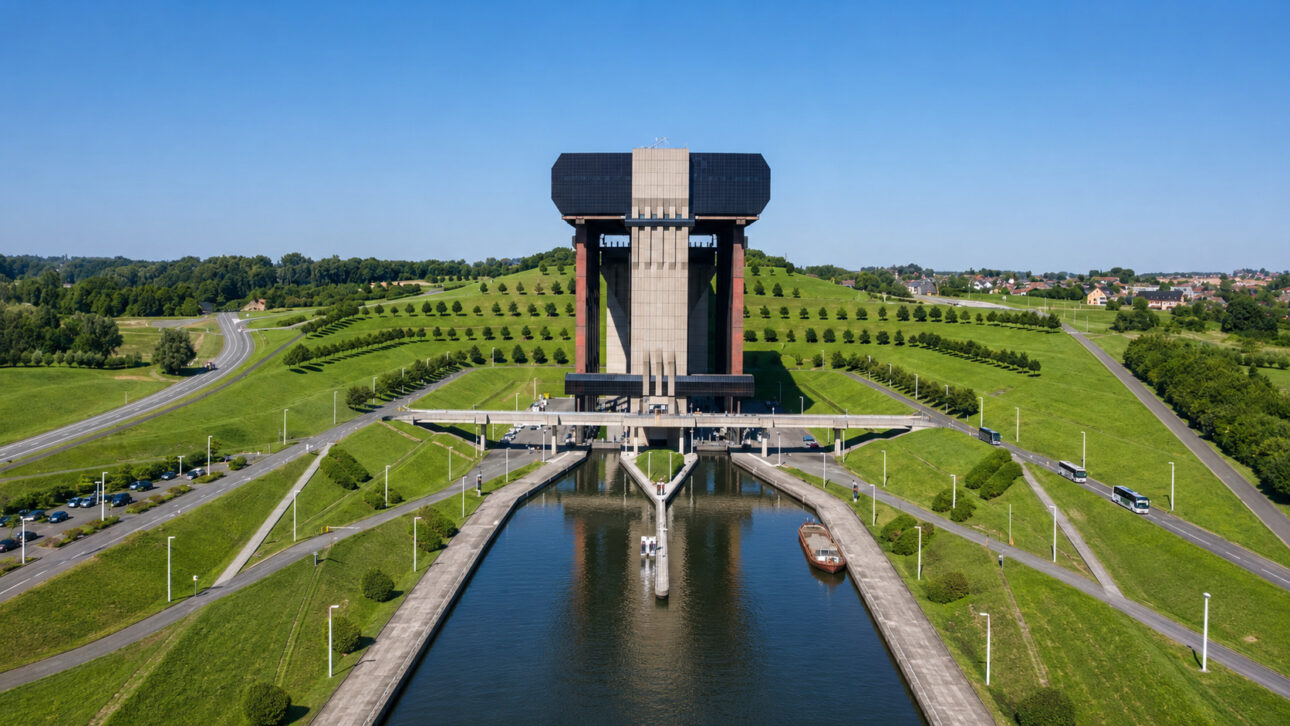
The caissons are about 112 meters long and 12 meters wide, enough space to accommodate large vessels without removing any of them from the water.
Why Belgium Needed to Build This Ship Lift
The Canal du Centre was served by four old hydraulic lifts and two locks. With the increase in the size of vessels used for cargo transport, this system no longer met the needs of modern navigation.
The new ship lift was developed to allow the passage of vessels with a capacity of 1,350 tons, while the previous infrastructure was suitable for boats of approximately 300 tons.
SOFICO, the public company responsible for road and waterway infrastructure in Wallonia, reports that the project was inaugurated in 2002, after about 20 years of construction, representing one of the largest infrastructure investments for inland navigation in the region.
A Single Vessel Can Transport the Load of About 90 Trucks
The modernization of the canal brought impacts beyond engineering. A vessel with a capacity of 1,350 tons can transport a cargo volume equivalent to about 90 trucks.
This feature helps reduce the flow of heavy vehicles on highways, improves the efficiency of goods transport, and strengthens the use of waterways as an alternative for large loads.
A Gigantic Structure That Impresses Even Those Who Have Never Seen a Navigation Canal
The size of the construction draws attention. The lift is 135 meters long, 75 meters wide, and 110 meters high, making it one of the largest structures ever built to move vessels.
The ascent or descent of the caissons takes approximately 7 minutes. Throughout the process, the ship remains floating inside the tank, with no need for cranes or any other equipment to remove it from the water.
Engineering Transformed a Major Obstacle into a Simple Route
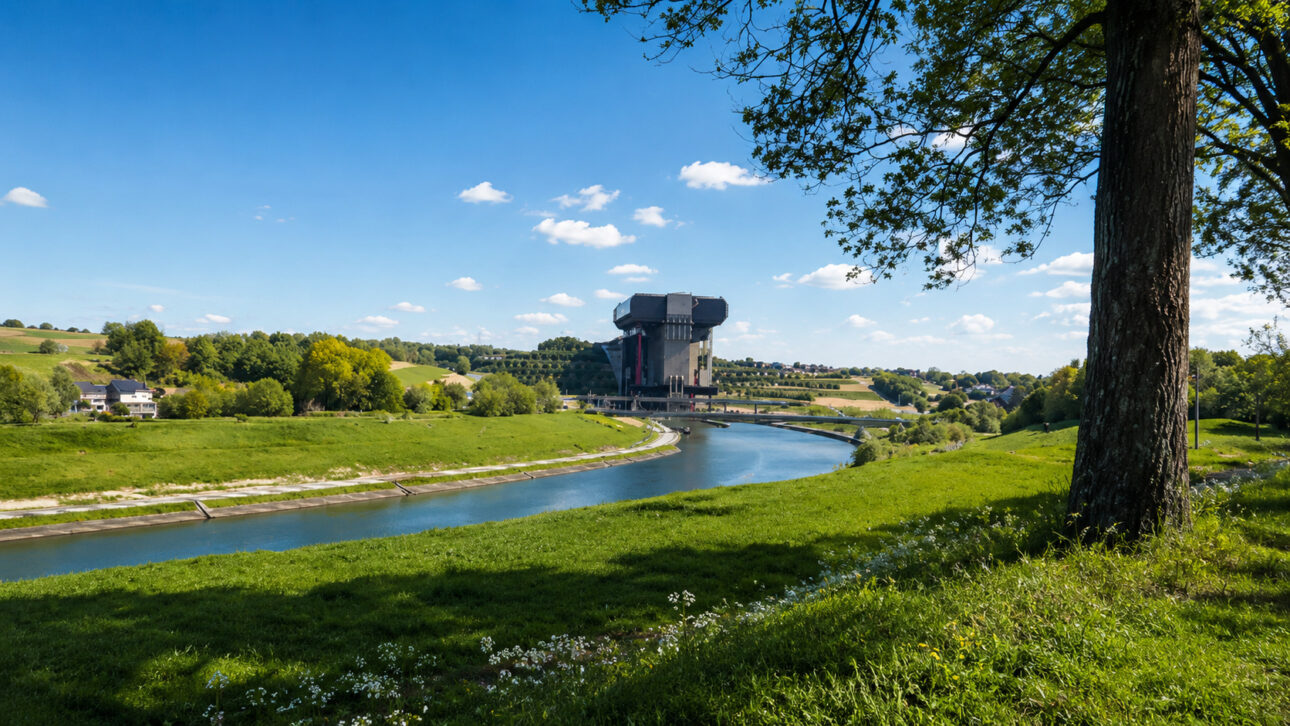
The Belgium ship lift demonstrates how engineering solutions can transform a natural obstacle into a much faster route for cargo transportation. Instead of facing multiple stages along the canal, vessels overcome 73.15 meters of elevation in a single operation.
The structure remains one of the largest examples of engineering applied to navigation, combining 110 meters in height, a capacity for 1,350 tons, and a system that keeps ships always within the water throughout the crossing.
Would you have the courage to board a ship that rises the equivalent of a building over 20 stories high inside a huge water tank, or would this experience seem too risky? Share your opinion in the comments.