






 Portuguese
  Spanish


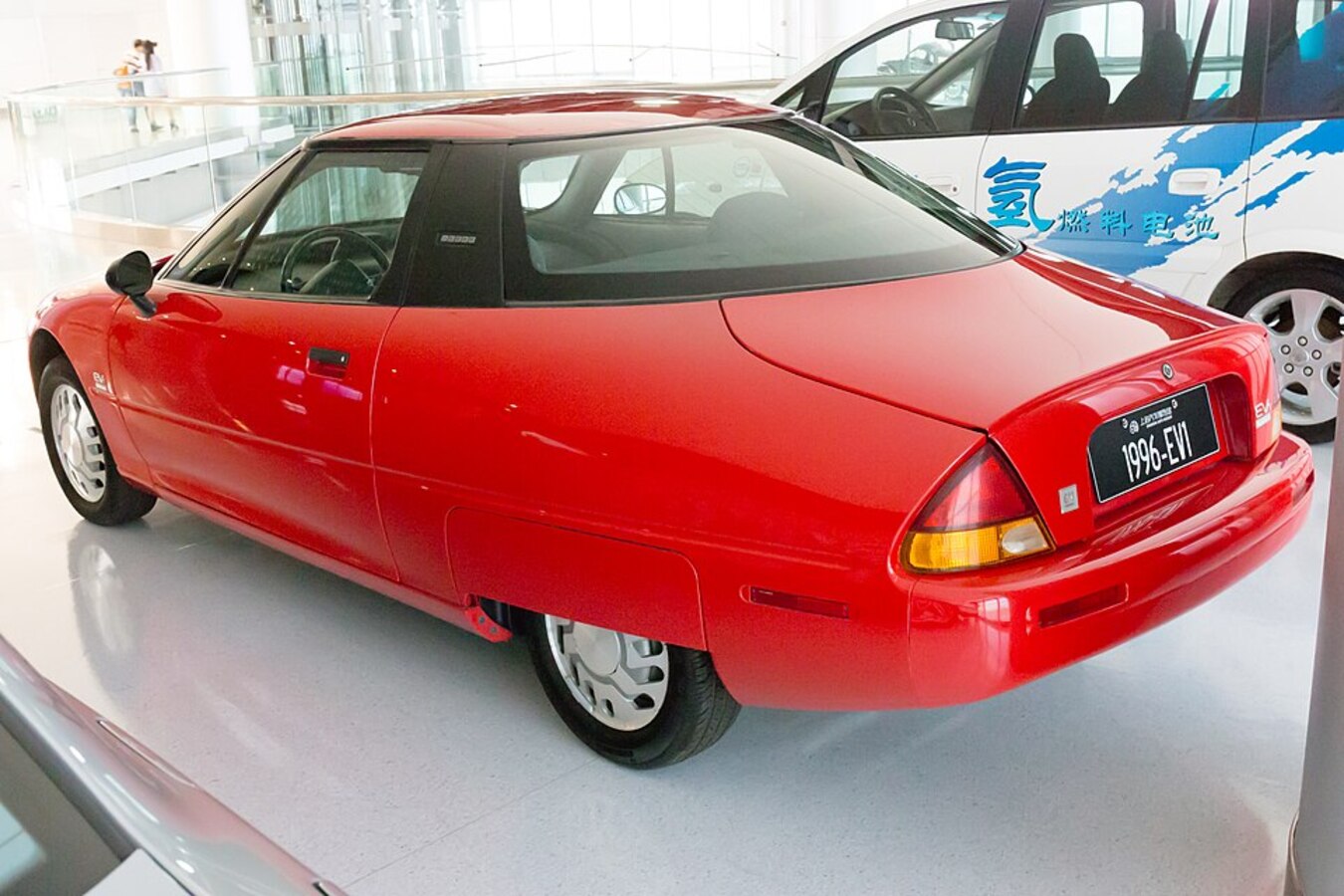


Before Tesla Dominated The Electric Market, General Motors Launched The EV1, A Revolutionary Car That Brought Technical Solutions Still Relevant
Today, Tesla is considered a global reference in electric cars and autonomous driving technology. The brand transformed the market and became synonymous with innovation. The most important thing, however, is to remember that there was another revolutionary car before it.
26 years ago, General Motors launched a vehicle that anticipated trends and brought technical solutions still present in current models. This vehicle was the EV1, produced between 1996 and 1999, in the United States.
The Birth Of An Idea
The GM EV1 emerged from a demand in California in the early 90s. The law required automakers to put zero-emission vehicles on the market.
-
British Factory Transitions from Mechanical Parts to Producing 420,000 Electric Power Units Annually, Supplying 70% of Ford’s Electric Cars Sold in Europe

-
Toyota Shifts from Hybrid Cars to Electric Air Taxis with Joby’s 6-Rotor Aircraft, Capable of 322 km/h, Aiming for Mass Production to Electrify Urban Skies

-
Ferrari Unveils Limited Edition 12Cilindri Manuale: 6.5-Liter V12, 830 HP, 0-100 km/h in 2.9 Seconds, Top Speed Over 340 km/h, Only 1,499 Units Available

-
Discover the 2021 Fiat Cronos 1.3: Affordable Maintenance, Reliable Mechanics, and Fuel Efficiency of Up to 15.6 km/l


General Motors’ response was the first fully electric car developed on a large scale by a major manufacturer.
Other groups also created models, but none had as much impact on the imagination as the EV1.
With an aerodynamic design and futuristic lines, the car looked like it had come out of a cartoon like “The Jetsons.”
The first version was equipped with lead-acid batteries, which offered about 100 kilometers of range. It was little for daily use, but already indicated the path to a new era.
In the following years, the batteries were replaced with nickel-metal hydride, raising the range to approximately 260 kilometers.
Technologies Ahead Of Their Time
The EV1 was not just an odd car. It debuted systems that are still present in modern models today.
Among them were low rolling resistance tires, keyless ignition, regenerative braking, and electro-hydraulic steering assistance.
It also featured cable-less acceleration and braking and electric charging through induction. Therefore, it is not an exaggeration to say that much of what is seen today in a Tesla was already present back in the mid-90s.
The impact goes further. AC Propulsion, founded by two engineers who participated in the Impact prototype, the basis for the EV1, developed the powertrain technology that would be used by Tesla in its first car, the Roadster.
Martin Eberhard and Marc Tarpenning, founders of Tesla, licensed this solution to start the trajectory of the California brand.
The Early End
Despite the innovation, the life of the EV1 was short. In 1999, GM halted production and in 2003 decided to permanently end the program.
The company argued that the car was not profitable because the volume was small. Additionally, the cost of maintaining replacement parts in after-sales service was high. Thus, it opted to recall the fleet and destroy it.
It is worth noting that the EV1 was never sold. It was leased to customers. This allowed the manufacturer to call all users back and reclaim the vehicles. Almost all were crushed and sold as scrap, to the sadness of its fans.
The Few Survivors
Of the more than 1,100 cars produced, only about 40 escaped destruction. Some ended up in museums, while others in private collections.
One specimen is reportedly still with director Francis Ford Coppola. Another, in what is considered exceptional condition, is part of the collection at the Smithsonian National Museum of American History in Washington.
The GM EV1 may have disappeared from the streets, but it left its mark. It showed that electrification was possible and paved the way for companies like Tesla to reach where they are today.
With information from UOL.


