






 Portuguese
  Spanish


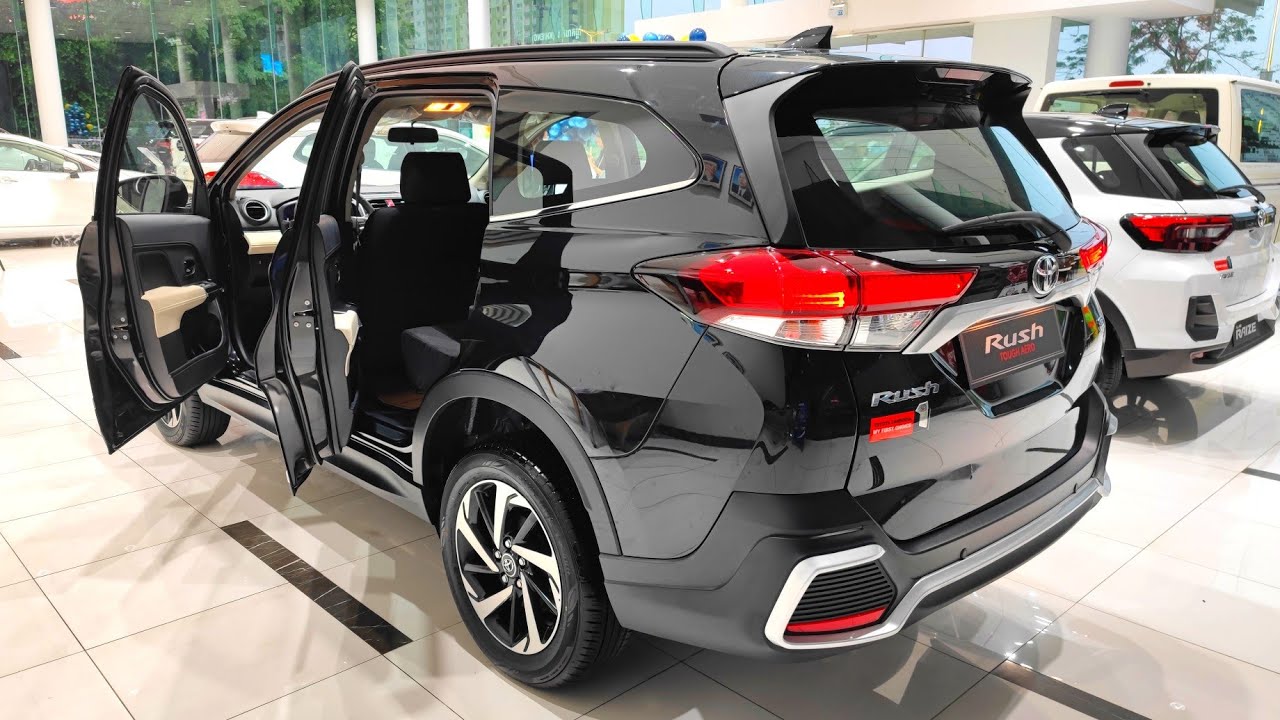

Toyota Rush is sold in Indonesia with 7 seats, 1.5 engine of 103 hp, manual or automatic transmission and initial price close to R$ 81 thousand.
In June 2026, the Toyota Rush continued to be sold in Indonesia as one of the most curious family SUVs in Toyota’s global lineup. The model starts at 289.4 million Indonesian rupiahs in the 1.5 G manual version, a value that is close to R$ 81 thousand in approximate direct conversion, without Brazilian taxes, freight, homologation, or import margin.
What draws attention is the combination: seven seats, 1.5 gasoline engine, rear-wheel drive, manual or automatic option, and compact body of 4.43 meters. In Brazil, 7-seater vehicles usually appear in much higher price ranges, especially when they carry an SUV badge.
Toyota Rush occupies an almost non-existent niche in Brazil: compact SUV with three rows and affordable family proposal
The Rush is sold in Indonesia in four main versions: 1.5 G M/T, 1.5 G A/T, 1.5 S M/T GR Sport, and 1.5 S A/T GR Sport. The official table from Auto2000, Toyota’s network in Indonesia, lists prices from Rp289.4 million to Rp315.6 million for April 2026, with values already on the road for Jabodetabek.
-
Practical Driving Tests in Brazil Surge by 23.5%, Exceeding 2.2 Million by 2026, as New Rules Make the Process Cheaper and Simpler

-
Brazil’s Lula Government Allocates $463 Million Quota for Electric Car Parts, Waives Import Tax Until December, Sparking Competition Among BYD, Automakers, and Unions as Consumers Question Impact on Prices and Local Industry

-
Thinking of Installing LED Headlights? Why Replacing Halogen Bulbs is Still Banned, the Glare Risks Authorities Worry About, and How a New Proposal Could Allow Certified, Safe Installations
-
2027 Toyota Corolla Cross Unveiled: New Design, Enhanced Fuel Efficiency, Reduced Maintenance Costs, Advanced Technology, Connected Services, and Up to 10-Year Warranty


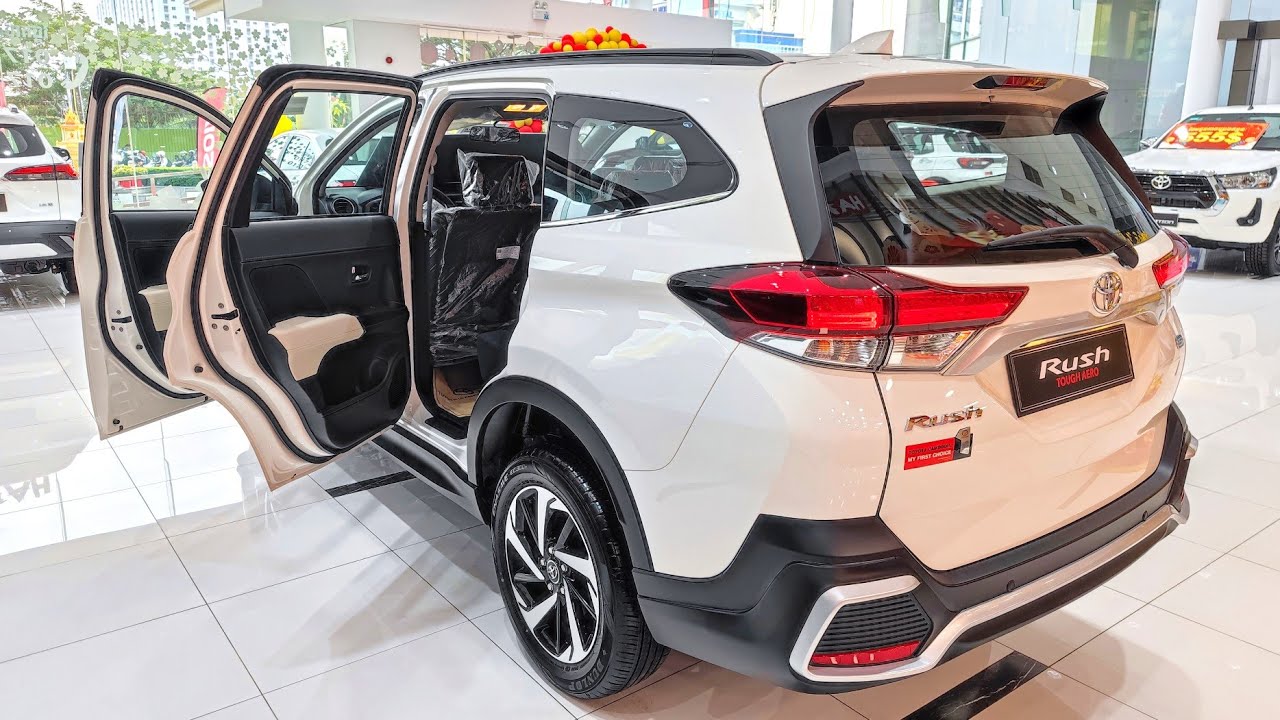
The commercial platform of the model is clear: to deliver a seven-seater family car without reaching the size of larger SUVs. The Rush measures 4,435 mm in length, 1,695 mm in width, 1,705 mm in height, and 2,685 mm in wheelbase, according to market data from Oto Indonesia.
This means it is smaller than many medium SUVs but still offers three rows of seats. The result is a common product in Southeast Asia, but rare in Brazil: a compact, simple, and relatively affordable family car.
1.5 engine of 103 hp and 136 Nm shows that the Rush bets more on robustness than on performance
The Toyota Rush does not try to be a powerful SUV. It uses a 1.5-liter, 4-cylinder, 16-valve, DOHC engine, with 1,496 cm³, capable of delivering 103 hp at 6,000 rpm and 136 Nm of torque at 4,200 rpm.
The transmission can be 5-speed manual or 4-speed automatic, depending on the version. The setup is simpler than the turbo, CVT, or hybrid systems used in more recent SUVs, but it matches the proposal of low cost and predictable maintenance.


Another important detail is the rear-wheel drive, an uncommon architecture in many modern compact SUVs, but retained in the Rush to cater to markets where robustness and family use on varied roads weigh more than sophistication.
Converted price near R$ 81,000 explains why the model draws so much attention in Brazil
The entry-level version of the Rush costs Rp289.4 million in Indonesia. In an approximate direct conversion for June 2026, this is close to R$ 81,000. This calculation is just a currency equivalence and does not represent the price the car would have if it were officially sold in Brazil.
The entry-level automatic version appears for Rp300.4 million, while the top-of-the-line 1.5 S A/T GR Sport reaches Rp315.6 million. Even the top of the range would be below R$ 90,000 in the approximate direct conversion, before Brazilian taxes and costs.
Technical specifications of the Toyota Rush in Indonesia
| Specification | Toyota Rush 1.5 |
|---|---|
| Market consulted | Indonesia |
| Versions | G M/T, G A/T, S M/T GR Sport, S A/T GR Sport |
| Seats | 7 |
| Engine | 1.5 gasoline, 4 cylinders, 16 valves, DOHC |
| Displacement | 1,496 cm³ |
| Power | 103 hp at 6,000 rpm |
| Torque | 136 Nm at 4,200 rpm |
| Transmission | 5-speed manual or 4-speed automatic |
| Drive | Rear-wheel |
| Length | 4,435 mm |
| Width | 1,695 mm |
| Height | 1,705 mm |
| Wheelbase | 2,685 mm |
| Wheels | 17 inches in GR Sport versions |
| Tires | 215/60 R17 |
| Starting price in Indonesia | Rp289.4 million |
| Approximate direct conversion | About R$ 81,000, without Brazilian taxes |
Toyota also sells the Rush in the Philippines, but with a more streamlined offer
Besides Indonesia, the Rush appears in other Asian markets. In the Philippines, Toyota offers the model in the 1.5 G GR-S A/T version, priced at PHP 1,208,000.
The local official specifications state a 4-cylinder, 16-valve, DOHC, Dual VVT-i engine, 4-speed automatic transmission, front McPherson suspension, and rear suspension with 5 links.
This detail shows that the Rush is not an isolated product of a single country. It is part of Toyota’s regional strategy in Southeast Asia, where compact seven-seater family cars remain relevant.
In Brazil, this category has practically disappeared or been pushed to more expensive ranges, mainly with the rise of SUVs.
What makes the Rush so different for the Brazilian consumer
The Toyota Rush is not a luxury car, does not have a modern turbo engine, and does not try to compete with premium SUVs.

The body of 4.43 meters brings the model closer to compact SUVs, but the cabin with seven seats places it in a role that, in Brazil, usually requires larger and more expensive vehicles.
For families, ride-share drivers, small businesses, and consumers who need to transport more people, this type of product would have evident appeal.
The problem is that the Brazilian equation of taxes, industrial scale, legislation, brand strategy, and commercial margin makes it difficult to imagine a seven-seater SUV in this price range.
A simple SUV that reveals a stark difference between markets
The Rush shows how the global automotive market can be very different from the Brazilian one. In Indonesia, Toyota sells a seven-seater SUV with a 1.5 engine, manual or automatic transmission, and an entry price converted to around R$ 81,000. In Brazil, the same family need usually pushes the buyer towards much more expensive models.
It is not the most technological, powerful, or sophisticated Toyota sold outside the country. But perhaps it is precisely for this reason that it attracts so much attention: while the Brazilian consumer sees family cars rise in price, other markets still receive simple, compact solutions designed to carry more people without turning the family budget into a heavy financing.


