Portuguese
  Spanish


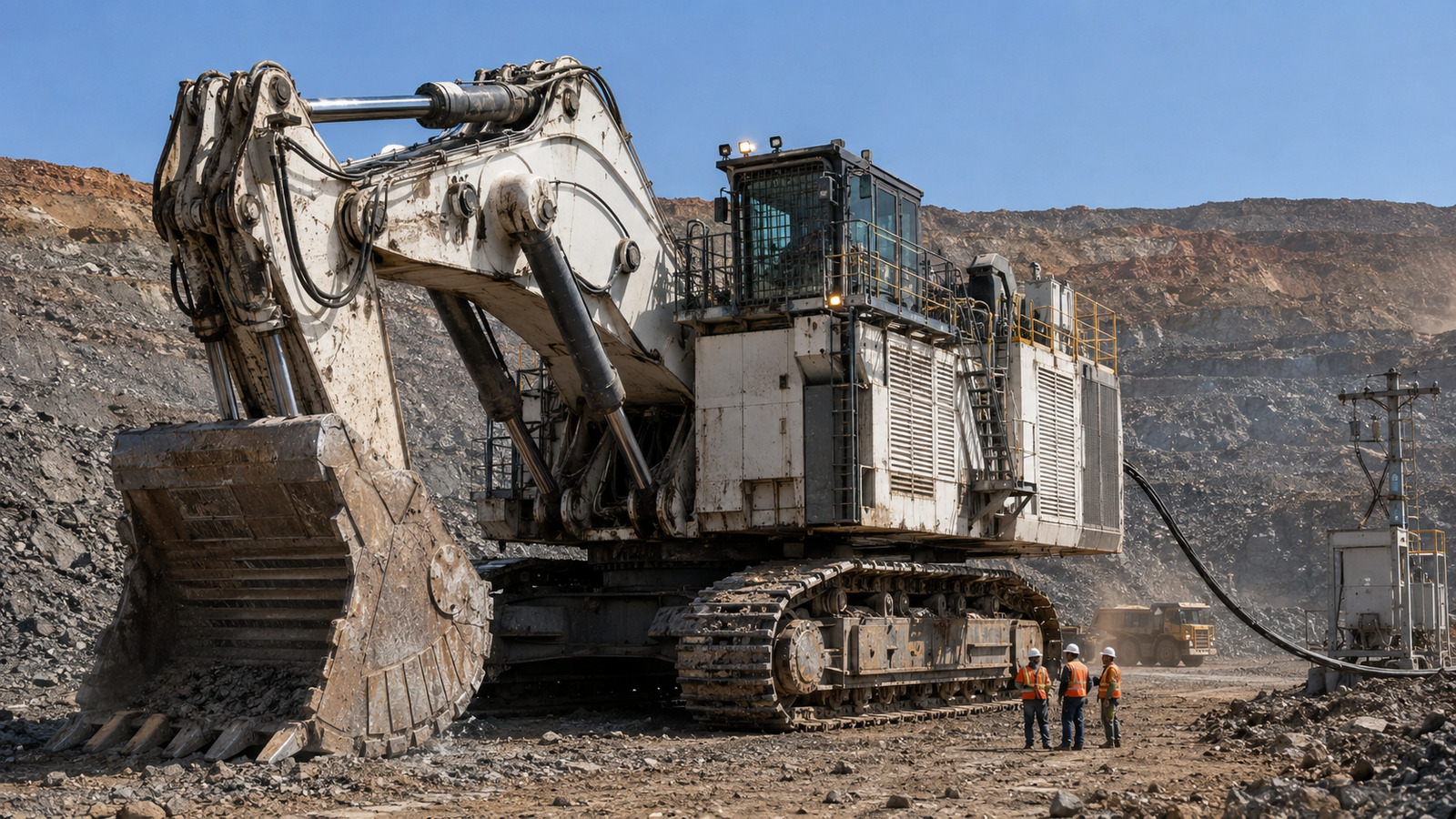

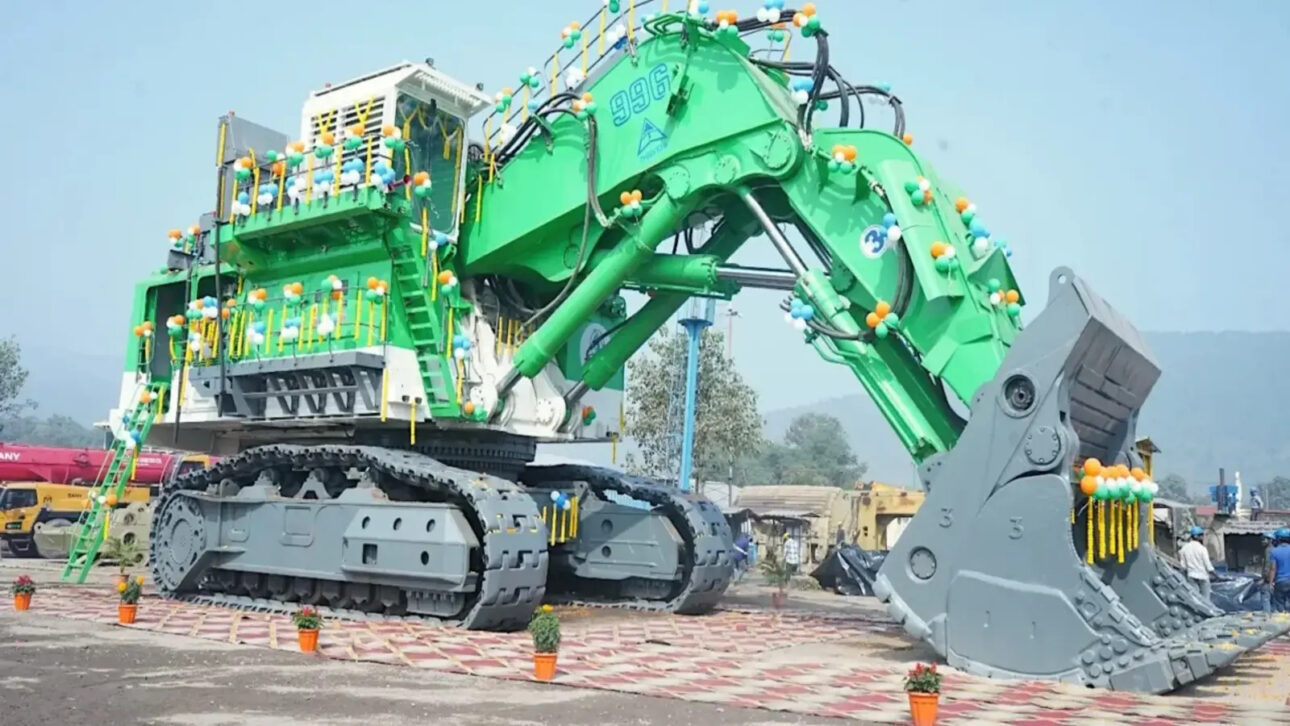
Lloyds Metals and Energy converted a 650-ton Liebherr R 996 for 100% electric operation, with internal engineering, less diesel dependency, digital monitoring, and a promise to reduce direct emissions in mining
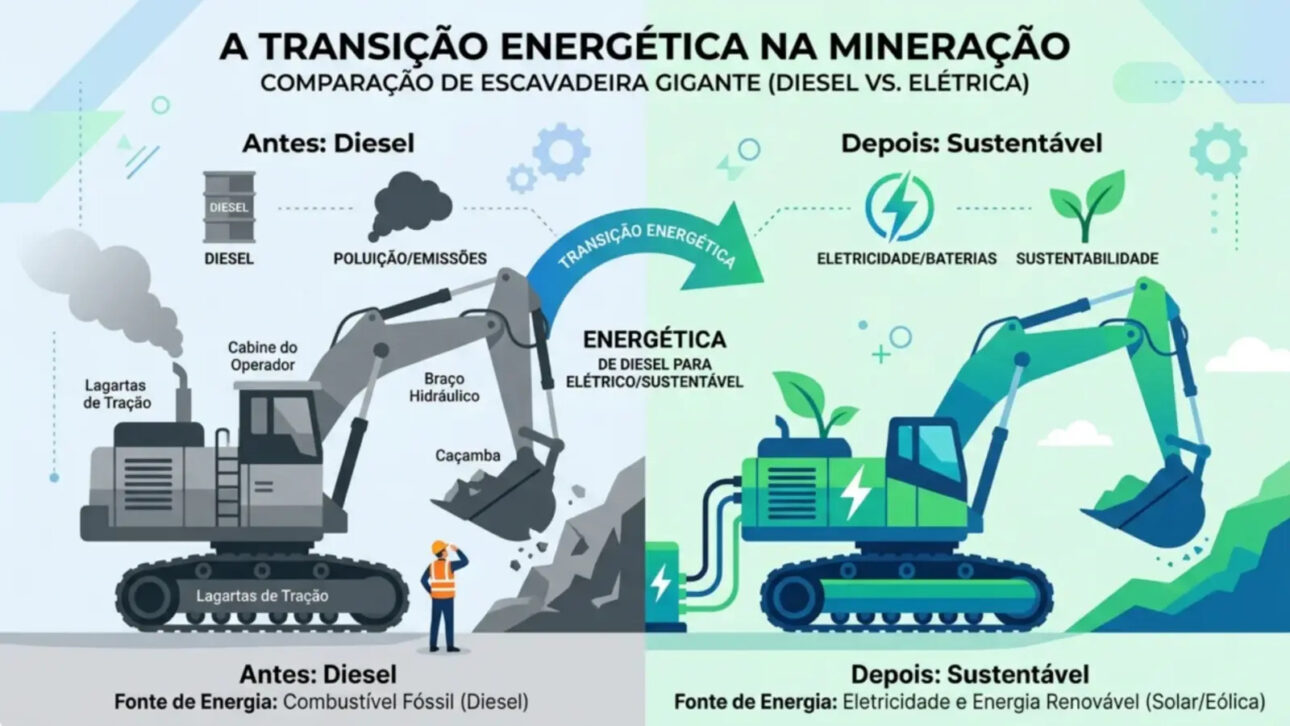
A 650-ton electric excavator began operating without diesel at a Lloyds Metals and Energy mine in the Indian state of Maharashtra. The company completed the conversion of a Liebherr R 996 for 100% electric operation, in a retrofit treated by the company as the first of its kind in this category of heavy machinery.
Electric excavator replaces diesel in large machine
Lloyds Metals and Energy, known as LMEL, announced the conversion of a Liebherr R 996 excavator, a model used in large-scale mining operations.
The machine, originally diesel-powered, underwent a complete retrofit to operate solely on electricity.
-
Brazil Faces Surge in Copper Wire Thefts at Electric Car Charging Stations, Leaving Drivers Stranded

-
Jetour S06 Launches in Brazil as a More Affordable Plug-In Hybrid SUV Than BYD Song Plus and Haval H6, But Tests Highlight Its Shortcomings

-
Electric and Hybrid Cars Set to Transform Brazilian Streets: A New Era Begins
-
Chinese Giant Invests $1.3 Billion in Brazil to Produce 50,000 Cars Annually, Create Jobs, Develop Local Suppliers, and Manufacture Electric, Hybrid, and Combustion Models by 2027
According to the company, the excavator is in the 650-ton class and had an original engine power of around 3,000 horsepower.
The adaptation was made to maintain work capacity in an operation marked by heat, dust, vibration, and continuous shifts.
The central point of the project is the scale. The R 996 is a machine designed to extract rock and ore in harsh environments. Therefore, the conversion required profound changes in the systems that previously depended on the diesel engine.


Internal engineering redesigned the machine’s central systems
The retrofit was not limited to fuel replacement. The power architecture was redesigned to replace the diesel engine-based set with an electric system sized for the same type of operational effort.
The control systems were also redesigned with proprietary solutions. The new configuration now commands the electric motorization and integrates safety features, real-time diagnostics, and digital monitoring.
Another point highlighted by the company is predictive maintenance. With this feature, the machine can anticipate failures and indicate wear before they cause unexpected stoppages in the mine’s operation.
The conversion was executed by Lloyds’ internal engineering teams. According to the company, the main subsystems were developed and acquired within India, in line with the national industrialization program “Make in India”.
Project differs from conversions made by the manufacturer
The case draws attention because Liebherr itself, the German manufacturer of the excavator, has been offering diesel-electric conversion programs for giant machines since 2024.
An example cited in the base material is an R 9400 converted by the manufacturer for a mining company in Australia.
The difference, in the Indian case, is that the conversion was not conducted by Liebherr. Lloyds claims that the work was carried out by its own engineering, which increases the technical weight of the project within heavy mining.
When announcing the conversion, B. Prabhakaran, CEO of Lloyds, stated that the achievement is not just about electrifying a machine, but about “reimagining the future of mining.”
He also highlighted India’s ability to deliver zero-emission solutions in complex and heavy environments.
Less diesel, less noise, and real-time monitoring
The company points out that the electric excavator should reduce thousands of tons of CO₂ per year, as it eliminates the direct emissions associated with the machine’s diesel consumption.
In equipment of this class, fuel represents a significant part of continuous operation.
Another practical effect is on operational cost. Replacing diesel with electric energy reduces the dependence on an important input for mines that use heavy equipment in constant operation.
The operation also tends to be quieter, as electric motors reduce noise compared to diesel systems.
In mining areas, this factor is relevant because noise is a recurring characteristic of working with large machines.
Furthermore, the embedded digital monitoring can enhance the reliability of the operation. With real-time information, maintenance can be planned before failures interrupt the work.
Lloyds has already indicated that this is the first conversion of a planned series for its fleet. The project, according to the consulted source, is also seen by industry analysts as a possible new standard to accelerate the electrification of heavy equipment in mines.
This article was prepared based on information from the base material provided about Lloyds Metals and Energy, with data, numbers, and statements preserved as per the consulted material.