






 Portuguese
  Spanish


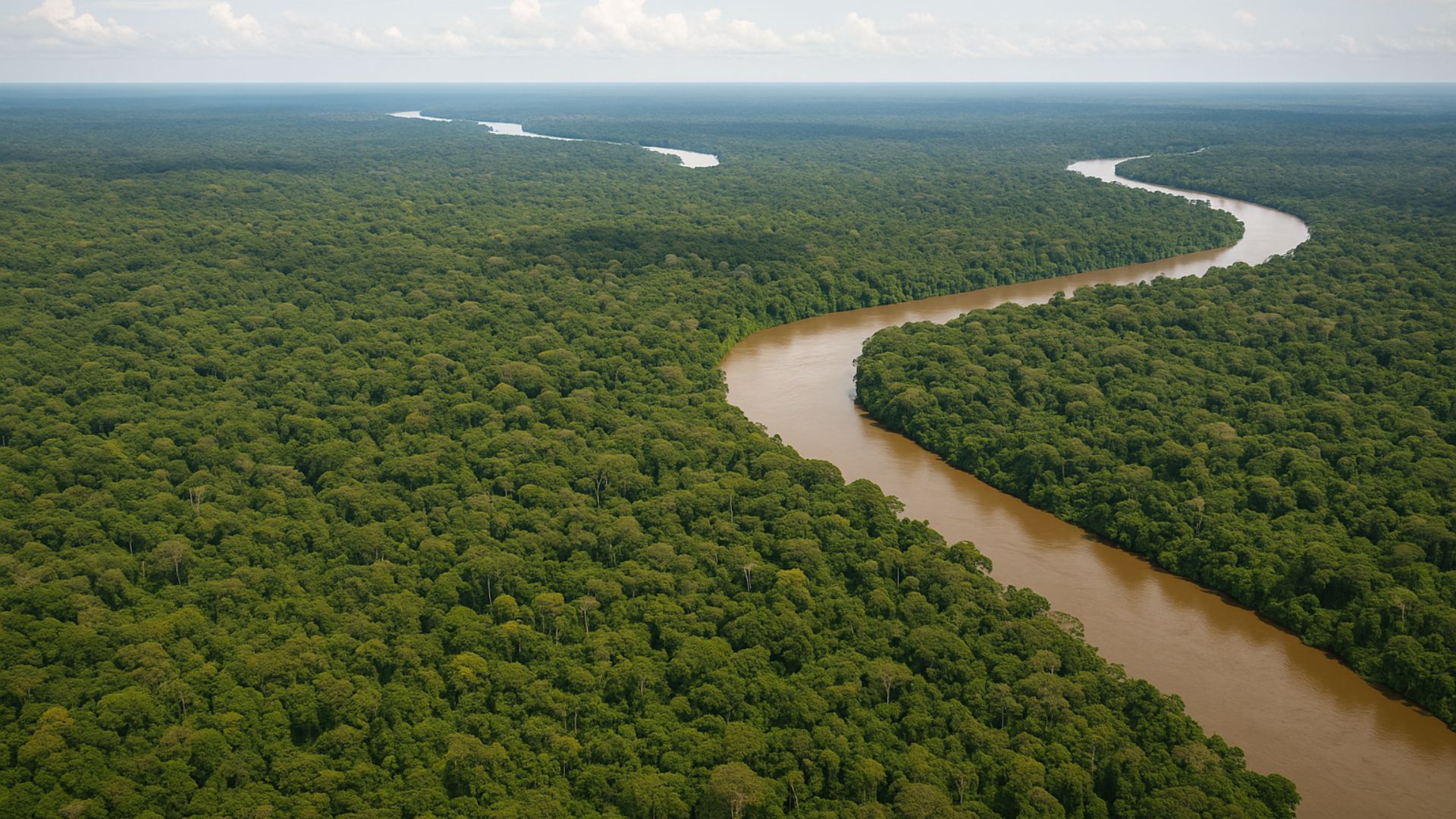


History Involves Environmental Preservation, Purchase of Large Area in the Amazon, Million-Dollar Environmental Fines, and Controversies Over Timber Exploration, Raising Debates About Private Conservation, State Oversight, Land Regularization, and Capital Limits in the Protection of Tropical Forests.
Reports about the purchase of large forest areas for preservation purposes often gain prominence when the topic is the Amazon.
In a context marked by deforestation, land conflicts, difficulties in oversight, and various economic interests, private initiatives aimed at environmental conservation frequently attract public attention.
In this scenario, the combination between the declared intention of preservation and the subsequent association with environmental penalties has led to the case involving Johan Eliasch being cited in reports as an example of the complexities related to forest protection in Brazil.
-
Award-Winning Japanese Restaurant Reveals It Has Preserved Part of the Same Frying Oil for 66 Years

-
American Youth Transforms from Severe Obesity to U.S. Air Force Enlistment, Losing 90 Kilograms in Two Years
-
11-Year-Old Entrepreneur Sells 60 Homemade Sweets Daily, Mastering Cost Calculation, Social Media Promotion, and Client Negotiation Since Age 7

-
Peruvian Mountain’s 5,200 Aligned Holes May Unveil Ancient Indigenous Market for Corn and Cotton


Purchase of Land in the Amazon and Promise of Preservation
Johan Eliasch, a Swedish-British businessman with involvement in the sports sector and engagement in international environmental agendas, came to be associated with the acquisition of a large area of Amazon rainforest estimated at about 400,000 acres, equivalent to approximately 160,000 hectares.
According to reports published at the time, the area was located in the state of Amazonas, near the Madeira River, a region that already had a history of timber exploration prior to the change of control.
The repercussions of the episode were primarily linked to the justification presented publicly.
According to statements attributed to the businessman in international media, the acquisition was intended to stop the advance of deforestation and preserve the forest, with no intention of expanding timber extraction activities.
This version was reproduced in various foreign publications and later began circulating in social media content as well.
Gethal Amazonas and the Interruption of Timber Exploration
The operation became associated with the company Gethal Amazonas, which operated in the timber sector in the region.
International reports indicated that, after the change of control, there had been an interruption of logging and sawmill activities related to the area.
According to these publications, the argument presented was that of environmental conservation, with mentions of reducing impacts associated with tree felling.
As a result, part of the coverage began to describe the purchase as an attempt to prevent the continuation of timber exploration in a territory pressured by illegal practices, although the effectiveness of this type of private strategy is a recurring topic of debate among specialists.
Fines from Ibama and Environmental Irregularities
The situation gained new contours when information about environmental fines involving the company began to be disclosed.
Years after the acquisition, Ibama imposed high-value fines on Gethal Amazonas.
According to data published in reports, the fines amounted to values that reached R$ 450 million.
The penalties were related to irregularities in the timber exploitation and commercialization chain, including questions about documentation, environmental permits, and forestry management procedures.
In reports and official communications, these infractions are described as administrative.
In popular usage, such situations are often summarized as “illegal extraction,” although technically they refer to environmental infraction proceedings subject to administrative and judicial challenge.
Difference Between Administrative Penalty and Environmental Crime
This point often generates simplified interpretations in summarized or viral content.
The fines were directed at the company responsible for the operations, based on the facts described in the agency’s proceedings.
There is no, in the publicly available records widely disclosed, a definitive conclusion that categorically establishes that the acquisition of the area was made with the goal of promoting illegal deforestation.
Experts in environmental law point out that such fines can involve previous environmental liabilities, formal failures, technical disputes over management plans, and documentation problems.
These processes generally result in prolonged administrative disputes, with presentation of defenses, appeals, and requests for review of the applied values.
In the case of Gethal, the company raised challenges to the fines at different times.
The complete resolution of these processes requires individual monitoring of the records, which is not always available in a consolidated manner in public sources.
Land Regularization and Limits of Private Conservation
Another aspect often associated with the case concerns land regularization.
In the Amazon, large land extensions often involve controversies over records, title validity, and area overlap.
These factors affect both territorial governance and the ability to ensure effective forest protection.
The episode was mentioned in public debates about foreign land acquisition and the need for greater transparency and control in transactions involving large areas in the Amazon region.
In experts’ assessment, private land purchases do not replace state oversight mechanisms, nor do they eliminate risks such as invasions, illegal mining, clandestine timber extraction, and documentation fraud.
Private Capital, Oversight, and Environmental Dilemmas
Over time, Eliasch became cited in international initiatives and debates related to environmental conservation and climate financing mechanisms.
This involvement reinforced interest in the episode.
At the same time, the fines and controversies associated with the company highlight the difficulties faced by private initiatives in contexts marked by complex oversight, legal hurdles, and a history of environmental irregularities.
Environmental policy experts emphasize that, in the Amazon, forest protection depends on factors such as governance, territorial control, production traceability, and continuous public authority involvement.
Therefore, the case continues to be cited in analyses and reports.
It combines the proposal for preservation through private land purchases with the practical challenges imposed by a complex regulatory and land tenure environment.
The simultaneous presence of figures such as 160,000 hectares and R$ 450 million in fines helps to dimension the economic and environmental scale involved.
In this context, it remains under discussion to what extent private initiatives can ensure, in a lasting manner, the protection of large forest areas, given the existing structural limitations in the Amazon region.





QUEM VENDEU PARA ELE??? DAQUI HÁ POUCO, O BRASIL SERÁ VENDIDO TAMBÉM!!!!
Eles precisam entender que nossa Amazônia não estão a Lavobter , será que deu objetivo é proteger mesmo ou explorar como fazem os outros ?
Não acredito que seja para preservar o pulmão do mundo, acredito que tem interesse no que tem no solo e na biodiversidade da floresta .