Portuguese
  Spanish


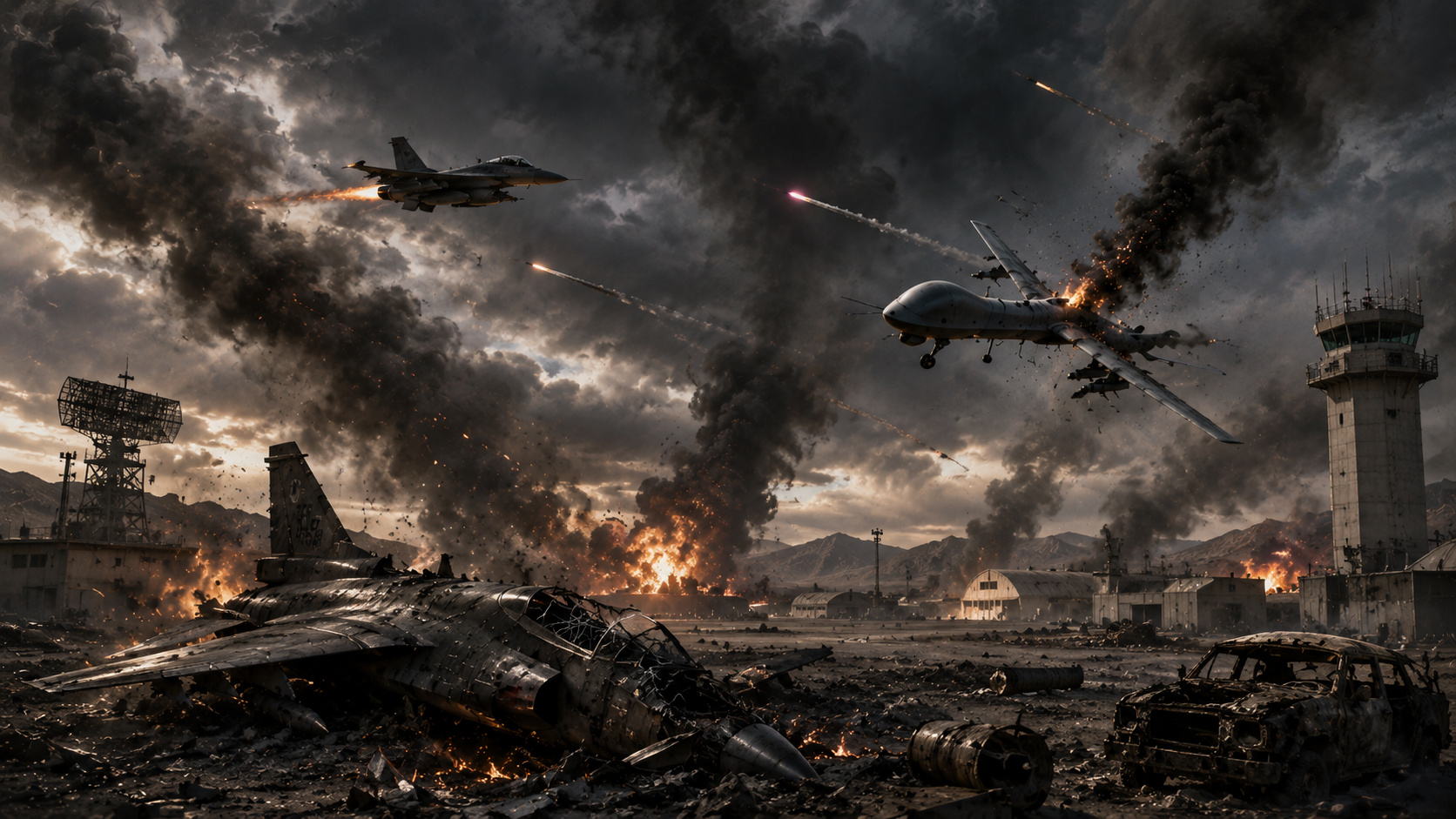

The United States has already lost more than 40 military aircraft during the conflicts related to the war against Iran, according to surveys released by sources linked to the U.S. Congress and international defense-specialized vehicles. The estimated loss from destructions, damages, and operational losses exceeds US$ 2.6 billion, equivalent to about R$ 13 billion.
Additionally, the list includes modern fighters, espionage drones, surveillance planes, and strategic aircraft used in operations in the Middle East. Experts state that the scenario reveals the high military cost of the conflict and raises concerns about the operational wear of the U.S. armed forces.
U.S. accumulates significant military losses
The air losses recorded during the conflict have drawn the attention of military experts worldwide.
Moreover, part of the aircraft was destroyed directly in combat, while others suffered severe damage during military operations in the region.
-
Oil Prices Rise as U.S.-Iran Tensions Heighten Concerns Over Global Supply and Energy Market Stability

-
Explosion at QatarEnergy Plant in Ras Laffan Kills 13 and Injures 66; Investigation Rules Out Sabotage

-
Brazil’s Búzios Oil Field Sets Record with 1.2 Million Barrels Per Day, Strengthening Global Leadership in Deepwater Production
-
Petrobras and Equinor Reach Agreement for 50% Stake in Itaimbezinho Block in Brazil’s Pre-Salt Campos Basin


Experts assert that the number of affected equipment demonstrates the intensity of the conflict involving the United States, Iran, and regional allies.
In this context, the operational cost of the war continues to increase rapidly.
Loss exceeds R$ 13 billion
The estimated damage to the aircraft already exceeds US$ 2.6 billion.
Furthermore, the costs include equipment destruction, structural repairs, parts replacement, and substitution of strategic aircraft.
Experts claim that modern conflicts involving advanced military technology generate extremely high expenses.
Therefore, the financial impact of the war worries U.S. authorities.
List includes modern fighters and drones
Among the affected equipment are aircraft considered highly sophisticated.
Additionally, the list includes models such as F-35, F-15E Strike Eagle, MQ-9 Reaper drones, and strategic surveillance aircraft.
Experts state that losses involving equipment of this level represent a strong operational and financial impact.
In this scenario, the U.S. faces growing military wear.
Drones played an important role in the conflict
The drones appear among the most affected equipment during operations.
Moreover, various models were shot down or destroyed in attacks and missions in the Middle East.
Experts state that drones have become fundamental pieces in modern wars due to their surveillance and remote attack capabilities.
Therefore, losses in this area directly affect military strategies.
War heightened tension in the Middle East
The conflict further intensified the geopolitical instability of the region.
Additionally, attacks on military bases, use of drones, and indirect confrontations increased the risks of international escalation.
Experts state that the Middle East remains one of the most sensitive scenarios in global politics.
In this context, markets and governments are closely monitoring developments.

Military bases also suffered damage
In addition to aircraft, American military structures were also hit.
Furthermore, satellite images pointed to the destruction of hangars, radars, and defense systems at different bases in the region.
Experts state that such attacks reduce operational capacity and increase logistical costs.
Therefore, the Pentagon faces growing pressure on the military budget.
Conflict generates political pressure in the USA
The advancement of the war has also started to generate internal political debates in the United States.
Moreover, lawmakers question high costs and risks of prolonging the conflict.
Experts state that prolonged wars often cause political and economic strain on governments.
In this scenario, the American Congress is monitoring the situation with concern.
Total costs of the war continue to rise
The losses involving aircraft represent only part of the financial impact of the conflict.
Additionally, the Pentagon has already raised total war estimates to tens of billions of dollars.
Experts state that modern military operations require massive spending on munitions, logistics, and maintenance.
Therefore, costs continue to rise rapidly.
Modern military technology has a high cost
Modern aircraft have extremely high values.
Moreover, advanced models like the F-35 cost hundreds of millions of dollars when considering development, maintenance, and armaments.
Experts state that losses involving this type of equipment have significant strategic impact.
In this context, the conflict raises concerns about operational sustainability.
Air war exposes vulnerabilities
The recorded losses have also raised questions about air protection and missile defense.
Additionally, Iranian drones and regional defense systems have demonstrated the ability to hit sophisticated equipment.
Experts state that modern wars are increasingly marked by the use of drones and asymmetric attacks.
Therefore, military strategies are being revised.
Markets monitor geopolitical tension
The war also directly influences the global economy and energy market.
Additionally, the conflict has raised concerns about oil, inflation, and international stability.
Experts state that tensions in the Middle East affect financial markets and global supply chains.
In this scenario, investors remain attentive to the next diplomatic moves.
Conflict may cause new losses
Analysts believe that the number of affected equipment may still increase.
Additionally, prolonged confrontations increase the risks of new attacks and military operations in the region.
Among the main factors being monitored are:
- Use of drones
- Attacks on military bases
- Operational costs
- Oil prices
- Political pressure in the USA
All these elements continue to influence the international scenario.


War against Iran increases military and financial strain on the USA
The loss of more than 40 military aircraft shows how the conflict involving the United States and Iran is already causing billion-dollar impacts and putting pressure on the U.S. armed forces.
Furthermore, the advancement of the war reinforces concerns about global stability, military costs, and risks of escalation in the Middle East.
While new diplomatic negotiations are being discussed, the scenario remains highly tense and closely monitored by governments, markets, and international security experts.