






 Portuguese
  Spanish


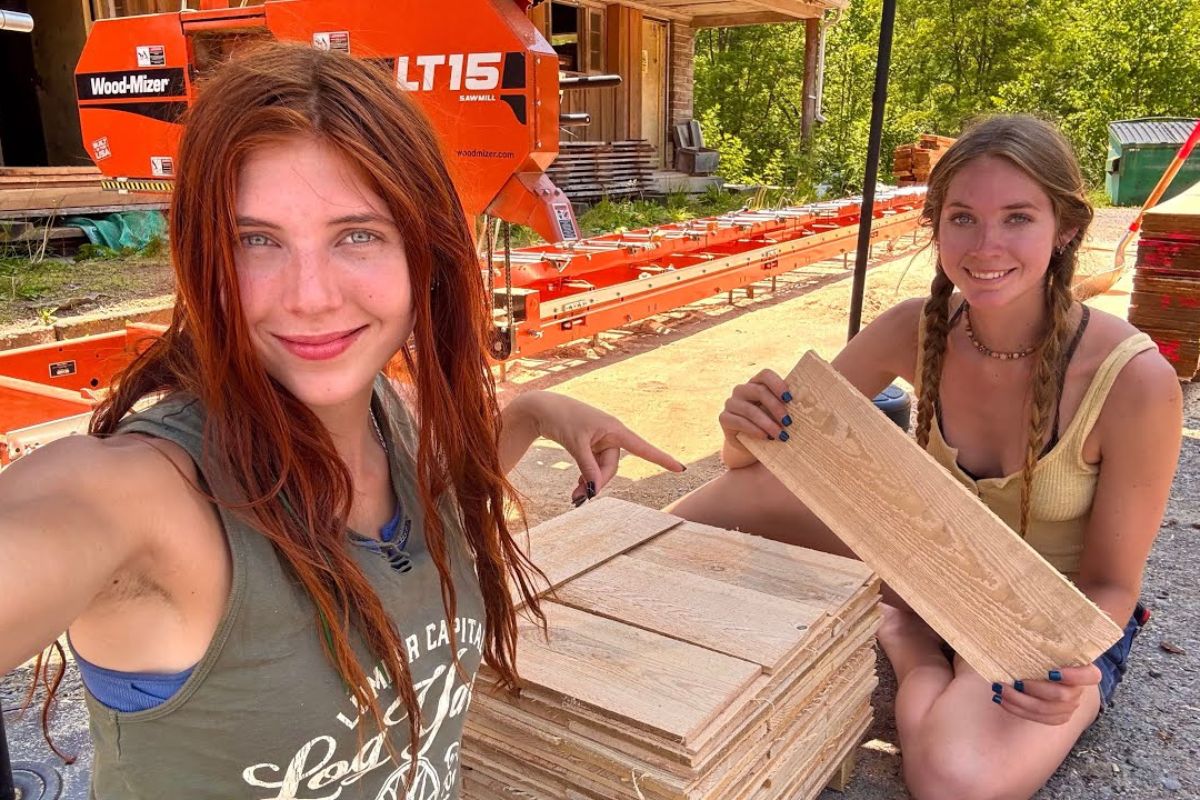


In a Logs Patio, Handcrafted Tiles Are Born from 18-Inch Cuts, Require Choosing the Right Side of the Block, Generate Inevitable Waste, and Become 27-Layer Bricks. Sold in Packages of 25 Square Feet, They Cost Around US$ 60 and Withstand the Elements Without Seeming That Simple
The handcrafted tiles seem like just cut wood, but the actual process begins long before any roof: it starts with sorting blocks, reading cracks, and deciding which face will touch the mill table first. It is there that efficiency and waste intersect. All of this happens at the Lumber Capital Logs Patio, located in the north-central part of Pennsylvania.
At the patio, the logic is practical and straightforward: handcrafted tiles are sold by area, in packages of 25 square feet, priced around US$ 60, and can become cheaper when the order increases to five packages. The question arises: why does something “simple” end up costing more than it seems?
From Raw Block to Installable Piece: The Cut That Defines Everything

The starting point for handcrafted tiles is a block of wood, referred to as 6×6, that enters the workflow already designed to become a covering.
-
Artesian Well Becomes Lifeline for Small Brazilian Farm: Drilling Reaches 60 Meters, Finds Marble, Navigates Rock Fissures, and Strikes Fresh Water

-
Street Cleaner in Brazil Finds Discarded Books That Helped His Wife Pass Civil Service Exam and Become Police Captain
-
July’s Night Sky to Feature Planetary Alignments, New Moon, Venus at Sunset, Buck Moon, and Two Meteor Showers

-
Fisherman Catches 18kg Catfish Near Brazil’s Itaipu Lake, Among Largest Recorded in Recent Years




This material is cut in increments of 18 inches because installation requires overlap: the piece needs to be longer than the “revealed” part that appears after being placed on the roof.
In practice, this changes the perception of the product. A loose tile, out of context, looks strange and disproportionate, but the geometry makes sense when considering the fit in layers.
It is this length, combined with the natural tapering, that determines the performance in water and the final appearance.
Waste Is Not a Detail: It Explains the Price

The handcrafted tile process carries a contradiction: to gain speed at the mill, “four or five blocks” are stacked and cut in series, but this very mechanics imposes a loss that cannot be eliminated.
The operator mentions a minimum retraction in the cut, around 2 cm, due to the fixing system, which creates waste even when the block is good.
Additionally, cracks and fissures are treated as criteria for disposal, not as exceptions.
A lot of pieces go to the side because integrity is essential in a covering that will face wind, rain, and moisture cycles.
Some of this material may become firewood, but from a cost perspective, it remains wood that went in and did not turn into a sellable product.
Stability Protects the Blade and Prevents a Lost Batch
Before the final cut, there is a step that is not very “photogenic,” but is critical: stabilizing the block at the point where nothing supports it.
The report describes a span without support in the middle, caused by the equipment’s own design, and a simple resource comes into play: small wooden wedges to create stability.
The goal is to prevent the block from moving during the cut.
If the block moves, the cut deviates, the risk of ruining the piece increases, and damage can reach the blade.
At the logs patio, this translates to direct costs: downtime, blade replacement, and loss of already selected material.
Technical Stacking: 27 Layers to Become a “Brick” of 25 Square Feet
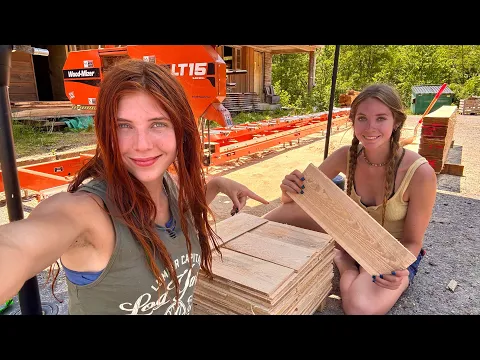

What transforms handcrafted tiles into ready-to-transport merchandise is not just cutting, it’s packaging.
The package of 25 square feet requires, according to the described procedure, 27 layers, assembled with a double alternation pattern: alternating the direction of the pieces and also alternating between the thick side and the thin side.
This is because each tile is thicker on one end and tapers down to the other. The thick end is the part that remains exposed after installation, and if all are stacked in the same direction, the package becomes a crooked ramp.
The alternation keeps the set straight, “like a brick”, improves binding, and prevents the package from breaking apart when moved.
Why Hemlock and Not Cedar, and What It Changes in Durability
The handcrafted tiles described are made of hemlock, a choice that arises as a response to local availability: “we don’t have cedar around here.”
In practice, this creates a regional market with its own aesthetics and materials, without relying on the more famous standard of cedar tiles.
The technical argument associated with hemlock is performance against insects and deterioration. The report itself acknowledges the less glamorous side: it does not have the “smell” of cedar, but “gets the job done.”
In a covering, this “job” is what matters: acceptable dimensional stability, resistance, and lifespan compatible with the price per area.
Tying and Transport: Why the Strapping Is Plastic
After stacking, the package is mounted on two pieces of wood to allow the straps to pass underneath.
And here comes a detail that explains the care in finishing: the straps used for this product are made of plastic, not metal.
The reason is simple and technical: metal can mark, dent, or damage the thin parts of the handcrafted tiles, especially at the edges.
Two straps, well positioned, keep everything together, and the stacking orientation also plays a role: the orientation must allow the strap to “grip” the center of the set and not miss grabbing the intermediate layers.
In the end, handcrafted tiles are not just “cut wood.” They are a precision product in a rustic environment, where heat, haste, and machinery coexist with strict rules: discard cracks, stabilize the block, protect the blade, alternate layers, and tie without damaging.
It is this chain, with inevitable losses, that makes the package of 25 square feet seem expensive even before going on the roof.
If you had to choose for your home, what would weigh more: paying more for handcrafted tiles for durability and aesthetics, or going with the cheaper material and accepting a sooner replacement? What has been the most real experience you have had with roofing: infiltration, warping, maintenance, or a pleasant surprise?


