






 Portuguese
  Spanish
  5 min of reading
  0 comments


New Uranium Discovery In Brazil Promises To Revolutionize The Nuclear Energy Sector And Generate Thousands Of Jobs. Located In Ceará, The Reserve Is Already Being Nicknamed The “Petrobras Of Uranium” Due To Its Strategic Potential. This Discovery Could Boost Clean Energy Production And Consolidate The Country As A Power In The Nuclear Market.
Brazilian Uranium Reserve Is Not Exploited: The Minister of Mines and Energy, Alexandre Silveira, stated last Friday, 8, that Brazil has an unexploited “Petrobras of Uranium” and emphasized the need to modernize the country’s nuclear chain. According to the minister, it is unacceptable that Brazil is the 7th largest uranium reserve in the world, knowing only 26% of its subsurface. Alexandre was present at the launch event for the Consolidation Notebook of the 10-Year Energy Expansion Plan (PDE) 2034 in Brasília.
Understand Why The Brazilian Uranium Reserve Is Not Exploited
In Silveira’s assessment, the exploitation of the Brazilian uranium reserve for nuclear energy is inefficient, as legislation still hinders private sector participation, despite the flexibilization during the Bolsonaro government. According to him, as mandated by the Constitution, the State must be the controller, but it is necessary to find a way to advance in this chain.


According to the 23rd clause of Article 21 of the Brazilian Constitution, only the Union is authorized to explore nuclear energy services and facilities of any kind and to exercise state monopoly over research, mining, enrichment and reprocessing, industrialization, and trade of nuclear minerals and their derivatives.
-
American company drills a 1,830-meter hole in Kansas using oil well technology, places a nuclear reactor inside, and claims it will generate electricity without any cooling tower.

-
Canada invests more than 2 billion dollars to upgrade an old nuclear laboratory and try to rival the world’s major atomic energy powers.
-
Nuclear company backed by Bill Gates partners with Hyundai for next-generation 345 MW nuclear reactor

-
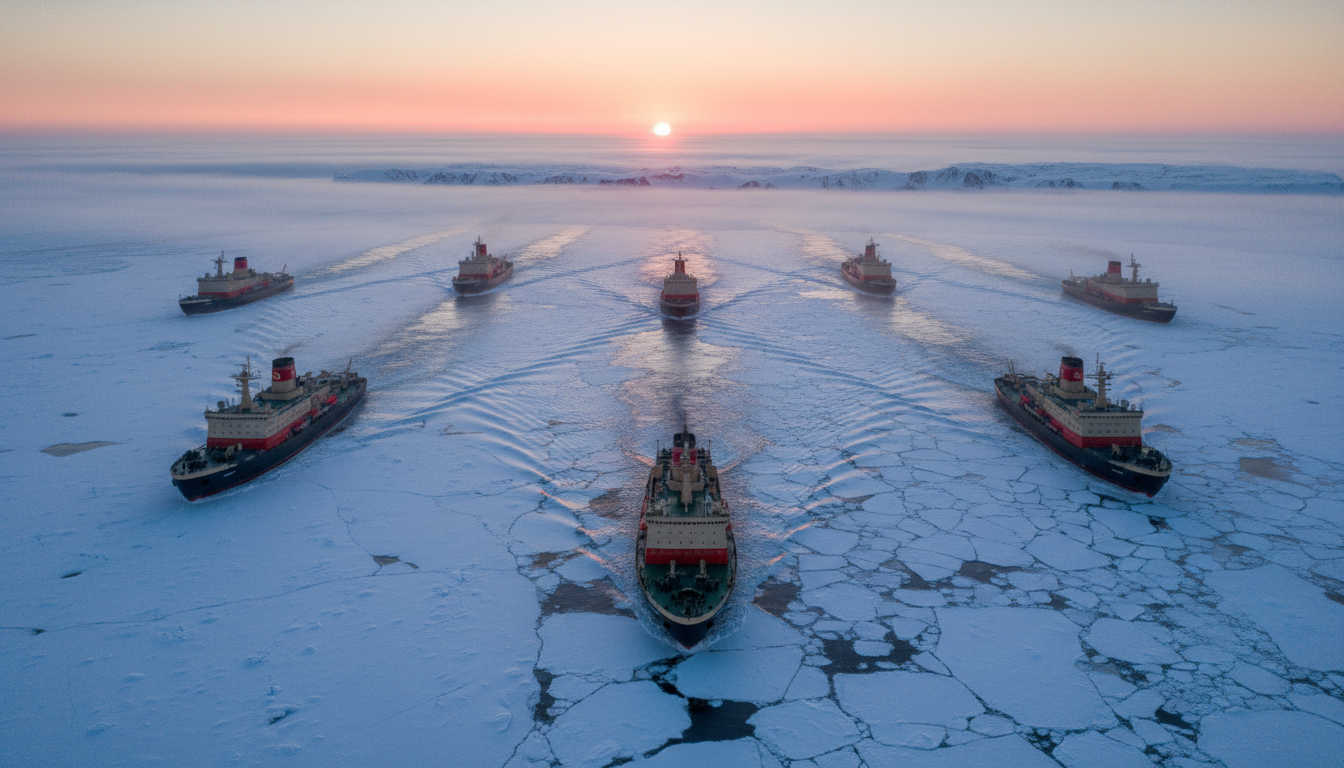
Russia is sailing all 8 nuclear icebreakers of its fleet simultaneously for the first time in history, as the Arctic freezes two weeks earlier than expected.



As a result, the extraction, processing and industrial treatment is managed by Indústrias Nucleares do Brasil (INB), while nuclear energy production is handled by Eletronuclear. Both are state-owned companies linked to the MME.
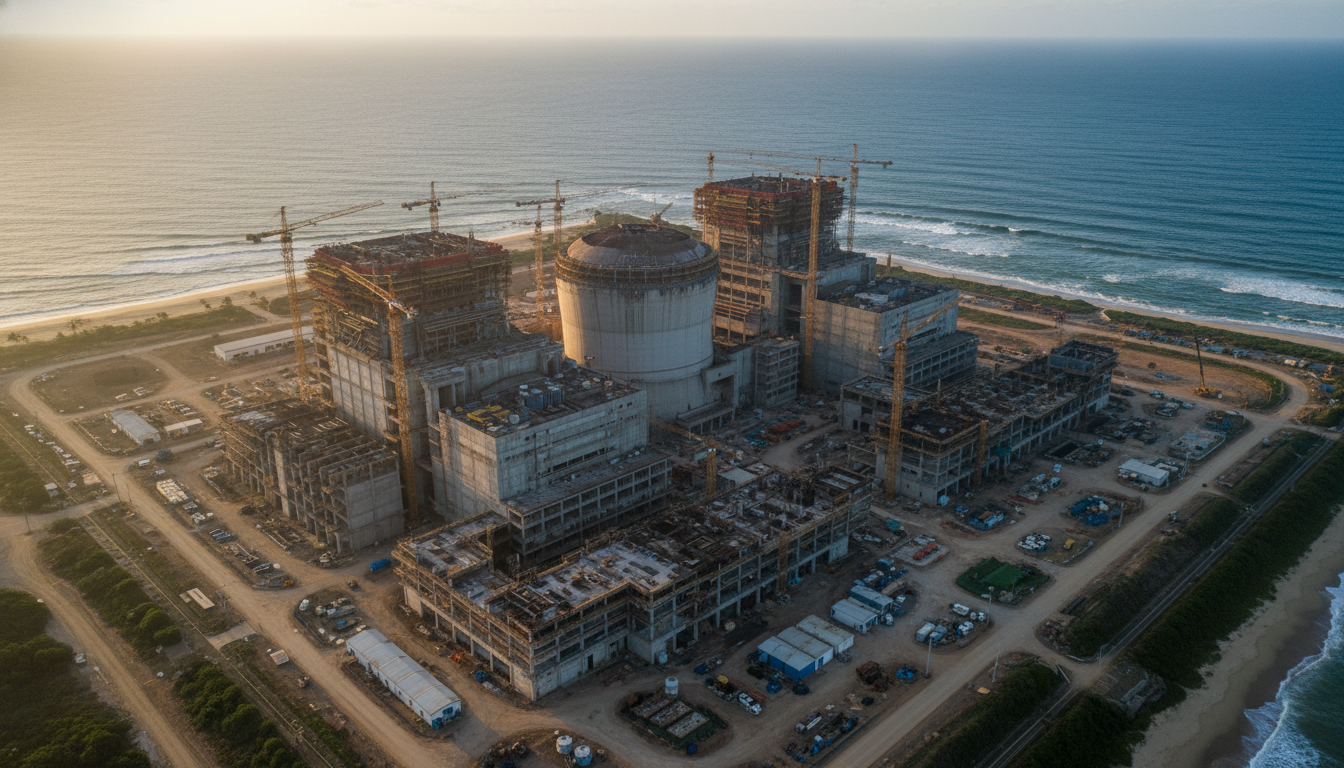
Silveira acknowledged the need to complete the works at Angra 3, which began in 1981 and has been halted since 2010. However, the installation was classified by the minister as a “mausoleum” and recognized the urgency to expand operations beyond the Angra dos Reis complex.
Silveira emphasizes the need to view the ‘Petrobras of Uranium’ already considering small nuclear reactors. In a transcontinental country like Brazil, there is no clean and renewable energy without this energy source. This refers to plans by technology giants to use small modular reactors to provide low-carbon electricity for artificial intelligence data centers.
Colossal Uranium Reserve In The Northeast
According to the Geological Service of Brazil (SGB), the Caetité uranium reserve mine, in the state of Bahia, is the only one currently in operation in Brazil. In May, the construction of the uranium beneficiation unit of the Santa Quitéria Complex, in Ceará, was approved by the National Commission on Nuclear Energy.
The exploration of the mine will be the responsibility of the Santa Quitéria Consortium, a partnership between INB and Galvani Fertilizantes, from the private sector.
However, the process is marked by sluggishness and depends on the environmental licensing granted by Ibama (Brazilian Institute of the Environment). In 2022, the agency did not approve the Environmental Impact Study (EIA) presented by the group. Outside the Northeast, there are smaller deposits in states such as Paraná, Minas Gerais, Amazonas, and Pará.
The Brazilian uranium deposit is located on the Itataia farm, between the municipalities of Santa Quitéria and Itatira, about 210 km from Fortaleza. It is considered the ‘Petrobras of Uranium’ and, if the project is approved at all stages, the uranium reserve plant will be capable of producing both uranium and phosphated elements used in fertilizer production. In the text announcing the approval, the National Commission stated that both products have strategic potential for Brazil.
While the consortium submits additional information to Ibama and awaits a new analysis, works at the Brazilian uranium deposit cannot commence. For the consortium, the expectation is to obtain the full installation license by the end of 2024.
‘Petrobras Of Uranium’ Can Generate Thousands Of Jobs
The uranium reserve in Ceará is both a promise and a controversy. It has the support of the state government, but raises questions from communities and researchers about the risks that the mining exploration may bring to workers and the local population, among other impacts.
Contact with uranium, a heavy and unstable metal, poses risks recognized by the scientific community. Experts point to possible impacts on people as well as on biodiversity.
In September 2023, the Ceará government renewed the memorandum of understanding with the Santa Quitéria Consortium.
The document signed by Governor Elmano de Freitas (PT) is valid for the next five years and provides for the government to cooperate in the implementation of the nuclear energy project. One of the government’s expectations is that the plant at the Brazilian uranium deposit will stimulate economic growth in the region and the state as a whole. For the implementation phase, the Santa Quitéria consortium forecasts an investment of R$ 2.3 billion.
For the Santa Quitéria region, 2,800 direct jobs and 5,600 direct jobs are expected to be generated in the construction phase of the beneficiation complex. When operational, the forecast is for 538 direct jobs and 2,300 indirect jobs.
Even if it secures all necessary licenses by the end of the year, the plant will take time to start operating. The installation works are expected to last two and a half years. In this scenario, and with the operating license approved, the complex could start producing between the end of 2027 and the beginning of 2028.






Be the first to react!