






 Portuguese
  Spanish
  4 min of reading
  0 comments


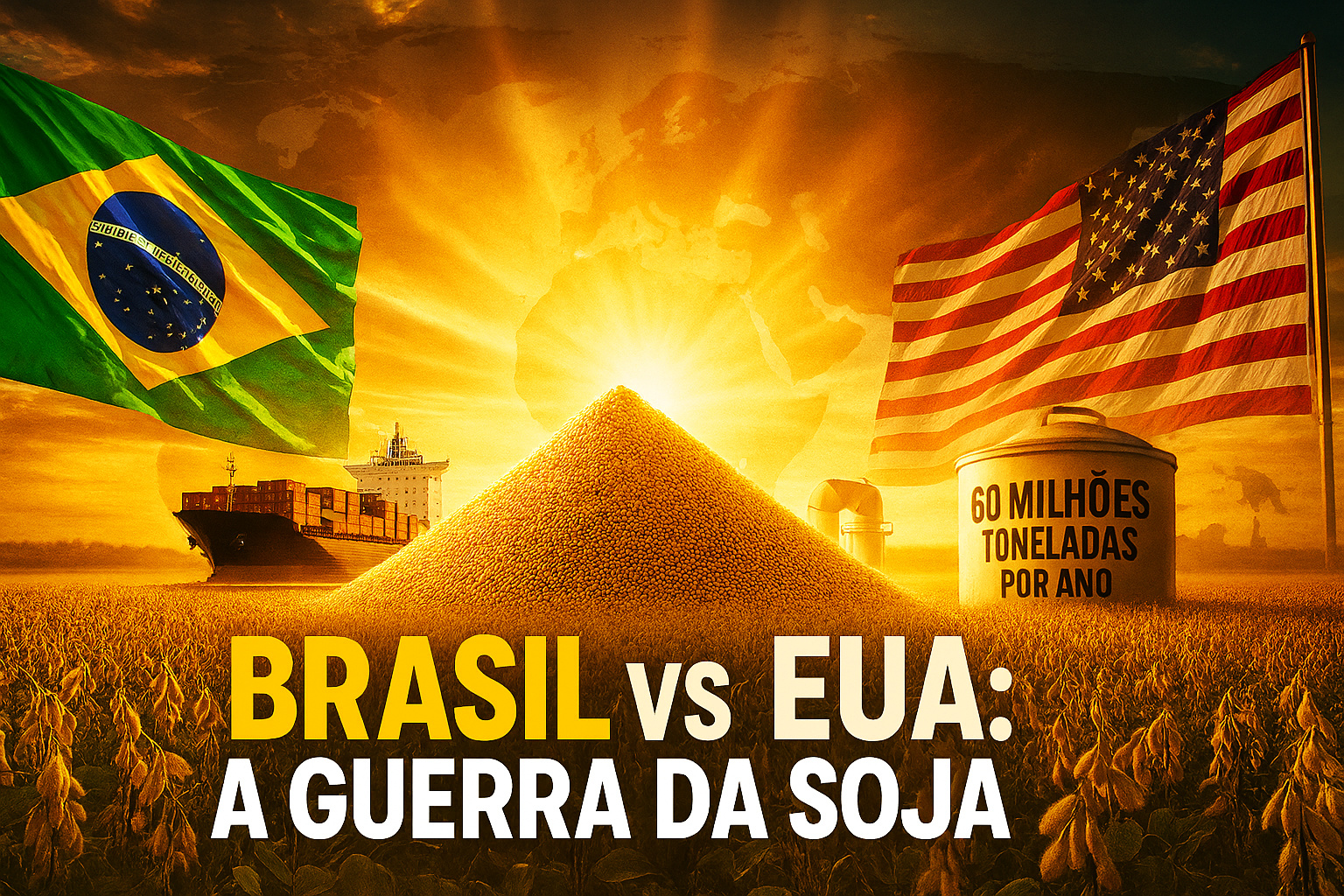
Brazil and the USA Compete for Global Soy Production That Moves 60 Million Tons of Soy Oil Annually and Dominates the Global Food and Energy Industry.
The competition between Brazil and the United States for world leadership in soybean production has become, in recent years, one of the most important economic movements in the global agribusiness. It is not just an agricultural competition: it is a mechanism that drives over US$ 250 billion, supplies the largest food industries on the planet, and sustains the manufacturing of the most consumed vegetable oil by humans. Today, while Brazil has established itself as the largest producer and largest exporter, the USA remains the largest crushers and giants of oil production, turning the market into a battle of efficiency, scale, and technology.
It is a scenario that shapes international prices, directly affects food inflation, and influences the food security of dozens of countries — from Asia to the Middle East.
Global Soy Production: The Brazil–USA Axis That Controls the Planet
According to the USDA (2024), the world produces about 400 million tons of soy per harvest, with Brazil and the United States together accounting for more than 60% of that volume. But the story becomes even more impressive when observing the impact of this production on the vegetable oil industry.
-
Low-Demand Brazilian Beef Offal Gains Popularity Abroad: Indonesia Purchases $19.5 Million, Boosting Revenue and Reducing Waste

-
Soy Expansion in Former Brazilian Savanna Sparks Water and Land Conflicts in Major Agricultural Frontier
-
Mexican Pest Threatens U.S. Cattle Herds at Historic Lows, Potentially Boosting Brazilian Beef Exports as Burger Prices Soar

-
Avocado Boom for European and U.S. Markets Fuels Water Crisis in Drought-Stricken Chilean Region


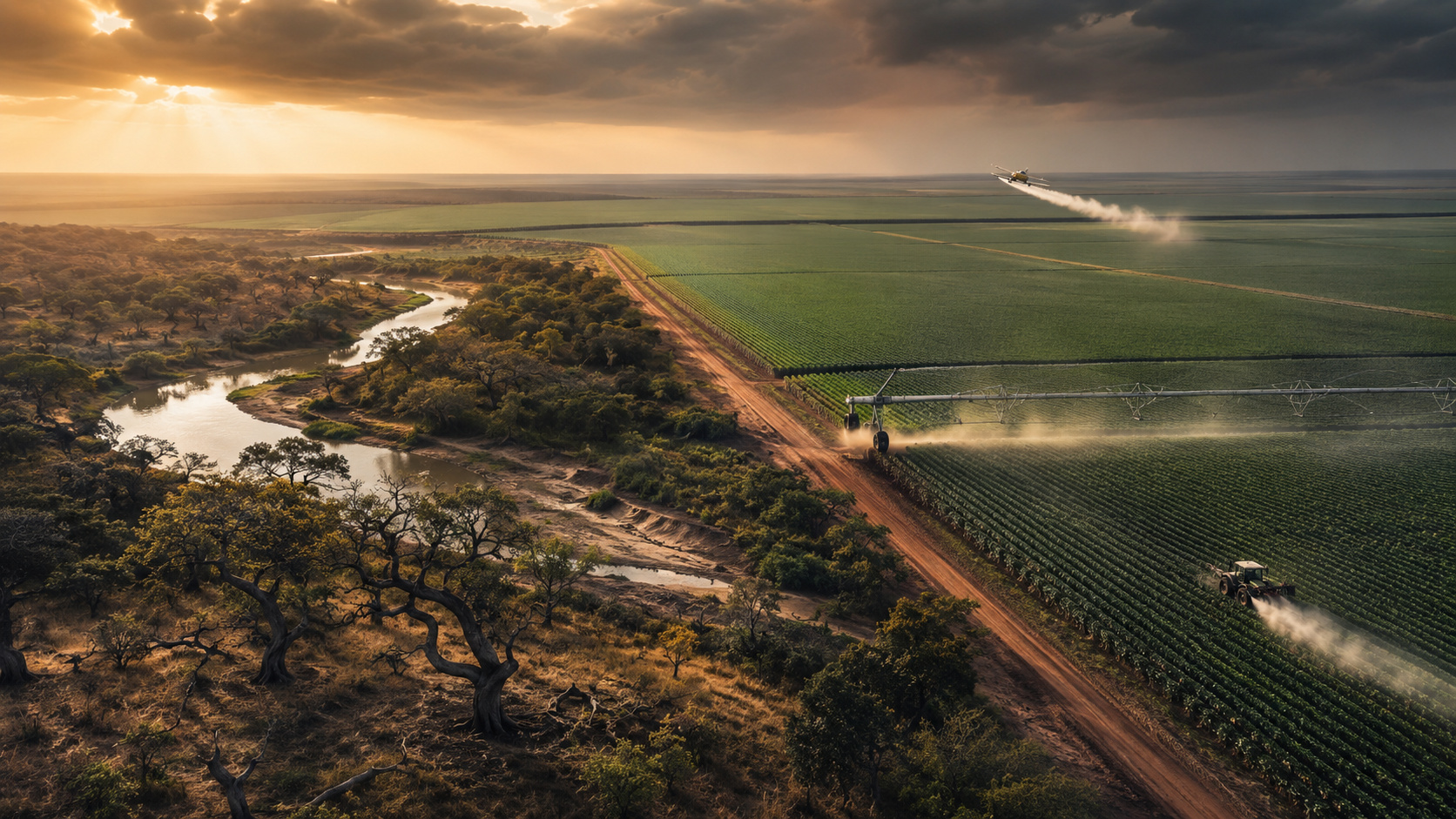


Of the total processed globally, it is estimated that around 60 million tons of soy oil are produced each year, a gigantic number that places the product as the most consumed oil in the world, surpassing palm, sunflower, and canola.
In Brazil, the growth of recent decades is almost cinematic: from a production of 50 million tons in the early 2000s to over 155 million tons in 2024, according to Conab. In the USA, production remains between 113 and 120 million tons, but with crushing far superior, driven by refineries, biofuels, and established processing industries.
Soy Oil: The Invisible Force That Dominates the Global Food Industry
Few people realize the real size of soy oil. It is:
— in most industrial frying
— in margarines, mayonnaises, and dressings
— in ultra-processed products
— in feed for poultry, pigs, and fish
— and, increasingly, in biofuels
This combination alone explains why the commodity has become strategic for supermarkets, slaughterhouses, feed industries, exporters, and governments.
Today, Brazil and the USA do not only compete with each other, but are essential for countries like China, Spain, Bangladesh, Egypt, and Turkey to keep their food supply chains functioning.
Brazil: Largest Exporter in the World and Powerhouse in Crushing
Brazil leads global exports by a wide margin: in 2023, there were almost 100 million tons shipped, according to MDIC. At the same time, the country has expanded its crushing capacity to meet not only domestic market needs but also the demand for oil and meal.
Brazilian plants currently process over 50 million tons annually, producing:
• soy oil for domestic consumption, export, and biodiesel
• meal for the animal protein industry, especially poultry and pigs
The energy transition has also changed the game: with the increase in the mandatory blending of biodiesel, soy oil has become one of the pillars of Brazil’s renewable energy matrix.
United States: Giants of Crushing and Global Biofuel Center
If Brazil reigns in plantations and exports, the USA dominates in factories. The country operates one of the largest crushing industrial parks in the world, processing over 65 million tons annually, according to the US Soybean Export Council.
This means:
— more refined soy oil
— more advanced biofuel
— more meal to supply the powerful North American meat industry
— and more value added per ton processed
This dominance is so significant that the United States has been producing more soy oil than any other country for years.
The Global Impact: Prices, Inflation, and Geopolitics of Food
The Brazil–USA dispute directly influences:
• the price of cooking oil worldwide
• the inflation of basic food staples
• the food security of import-dependent countries
• the production cost of chicken, pigs, and fish
• the global biofuel agenda
In 2024, a drought in the Midwest combined with delays in the Brazilian harvest caused soy oil prices to skyrocket in Asia, prompting Indonesia and India to revise purchases and stocks.
In other words: soy is more than a commodity — it is a tool of power.
Why This Battle Continues to Grow
Experts point out that, in the coming years:
— Brazil is expected to surpass 170 million tons
— the USA will strongly increase crushing for biodiesel
— Chinese demand may rise by up to 8%
— the search for sustainable vegetable oils will further boost the market
In other words: the race between the two giants is far from over — and soy oil will remain at the center of the dispute.





-

2 people reacted to this.