






 Portuguese
  Spanish
  2 min of reading
  2 comments


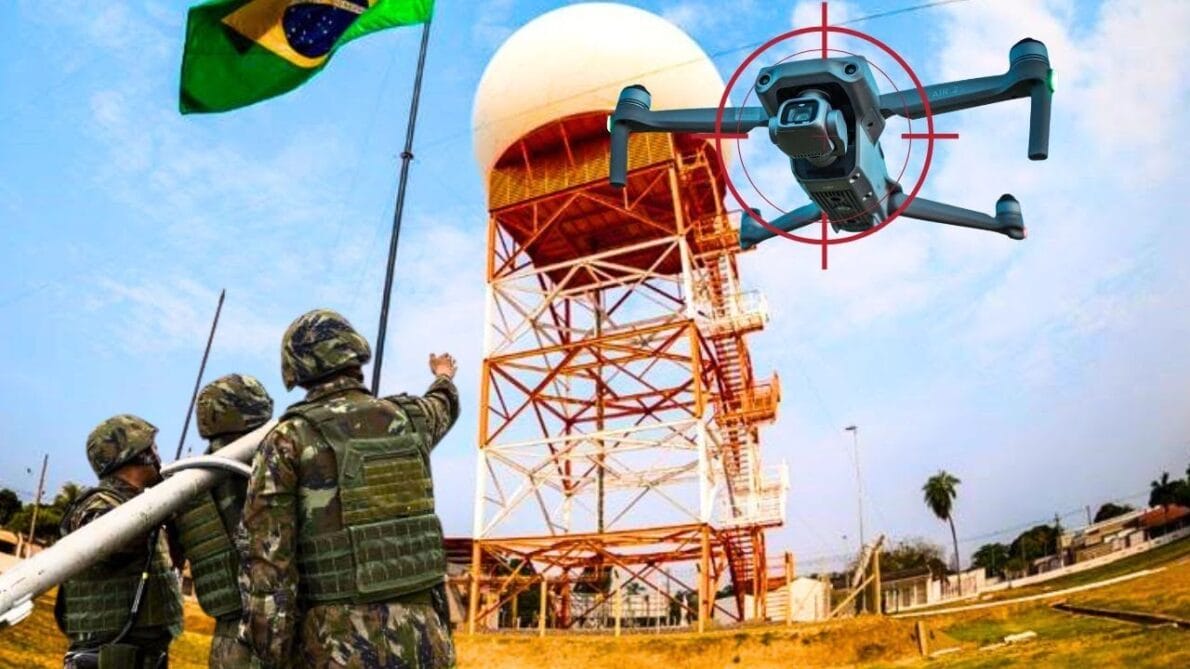

Have You Ever Wondered How Brazil Protects Its Airspace Against Threats Like Enemy Aircraft and Missiles? The Answer Is in Anti-Air Radars. These Devices Allow Early Detection of Flying Objects, Providing Time to Prepare a Defensive Response.
Anti-air radars are essential for national security. They detect and track the movement of aerial targets, and can even identify the type of aircraft or missile. This is crucial for coordinating defense systems, such as surface-to-air missiles and anti-aircraft artillery, protecting critical infrastructures such as military bases, government centers, and urban areas.
To strengthen this defense, Brazil is heavily investing in anti-air radars. Omnis, a subsidiary of Thales in Brazil, is a reference in surveillance and airspace control radars. The system produced by them, such as the RSM 970 SNG radar, is one of the most advanced on the market.
The RSM 970 SNG Radar Officially Began Operations in July 2023 at the Senador Nilo Coelho Airport in Petrolina, PE


Recently, another radar station was deployed in Bom Jesus da Lapa, further expanding the national radar base. With these new additions, Brazil now has 70 radars from the RSM 970 S family operational.
-
Without a mansion, without high investment, and without a traditional classroom, a teacher living in a 22 m² house taught students to build a 9 m² studio apartment with the equivalent of R$10,000.

-
Without her own home and pressured by rent, a 25-year-old bought a small 15-meter boat, gradually renovated the interior by herself, transformed the interior with paint, new flooring, a larger bathroom, and started living on the canals, paying much less per month.
-
Long before sustainable construction became a trend, China built earthen fortresses with multiple floors, a central courtyard, and the capacity to house up to 800 people living in a community.
-
He got tired of renting, bought an old school bus, removed the seats, modified the roof, reinforced everything with steel, and created a two-story mobile home that looks small on the outside but houses two bedrooms inside.




The RSM 970 SNG radar is state-of-the-art, capable of providing detailed data on the identification, position, and speed of aircraft. This data is essential for ground controllers, allowing them to have an accurate and up-to-date view of the airspace. Produced in São Bernardo do Campo, SP, this equipment is certified by the Ministry of Defense as a strategic defense product.
In Addition to Manufacturing and Installing These Radars, Omnis Also Offers Local Technical Support. This Includes Preventive and Corrective Maintenance, Ensuring a High Level of Equipment Availability.
For even more efficient defense, Brazil is integrating these radars with other defense systems, such as surface-to-air missile batteries and defense aircraft. This integration is done through command and control networks, ensuring a quick and coordinated response to any threat.
Brazil’s investments in anti-air radars are a crucial step in reinforcing national security. With advanced technology and efficient integration with other defense systems, the country is better prepared than ever to protect its airspace against threats.





Conta outra ,o que é isso um stand up kkkkkkkkk
Da mesma forma que a Bolívia perdeu o estado do Acre após invasão de brasileiros estamos correndo o risco de perder Roraima com a invasão de venezuelanos. A cidade de Pacaraima já está dominada, falta o resto do território. Cadê nossa segurança territorial?