






 Portuguese
  Spanish


Pix Has Solidified Its Position as a Global Reference for Digital Payments, Became a Topic in BRICS, Gained New Functionality in Brazil, and Even Entered into the U.S. Commercial Investigation, Highlighting Its Global Economic and Political Impact.
The Pix remains consolidated as the main payment method in Brazil and recently gained the Automatic Pix functionality, aimed at recurring charges and integrated into Open Finance.
As it expands its reach in retail and among small businesses, the system has caught the political and commercial radar of the United States.
The U.S. government opened a commercial investigation that cites Pix among Brazilian practices that, in the view of the USTR, harm American companies from the USA.
-
Family Quietly Transforms Old Sawmill into $700 Million Business, Opens 25 Stores in Two Years Across 22 Brazilian States

-
Couple Sold Their Home to Save Business, Now Run Platform Handling $180 Million Monthly and Managing Over 51 Million Listings
-
Brazil’s 2026 Tax Refund: Record 9.58 Million Filers in Largest Payout Ever, But a Key Detail on Priority Recipients Draws Nationwide Attention

-
Itaú Alters Hybrid Work Model, Increasing Office Days from 2028, Prompting Employees to Adjust to New Routine




In this context, attorney Daniel Alvarenga summarizes the moment: “Brazil is no longer the country of football; it is the country of Pix,” he said in an interview with the portal UOL this Wednesday (28).

Pix Becomes an International Showcase
The expansion of the instant arrangement by the Central Bank has transformed the payment experience for Brazilian consumers since 2020 and has begun to attract attention outside the country.
In July, acquiring solutions began accepting Pix at points of sale in the United States, in partnership with manufacturers of card machines. As a result, the method is being tested in physical stores abroad.
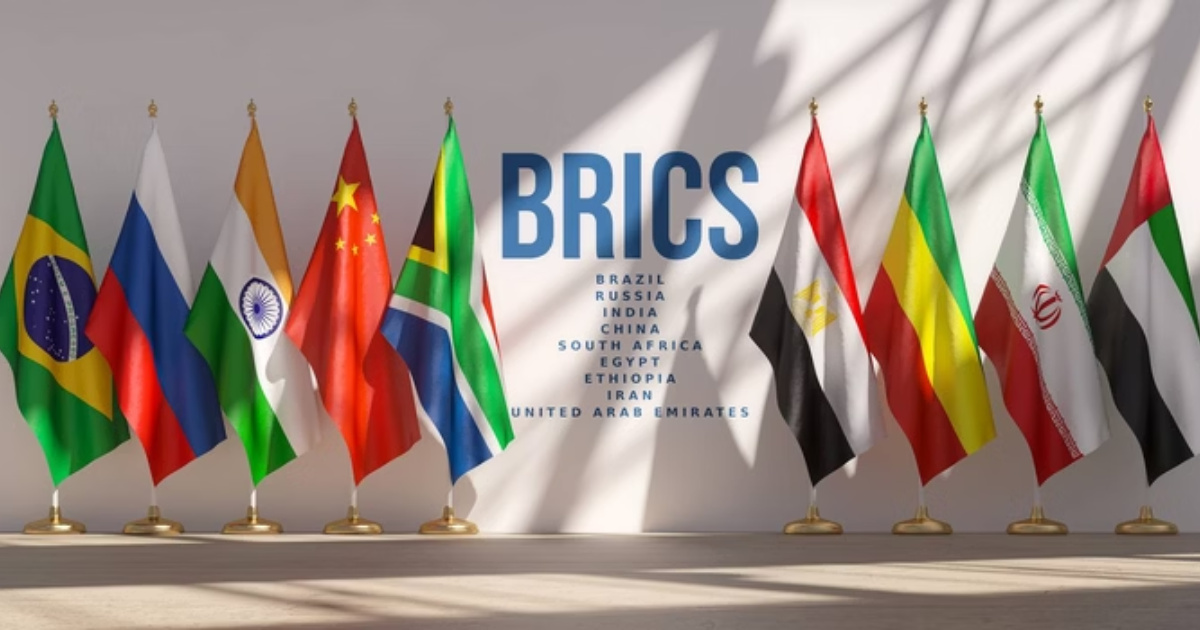
On the geopolitical front, the topic has also entered the agenda of BRICS, which discusses BRICS Pay, a project for integrating instant payments among the countries in the bloc, with forecasts for technical advancements by 2025.
Automatic Pix: A New Stage for Recurring Charges
The Automatic Pix was launched on June 16, 2025, with the aim of simplifying the payment of bills and recurring services, such as subscriptions, monthly fees, and utility bills.
The journey allows the user to authorize a periodic charge, and from then on, the debits occur automatically, with security and transparency.
The technical design provides for offerings from both banks and payment initiators via Open Finance, expanding the functionality’s reach to businesses of all sizes.
According to the Central Bank, the innovation aims to reduce typical frictions of traditional automatic debit, standardize integrations, and lower operational costs for those who bill monthly.
In practice, recurring billers can adopt the tool without needing specific agreements with multiple institutions.
This tends to facilitate reconciliation, reduce delinquency, and improve the customer experience.
Expert Highlights Impact on Small Businesses
For attorney Daniel Alvarenga, a specialist in banking regulation, the feature brings direct benefits to the financial management of small businesses.
“Pix now has a new tool that will run on the rails of Open Finance called Automatic Pix. This is super interesting for entrepreneurs,” he stated.
According to him, recurring charges via Pix tend to reach customers from any bank, eliminating the need to maintain specific agreements with a single institution.
Alvarenga also highlights the reputational effect of the Brazilian system abroad.
“Everyone already knows Pix. I was in London a few months ago, and everyone wanted to talk to Brazilians because Brazil is no longer the country of football; now it is the country of Pix,” he said, reporting the interest of foreign interlocutors in the open infrastructure supporting the arrangement.
Investigation in the United States Involves Pix
On July 15, the Office of the U.S. Trade Representative (USTR) opened an investigation into Brazilian practices in digital trade and financial services, including Pix.
Documents from the inquiry list the system among measures that, according to the complaint, favor local companies to the detriment of American competitors.
The public comment phase occurred until August 18, with input from Brazilian entities in the productive sector. There is no final decision.
Although the debate was associated with former President Donald Trump, currently at the helm of the government conducting the investigation, independent checks indicate that there has been no official announcement of specific sanctions against Pix or any formal declaration promising to “tax” the system.
What exists is the inclusion of the instant arrangement in the broader scope of the USTR’s trade analysis.
Central Bank Defends System Neutrality
In light of the criticisms, the Central Bank has reiterated that Pix is a neutral public infrastructure.
It was designed to increase efficiency, competition, and inclusion in the payments market, without competing with private institutions.
The monetary authority also reminds that, despite the advancement of Pix, the use of cards continued to grow.
The arrangement has helped bring millions of people into the financial system since its debut.
BRICS Discusses Integration with Pix
The visibility of Pix both domestically and internationally has driven its mention as a reference in forums for emerging economies.
In the BRICS, the BRICS Pay proposal seeks to interconnect systems such as the Brazilian Pix, the Indian UPI, and other equivalents. The idea is to allow for instant settlement among countries in their local currencies.
Representatives linked to the business council of the bloc state that the project has advanced in technical testing and may see implementation milestones later this year.
What Changes for Those Who Charge and Those Who Pay
For the entrepreneur, especially for the smaller ones, the main change of the Automatic Pix lies in the portability of charges.
The company can contract a provider or initiator and, with the customer’s consent, receive every month regardless of the payer’s bank.
This opens the door for lower acceptance costs, simplifies integration complexity, and standardizes the experience.
For the consumer, the authorization is clear and revocable. The model provides trails of consent in Open Finance, management panels, and notifications to maintain control over recurring expenses.
As the political debate continues, daily life points to an increasingly broad adoption.
From payments at the card machine of a foreign store to the monthly fee at the neighborhood gym, Pix has established itself as the infrastructure on which new services are built. The Automatic Pix adds a layer of recurrence that was missing in the ecosystem.
In the international scenario and on the domestic agenda of financial innovation, what will be the next step that will place Brazil even more at the center of conversations about digital payments?








E necessário evoluir mas temos que ter cuidado com inimigos da própria casa que trabalham para os adversários…temos visto homens que se dizem homens casarem com a melhor e mais bonita mulher da rua e deixar ela ir pra lua de mel sozinha pra agradar os estrangeiros que tanto admiram como donos do mundo….tenho dito…