






 Portuguese
  Spanish


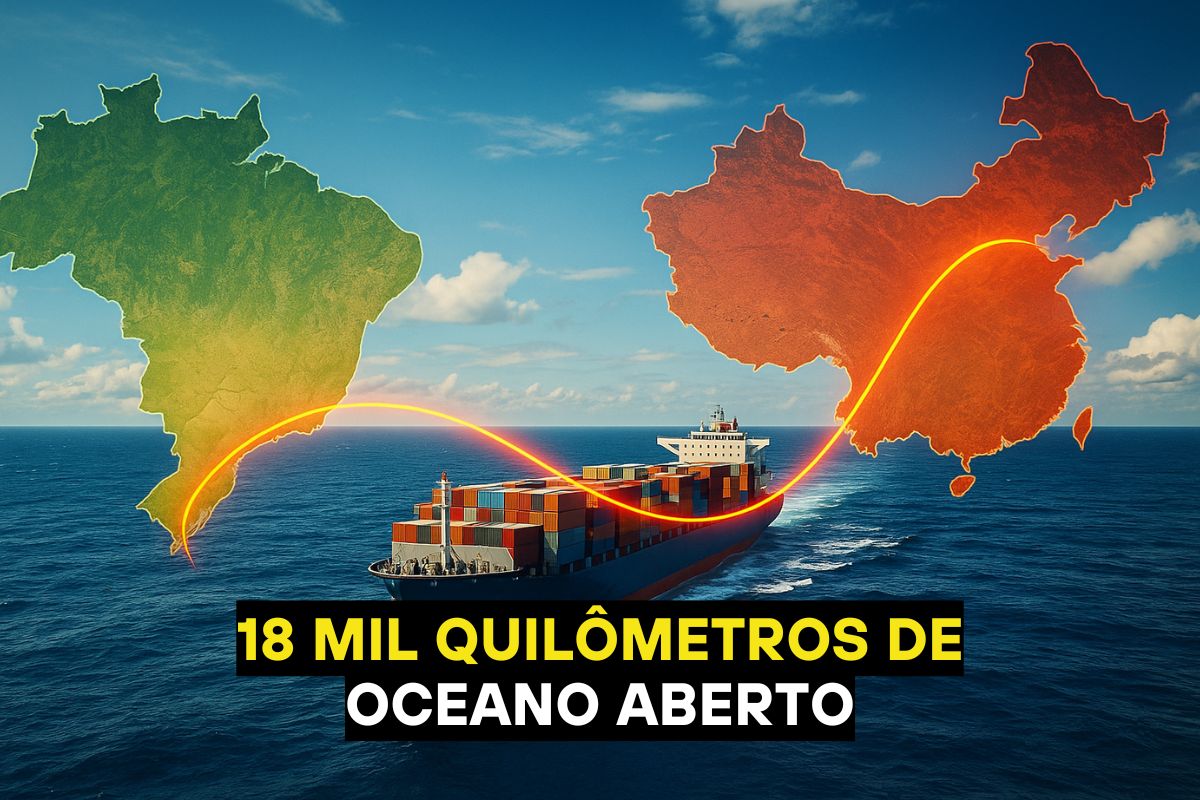


Nonexistent Ports, 18,000 Kilometers of Open Ocean, and Low Cargo Explain Why the Route Remains a Distant Dream.
The idea of a direct maritime route between Brazil and China via the South Pacific sparks strategic and geopolitical interest. In theory, it would shorten timelines, reduce logistical costs, and reposition South America in global trade.
In practice, however, this project faces almost insurmountable obstacles. The absence of supporting ports, the distance of 18,000 kilometers, and the low cargo demand make the plan unviable. The dream of crossing the South Pacific as the central axis of world trade is hindered by technical, economic, and political limitations.
The Historical Legacy of the Pacific
Centuries before the modern great powers, Polynesian peoples were already challenging the Pacific in canoes, guided by the stars.
-
Farewell to Toilet Paper? New Technology Sparks Debate on Bathroom Habits

-
Young Entrepreneur Who Started Recycling Bottles at Age 3 Becomes Environmental Icon in the U.S.

-
Nivea Blue Tin Cream: Popular Post-Beach and Pool, But Pharmacist Warns About Missing Ingredients and Common Summer Mistakes Regarding UVA and UVB Protection.
-
Archaeologists Recover Colossal Structure Lost for Over 1,600 Years Under the Sea, Including 22 Monumental Blocks Weighing Up to 80 Tons, Intriguing Experts.




There are indications that some reached South America, but no direct route between Chile and Australia was established.
Even the Spanish Empire, after conquering Chile, failed in its attempts to expand trade routes in the region.
Legends of missing galleons, such as the ship San Lesmes in 1526, show how the crossing has always been marked by extreme risks, storms, and uncertainties.
The Logistic Void of the South Pacific
The main obstacle of the route between South America and Oceania is the lack of infrastructure.
There are almost no inhabited islands or supply ports along thousands of kilometers. This means that ships would be exposed to journeys without supplies, repairs, or protection against cyclones and tsunamis.
Studies have considered building artificial islands as support points, but the cost would be astronomical.
Furthermore, international law does not recognize artificial islands as full territories, which would open diplomatic disputes with Australia, Chile, New Zealand, and powers like the US and China.
Why Australia and Chile Don’t Have a Direct Route
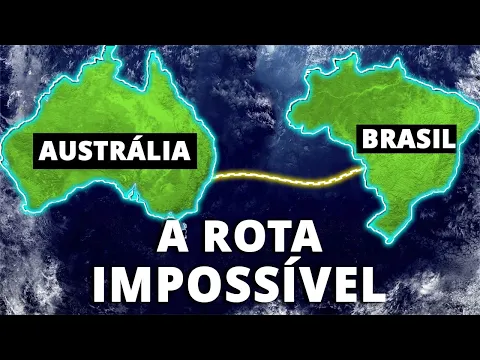

In addition to physical challenges, there are economic factors. Australia and Chile have very similar export structures: minerals, meats, and agricultural products.
Instead of complementing each other, they compete in the same markets. This reduces the interest in a direct link, as there is not enough cargo volume to justify billion-dollar investments.
The trade of both is primarily directed towards Asia, the US, and Europe.
The route between them remains secondary compared to more established and lucrative corridors.
Where Brazil Fits into This Equation
Brazil appears as a potential protagonist in the discussion.
With a strong trade relationship with China, it could benefit from a direct line via the South Pacific, reducing reliance on the Panama Canal.
For commodities like soy, iron ore, and meat, the logistical gain would be significant.
However, experts point out that without sufficient demand and minimal infrastructure, the route cannot sustain itself.
Today, the costs and risks outweigh any potential advantages, making the project more of a strategic speculation than a real alternative.
The creation of a direct route between Brazil and China via the South Pacific remains in the realm of ideas.
Nonexistent ports, colossal distance, and low economic viability make this plan a maritime utopia.
Do you believe that new technologies, such as autonomous ships or artificial ports, could change this scenario? Or will the South Pacific continue to be a void in global trade? Leave your opinion in the comments.




Nada e impossivel para uma China visionaria e poderosa.