Portuguese
  Spanish


Brazilian Agricultural Production Hits 345 Million Tons in 2025, Anticipating Official Projections by Four Years; Meat, Ethanol, and Forest Products Also Hit Records, But Credit and Logistics Bottlenecks Threaten Growth Pace
Brazil harvested in 2025 the largest volume of grains in its history, with 345.2 million tons, according to estimates from the National Supply Company (Conab). The result represents a 15.6% increase compared to the previous harvest and surpasses by four years the official projections from the Ministry of Agriculture and Livestock (Mapa), which expected such a mark only for 2029.
The record production is a direct result of a combination of favorable weather, expansion of the planted area, and the use of technology. Products such as soybeans, corn, cotton, sorghum, and peanuts were the main drivers of this leap, solidifying the country as one of the largest food suppliers on the planet.
Record Harvest Anticipates Future
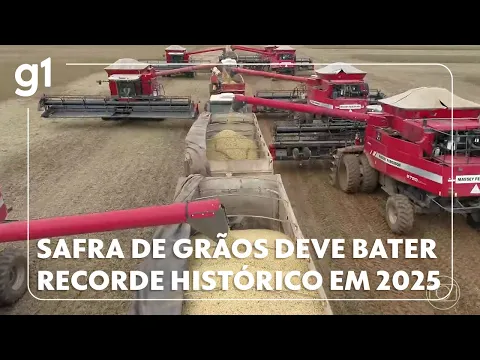

According to the national agribusiness projections document prepared in 2024 by Mapa in partnership with 13 sector entities, the expectation for the 2024/25 season was 319 million tons of grains. The level reached in 2025, nearly 345 million, was only expected to occur in 2028/29.
-
Bangladeshi Farmers Use Bamboo Levers to Pump Thousands of Liters of Water Daily Without Engines or Electricity

-
Brazilian Forests Could Expand by an Area Twice the Size of Switzerland by 2035, but Agricultural Sector Holds the Key, Study Finds

-
Brazilian Student Develops Solar-Powered Agricultural Machine Capable of Processing 250 Kilograms per Hour

-
Brazilian Farmer’s Viral Video on Onion Prices Opens New Income Opportunities Online


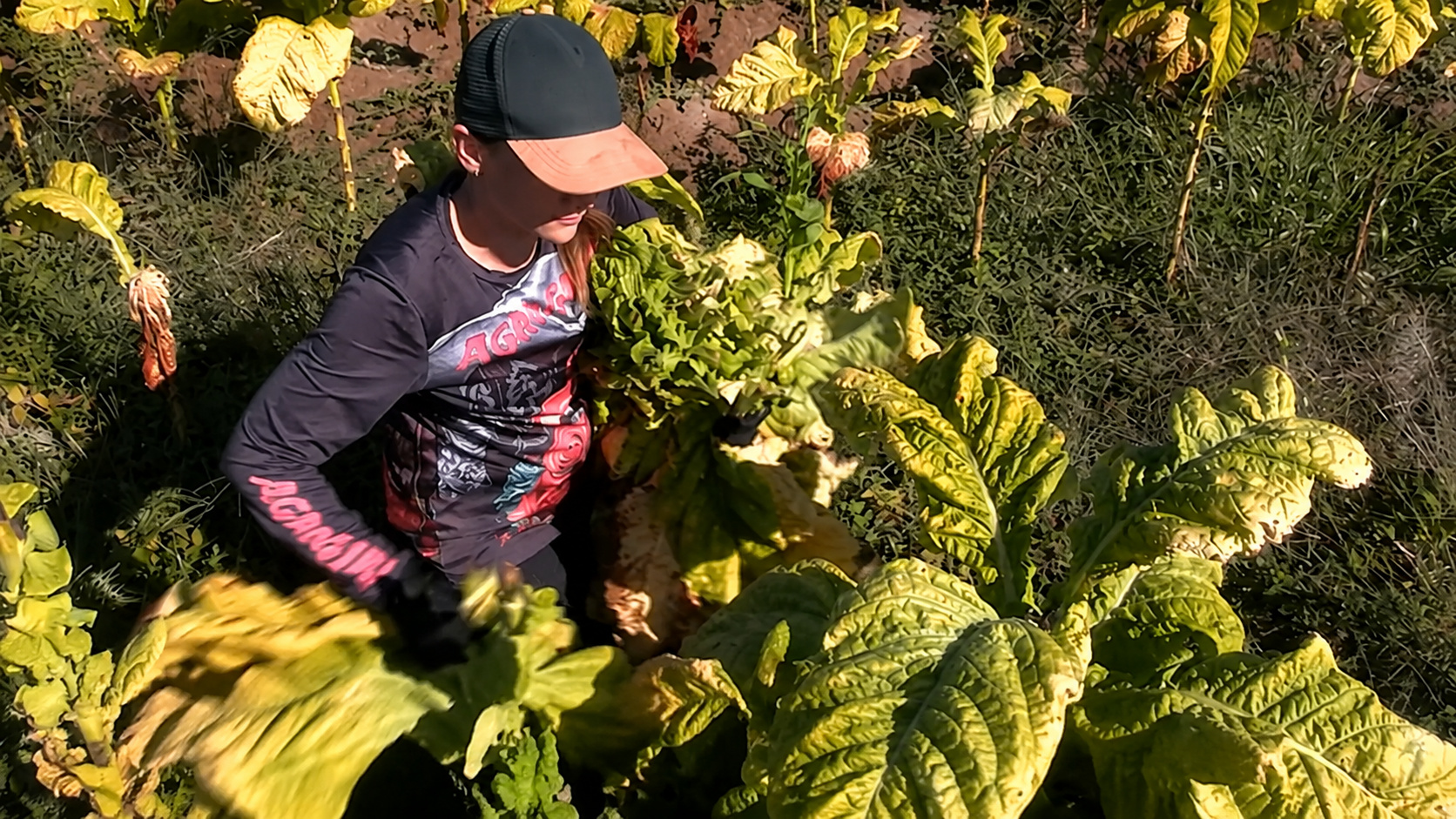
In soybeans, the estimate points to a 15% increase compared to the previous harvest. Corn is expected to advance 19%, cotton 7%, and sorghum 23%. The highlight is peanuts, with a 45% increase, surpassing for the first time 1 million tons produced.
This performance also reflects the intensification of the three harvests per year system, an increasingly common practice in regions such as São Paulo, Mato Grosso, and Goiás. Producers like Mário Sérgio Silvério, from Guaíra (SP), exemplify the change: in 1997, he cultivated only 90 hectares; today, it is a thousand hectares alternating corn, soybeans, and beans.
Meat, Ethanol, and Forest Products Also Advance
The meat sector also recorded records in 2024: 10.2 million tons of beef, 14.2% above 2023; 13.6 million tons of chicken (+2.4%); and 5.3 million tons of pork (+1.2%). For 2025, only beef is expected to see a slight decline due to the reduced supply of heifers, but chicken and pork continue to grow.
In the energy sector, ethanol production reached 34.96 billion liters in the 2024/25 sugarcane cycle, an increase of 4.06% compared to the previous season. Biodiesel is also expected to grow by 10% in 2025, reaching 9.9 billion liters.
Forest products follow the trend, with an increase of at least 11% over 2024, according to specialized entities. These results expand Brazil’s presence in global export chains, reinforcing the country’s image as a strategic supplier.
Exports at Historic Pace
External sales confirm the strength of the sector. In 2024, Brazil exported 2.89 million tons of beef, 5.3 million of chicken, and 1.35 million of pork. Despite a slight decline expected for chicken in 2025 due to cases of avian influenza in Rio Grande do Sul, beef and pork are expected to grow even amid barriers such as the 50% tariff from the United States on beef.
Data from BTG Pactual and Cogo Agribusiness Intelligence indicate that Brazil is the world leader in exports of soybeans, cotton, coffee, sugar, tobacco, and orange juice. It also ranks second in ethanol and third in corn, consolidating the country among the largest global players.
Soybeans and corn are expected to end 2025 with record shipment volumes: 109 million and 45 million tons, respectively. According to José Carlos Hausknecht, managing partner at MB Agro, Brazil leverages geographical conditions, tropical climate, and technology to develop adapted planting systems that meet international demand.
Credit and Logistics as Bottlenecks
Despite the advances, structural challenges threaten the pace of growth. The annual financing needed for Brazilian agribusiness production is estimated at R$ 1.3 trillion, but the 2025/26 Agricultural Plan provided R$ 605.2 billion — only 46% of the demand.
According to Hausknecht, credit in Brazil is expensive, bureaucratic, and poorly supported by rural insurance policies. Added to this is the lack of adequate logistical infrastructure, which raises costs and delays the flow of production. This scenario pressures producers to increase volume as a way to offset falling prices per harvested unit.
Cooperativism on the Rise
The Brazilian Cooperative Organization (OCB) estimates that 50% of the country’s grain harvest already goes through agricultural cooperatives. In credit, the participation of these entities could reach 48% of the total in 2025, surpassing the amounts released by the government.
Márcio Lopes de Freitas, president of OCB, points out that the growth of cooperatives reflects the search for financial balance in the field. The 10% annual increase in the number of associates reinforces this movement.
According to Matheus Marino, president of Coopercitrus, in addition to credit, cooperativism contributes to the diversification of production and to family succession in the field, involving new generations through technology and education.
Future Perspectives
The information was published by the portal Brasil Agro on September 3, 2025, which also highlighted that Brazil is one of the countries with the lowest subsidy rates in the agro sector. Among major producers, only Argentina provides less proportional government support.
Experts affirm that the trend is for continued growth. With global demand for food and energy on the rise, Brazil remains one of the main strategic suppliers.
Thus, even in the face of bottlenecks, the national agribusiness projects advances in production, export, and technological innovation, establishing itself as a pillar of the economy and global food security.