






 Portuguese
  Spanish


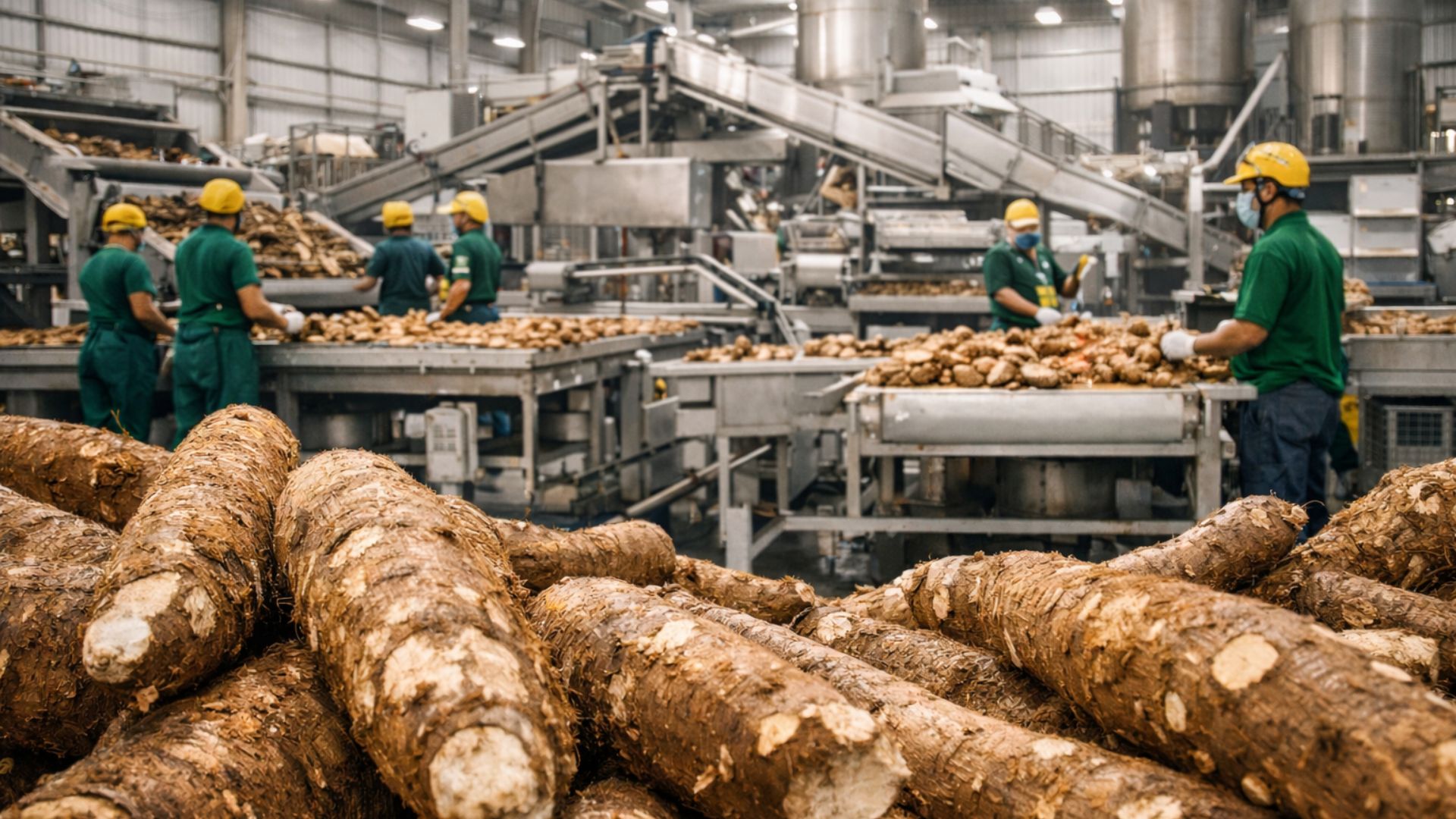


Large Industrial Investment Promises to Change the Dynamics of the Cassava Sector in Northwestern Paraná, with a Focus on Local Processing, Job Creation, and Utilization of High-Yield Harvest in One of the Main Producing Regions of the Country.
Umuarama, in Northwestern Paraná, is set to receive a new cassava processing plant with an estimated investment of R$ 50 million.
The unit, attributed to Amafil, was presented by the municipal administration as a step to expand local processing and reduce the shipment of production to other cities, at a time when the region monitored by the Rural Economy Department projects a harvest of around 1.6 million tons on 52 thousand hectares.
Present on the Brazilian table in different forms, cassava also supports a broad industrial chain, ranging from flour and starch to derived products used by the food industry.
-
Study of Brazil’s Tietê River Finds 25 Pesticides in Water, Including Cancer-Linked Substance Near Source

-
Young Entrepreneur Expands from 50 to 1,400 Chickens, Proving “Happy Hens” Can Be a Viable Business
-
Small Farm in Brazil’s Minas Gerais Produces 403 Liters of Milk Daily, Sets Benchmark for Rural Producers
-
Man Revives 1930s Abandoned Trout Farm, Learns from Scratch, and Earns $1.1 Million Annually Selling Fish to Michelin-Starred Restaurants



In this scenario, Paraná appears as one of the hubs that supplies factories and cooperatives, with special weight precisely in the Northwest, where the crop is treated as strategic for both producers and the processing sector.
Umuarama Bets on Local Cassava Processing
The announcement of the venture was made by Mayor Fernando Scanavaca, who linked the arrival of the industry to job creation and value retention in the region itself.
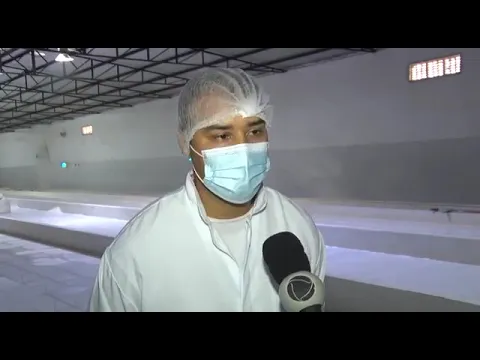

According to the municipality, the new plant is expected to shorten distances in the cassava flow, allowing part of what currently goes for processing in other municipalities to be processed in Umuarama.
In a statement registered during the project announcement, Scanavaca stated: “This is an important investment that will generate jobs, income, and add value to a raw material that today needs to be taken to other municipalities for processing.”
This statement was used to support the expectation that the factory will change the dynamics of the local production chain by bringing farming and industry closer together.
Although the city hall has not publicly officialized the name of the company in the announcement, reporting published by local media attributed the installation to Amafil, considered one of the largest cassava processors in the country.
The idea, according to the coverage, is for the plant to receive roots not only from Umuarama but also from neighboring cities monitored by the Rural Economy Department in the same region.
Industrial Capacity and National Presence of Amafil
Amafil reports having a national presence and operates 11 manufacturing units.
The company also discloses an annual processing capacity of 858 thousand tons of cassava, a number that appears in both institutional materials and news reports about the new factory in Paraná.
In addition to industrial scale, publications mention its own logistics structure, with a fleet of over 120 trucks and distribution centers in Fortaleza, Ceará, and São Lourenço, Paraná.
This type of support is indicated as an element that facilitates the supply and distribution of processed products, especially when production is spread across different regions.
Even with an estimated investment of R$ 50 million, the implementation schedule still appears as an open point.
Local coverage reports that the land for the installation has been acquired and that details such as deadlines, construction phases, and the number of direct and indirect job vacancies will be informed later.
Projected Harvest and Factors Influencing the Numbers
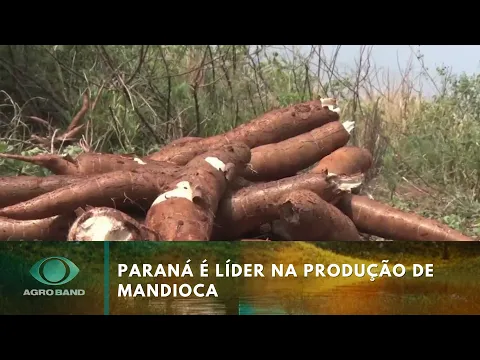
The 1.6 million tons mentioned as a forecast for the region monitored by the Rural Economy Department are associated with an area of about 52 thousand hectares.
The department itself, according to reports, stresses that cassava has particularities that make completely accurate estimates difficult, especially since the harvest can be postponed and vary according to the producer’s decisions.
Among the highlighted factors are weather conditions, which have a direct impact on productivity, and market behavior, which influences the harvesting pace.
In scenarios of low prices, producers may hold back the harvest and shift part of the volume to the next cycle, which tends to cause fluctuations in official statistics.
In this context, local authorities and regional publications treat the establishment of a processing industry as an attempt to provide more stability to the production chain and improve value capture within the producing territory.
The understanding is that by processing closer to the source, the region reduces transportation costs and expands negotiation possibilities for those supplying the raw material.
Expected Economic Impacts in Northwestern Paraná
Umuarama’s bet relies on a recurring argument in the agribusiness sector: the more processing stages remain in the producing region, the greater the chance of money circulating locally.
This movement occurs through jobs, contracted services, purchases of inputs, and tax collection.
Still, the information available so far focuses on the investment announcement and the processing potential without detailing the number of job positions, start date for the works, or specific capacity of the plant to be installed in the municipality.
For this reason, the effective reach of the project depends on data that have not yet been publicly disclosed by the parties involved.
Among them are the complete schedule, the planned production lines, and the volume that will actually be absorbed from each supplying municipality.
With the regional harvest projected at a high level and the promise of a large-scale factory, the discussion now shifts to the point that matters most to producers and residents: what will be the speed of implementation and the actual capacity to transform a significant volume of cassava into income and industrial activity in Northwestern Paraná?






Fábrica de mandioca, que bom agora não precisa mais plantar a rama, é cada “jornalista”
Que bom que já descobriram como fabricar mandioca. Só não descobriram ainda como alfabetizar certas pessoas.
Não é rama que se planta, para se ter a mandioca, se planta o caule da planta, que chamamos de maniva.