Portuguese
  Spanish


Brazil Attracts Large Chinese Automakers to Invest in Electric Vehicles, But Some Face Unexpected Challenges That Lead Them to Withdraw Before Consolidating Their Presence in the Promising and Competitive Market of the South American Country.
In recent years, Brazil has become a true hub for Chinese automakers, especially in the area of electric and hybrid vehicles.
According to automotive industry experts, the Brazilian market has stood out for offering great growth potential, increasing infrastructure for electrified vehicles, and a rising demand for sustainable alternatives.
However, even in the face of this promising scenario, some Chinese brands have left the country before establishing robust operations, while others are betting big and heavily investing in local production.
-
Family Quietly Transforms Old Sawmill into $700 Million Business, Opens 25 Stores in Two Years Across 22 Brazilian States

-
Couple Sold Their Home to Save Business, Now Run Platform Handling $180 Million Monthly and Managing Over 51 Million Listings
-
Brazil’s 2026 Tax Refund: Record 9.58 Million Filers in Largest Payout Ever, But a Key Detail on Priority Recipients Draws Nationwide Attention

-
Itaú Alters Hybrid Work Model, Increasing Office Days from 2028, Prompting Employees to Adjust to New Routine



The arrival of the first Chinese automakers in Brazil dates back about 15 years, when companies like JAC Motors and Chery decided to bet on the national market to expand their businesses.
Chery, for example, still maintains local operations and is the only Chinese manufacturer producing vehicles on Brazilian soil, thanks to its partnership with Caoa.
On the other hand, brands like Lifan, Brilliance, and Geely had quick stints and ended their activities here, leaving important lessons about the challenges that involve the sector.
In recent years, this Chinese presence has gained new momentum, particularly with a focus on electric vehicles, which have become the center of strategies for major manufacturers.
Geely itself, which owns famous brands like Volvo and Lotus, recently announced its return to Brazil, now in partnership with Renault, demonstrating the importance that the Brazilian market has been gaining for these companies.
Expansion and New Investments
Among the major players in this new “invasion” from China are BYD and Great Wall Motors (GWM).
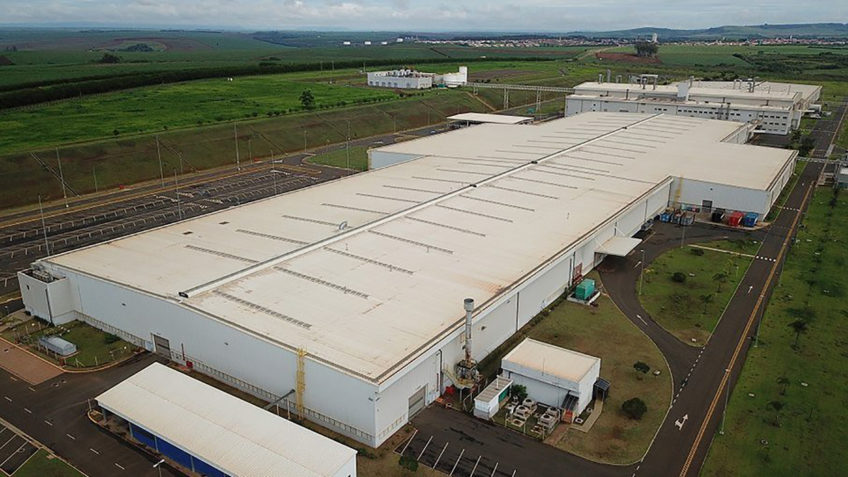
These two companies are already building factories in the country, betting on local production of electrified vehicles and contributing to the expansion of the national market.
In addition to them, other brands like GAC and Omoda Jaecoo have already started operations in Brazil and plan to produce vehicles in the country.
Curiously, even before they began producing cars in Brazil, BYD and GWM had already made a significant shift in the local market for electric and hybrid vehicles, which until recently was considered nascent.
According to data from the Brazilian Association of Electric Vehicles (ABVE), the share of electric vehicles in the national market has grown significantly in the past two years, largely due to the entry of these Chinese brands.
However, the success of these companies does not guarantee that all Chinese automakers will be able to establish themselves in Brazil.
A recent example is Seres, which started operations in 2023, bringing electric SUVs like the Seres 3 and Seres 5, but faced pricing difficulties and lack of experience in the market, closing its activities in mid-2024 after selling only eight cars.
The manufacturer Dongfeng, which is one of the owners of Seres, plans to attempt a new entry into Brazil with more recent models, according to former importers.
Another notable case is the startup Neta Auto, which announced its entry into Brazil during the 2024 Interlagos Festival, presenting three models at competitive prices.
However, the challenging economic moment in China has impacted its plans for South America.
In recent weeks, Neta has started to deactivate its Brazilian social media accounts, and according to the magazine Quatro Rodas, some of the brand’s dealerships canceled their openings just before inaugurating.
The parent company Hozon Auto stated that such bankruptcy speculations are unfounded and that it maintains plans for major expansion in Brazil.


New Brands Bet on the Country
In addition to these situations, other Chinese automakers are announcing their arrival or return to the Brazilian market.
Changan Automobile, which has been absent since 2016, confirmed that it will return to the country focusing on electric SUVs, using its own technology.
One of the models already spotted testing in São Paulo is the Avatr 11, a result of a partnership with Huawei.
Although there is no official launch date, it is expected that its vehicles will reach the Brazilian market starting in 2025, although the possibility of local production is not yet confirmed.
Another example is MG Motor, a British brand with over 100 years of history, now owned by Chinese Saic Motors, which plans to enter Brazil in the same year.
With the MG 4 electric hatchback currently undergoing homologation, MG aims to compete in the entry-level electric and hybrid car segment, seeking to attract consumers looking for technology coupled with affordable prices.
The Geely Group, which in addition to Volvo also controls the brands Zeekr and Lynk & Co, plans to expand its operations in Brazil with the entry of Polestar, Volvo’s sports brand.
Furthermore, it will have its own operations for Geely vehicles and the Riddara pickup, which bets on medium-sized electric pickup technology.
The expectation is that Geely will build a factory in Brazil with high-volume production, although the location of the unit has not yet been officially announced.
Strategic Partnerships and Challenges in the Brazilian Market
A promising startup is Leapmotor, which gained prominence in 2023 by closing a strategic partnership with Stellantis, the giant that owns brands like Fiat, Jeep, Citroën, and Peugeot.
With this, Leapmotor seeks to leverage Stellantis’ infrastructure to expand the offering of electric vehicles in Brazil.
The C10 SUV is the first model that will arrive here, followed by the B10 and the B01 sedan, which is expected to compete with the BYD Seal.
In addition to direct sales, the partnership allows Leapmotor to explore alternative business models, such as vehicle subscriptions and fleet services, using Stellantis’ established network.
Even in the face of this promising scenario, the challenges of the Brazilian market are not few.
High production costs, tax burdens, regulatory requirements, and the need to adapt to local consumer preferences are obstacles that some automakers cannot overcome.
Moreover, intense competition with traditional, national, and international brands forces the Chinese companies to be agile and innovative to secure their space.
Therefore, Brazil represents a market full of opportunities for Chinese automakers, but also a challenging terrain where only brands that can adapt and invest correctly will succeed in the long term.
Do you think Brazil will continue to be a fertile ground for new Chinese brands, or could the difficulties hinder this expansion? Share your thoughts in the comments!