Portuguese
  Spanish


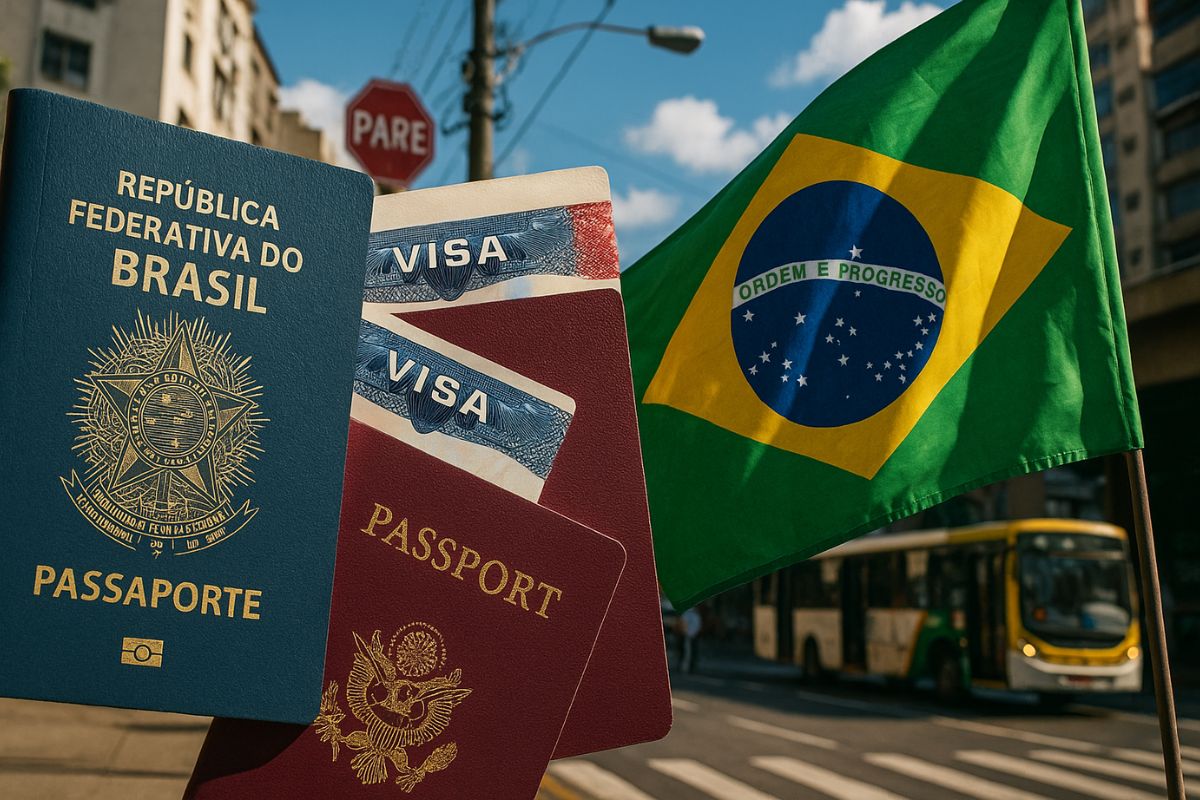


The Resumption Of Visa Requirements For American Tourists, Based On The Principle Of Reciprocity, Contributed To The U.S. Document Losing Positions In The Global Mobility Ranking.
For the first time in 20 years, the American passport is not among the ten most powerful in the world. The document now ranks 12th in the Henley Passport Index, one of the most respected global travel freedom rankings. The decline was influenced, among other factors, by Brazil’s decision to resume requiring visa and passport with entry authorization for tourists coming from the United States starting in April this year.
According to the G1 portal, the measure from the Brazilian government follows the principle of reciprocity, since Brazilian citizens also need a visa to enter U.S. territory. The direct consequence of this diplomatic change was felt on the global stage, with the U.S. passport, which guarantees access to 180 destinations without a prior visa, losing strength compared to Asian and European nations, which now dominate the top of the list.
The Impact Of Reciprocity On The Global Ranking
The Henley Passport Index, created by the consultancy Henley & Partners, analyzes 199 passports and 227 travel destinations, ranking them by the number of countries that their holders can enter without a visa.
-
Brazil’s Federal Revenue Auction: iPhone 13 for $95, PlayStation 4 for $80, and Volkswagen Jetta for $2,600 Among 232 Lots Available

-
Tech Giant Oracle Lays Off 21,000 Employees and Invests $70 Billion in Artificial Intelligence

-
Chilean Giant Acquires St. Marche, Expanding from Discount to Premium Supermarkets in São Paulo’s High-End Retail Market
-
After 60 Years of Selling Cheap Milk, Brazilian Family Invests in $4,000 Equipment to Transform Farm’s Milk into Premium Sweets, Producing 2 Tons Daily and Aiming for $6.4 Million


In the latest update, released on October 7, the Singapore passport was ranked as the most powerful, allowing access to 193 destinations.
The Exit of the U.S. from the Top 10 Was A Significant Milestone, and the consultancy directly pointed to the change in Brazilian policy as one of the reasons for this reclassification.
Brazil’s decision, while sovereign and based on a common practice in international relations, illustrates how a country’s migration policies can have a cascading effect.
By reinstating the requirement for visa and passport authorization for Americans, Brazil reduced the number of “free” destinations for U.S. citizens, directly impacting their score on the index.
The Change Reflects A Geopolitical Scenario Where Mobility Has Become A Tool Of Soft Power.
A Decade Of Loss Of Power For The American Passport
The decline of the American document is not an isolated event, but rather part of a trend observed over the past decade. In 2014, the United States held the top spot in the rankings.
According to Christian H. Kaelin, creator of the Henley Passport Index, the loss of positions is related to a “fundamental shift in global mobility and the dynamics of soft power.”
He States That “Nations That Embrace Openness And Cooperation Are Advancing Rapidly, While Those That Rely On Past Privileges Are Being Left Behind.”
While the U.S. loses ground, Asian and European countries consolidate their dominance.
Following Singapore, South Korea (190 destinations) and Japan (189) appear at the top. European nations such as Germany, Italy, Spain, and Switzerland also stand out, with access to 188 countries.
This Reconfiguration Of Mobility Power Shows That The Strength Of A Passport Is No Longer A Guaranteed Privilege, But A Result Of Continuous Negotiations And Openness Policies.
And How Does The Brazilian Passport Fit Into This Scenario?
The change in requirement for visa and passport did not only affect Americans. The Brazilian document also lost positions in the ranking.
In July, Brazil ranked 16th, with entry permitted in 170 countries. It has now fallen to 19th place, ensuring access to 169 destinations, tied with Argentina and San Marino.
The Decline, Though Small, Signals The Complexity Of Diplomatic Relations And How Visa Exemption Agreements Are Delicate And Volatile.
For Brazilians, the situation reinforces the importance of diplomatic negotiations to expand travel freedom.