






 Portuguese
  Spanish


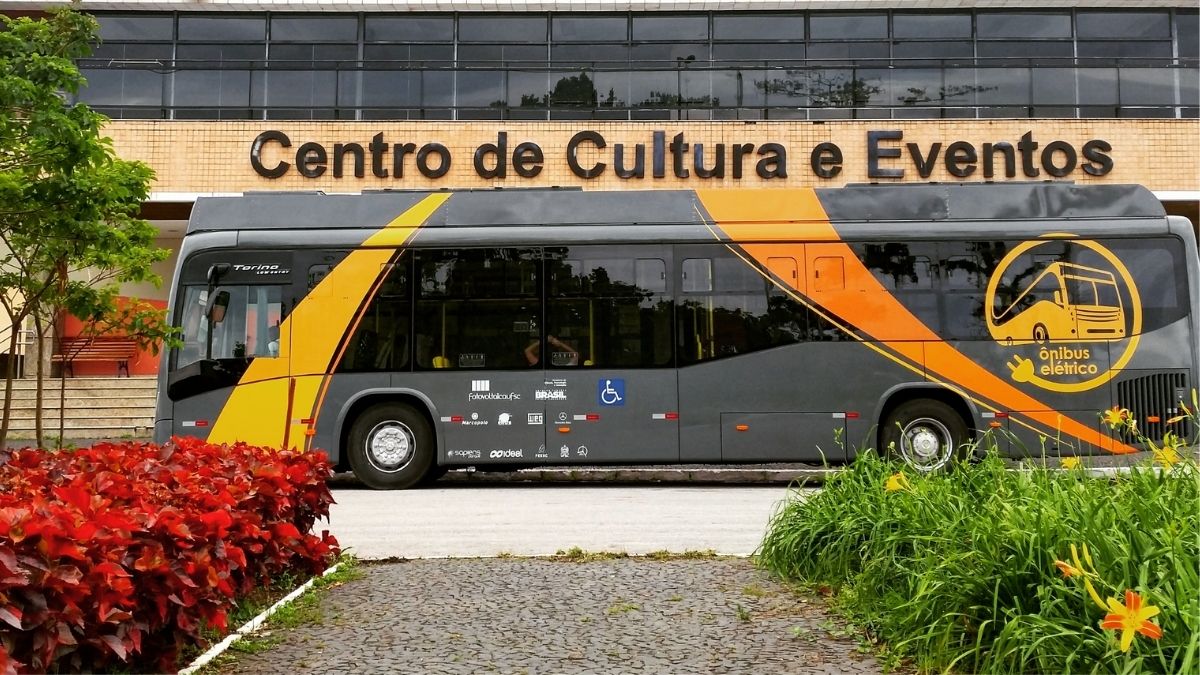

New Alternative Bus Powered Totally by Solar Energy Has Already Traveled 100 Thousand Km and Points to a Promising Future with Reduced Fuel Use
Researchers from the Photovoltaic Laboratory at the Federal University of Santa Catarina (UFSC), in partnership with major companies WEG, Marco Polo, and Eletra, developed a bus powered entirely by solar energy. The electric vehicle has already traveled 100 thousand kilometers without showing any problems and without using fuels. The assembly process of the new bus is entirely done in Brazil, with local parts.
The prototype is named ebus and is a great alternative to fossil fuel-powered vehicles at a time when gasoline and diesel reach exorbitant prices. The innovation has earned the title of the first electric vehicle that has a battery powered entirely by photovoltaic solar energy. Learn more about the characteristics of this bus and how it traveled 100 thousand kilometers.
Meet the Solar Powered Bus Created by UFSC with the Video Below
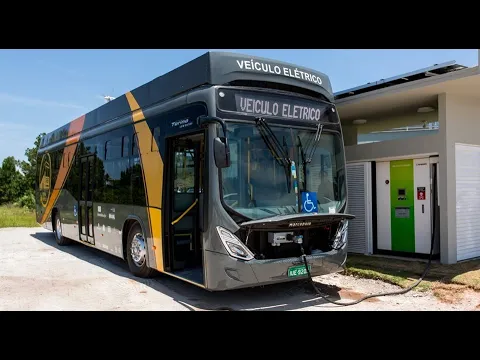

Unprecedented Bus Is Being Used to Transport Teachers and Students in Florianópolis
The new electric vehicle created in Santa Catarina, in partnership with WEG, is recharged at the station of the Photovoltaic Laboratory at UFSC and has been used for transporting students, visitors, and professors from the campus located in Florianópolis. The bus has its own route and after completing it, it stops at the charging station to recharge.
-
What is a red flashlight used for, after all? See why it is so commonly used at night.

-
He has never read a line of code, but he already knows how to work: the French company UMA presented in Paris the Northstar, its first AI-powered humanoid robot designed for factories and warehouses, capable of copying tasks just by observing an employee in action.

-
A young Kenyan engineer collects plastic waste from the streets and transforms it into robots that translate physics lessons into sign language in real-time, a machine made with old bottles that teaches what was missing to deaf children left out of science.
-
What is the dark substance found in the sand of Ipanema Beach? Civil Police conduct an examination, collect samples of the material, and initiate an investigation to identify the composition, clarify the origin, and verify if there was an environmental crime.




The innovation created in Florianópolis operates as a true mobile laboratory for sustainability and electric mobility studies. During its movement along the established route, the bus is analyzed for battery performance, installed technology, and efficiency. If all goes well, the researchers aim to mass-produce this model and implement it for public transport at the national level.
The Vehicle Features High Technology and a System That Saves Battery Energy Using Special Braking
The creation by researchers and companies in Florianópolis includes a groundbreaking Regenerative Braking System. It can harness the kinetic energy from the bus’s wheels and brake for solar energy to generate electricity, in addition to what is provided by the battery. Thus, the vehicle has another source besides solar to operate.
The vehicle created in partnership with WEG is automated and also features an internal high-speed wireless internet system to create a type of “productive displacement.” In addition, the interior is equipped with meeting tables so that professors, students, and visitors using the transport can work or study during the journey.
All the solar energy for the vehicle is generated from photovoltaic panels installed on the top of the laboratory, which convert light into energy and store it at the station. The vehicle then receives the stored charge in lithium batteries located on its roof. The autonomy reaches 70 kilometers without the need for charging. This could be the solution for a future without fuels for vehicles.
Federal Government Funded Part of the Project, Allowing the Transportation of Over 30 Thousand Passengers Using Only Solar Energy as Fuel
For the implementation of this technology, by the UFSC, the project received around R$1 million in investment from the Ministry of Science, Technology, Innovations, and Communications of the federal government. However, the researchers also sought partnerships with WEG, Marco Polo, and Eletra to make the prototype even more efficient.
This allowed the bus to complete over 100 thousand kilometers traveled, equivalent to two and a half laps around the world. The daily route that the electric vehicle travels is 26 kilometers, and it has already transported over 30 thousand passengers since 2017, the year it began circulating in the cities of Florianópolis and Jaraguá do Sul (SC). The bus journey takes about 30 minutes and provides passengers with comfort, without the need for fuels.


