






 Portuguese
  Spanish


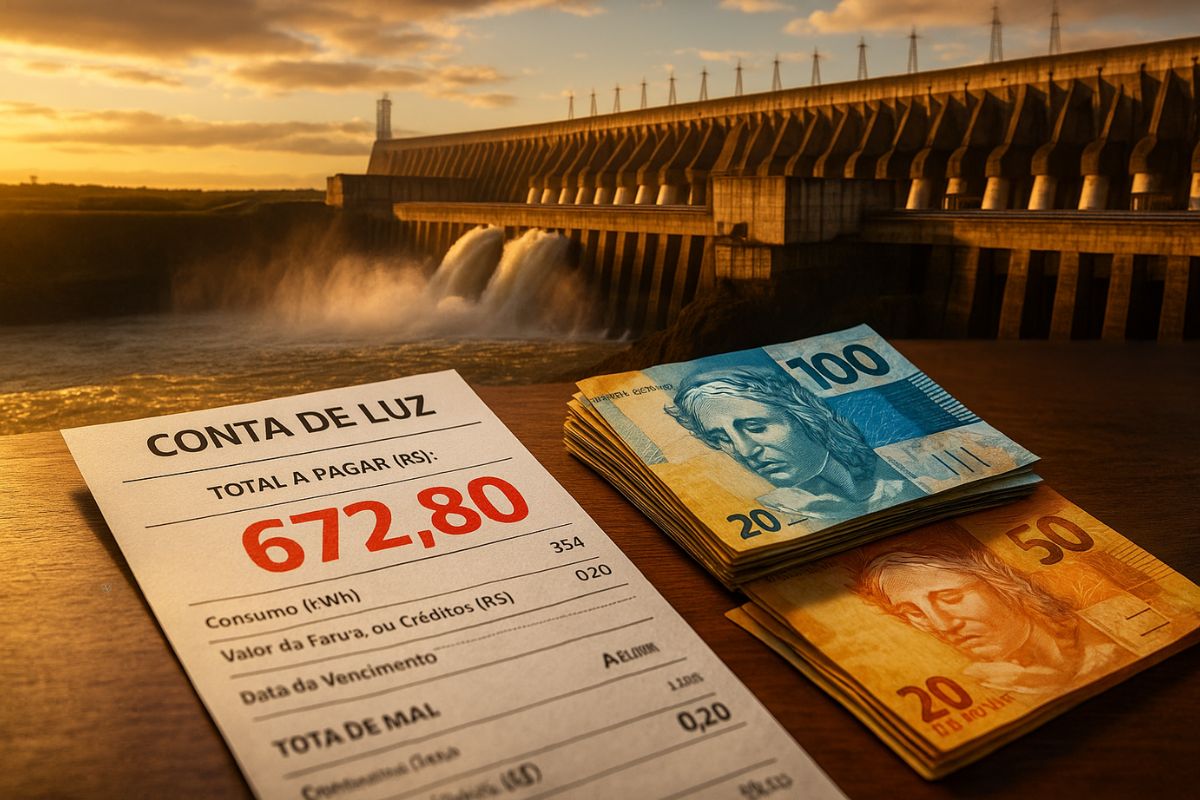


Study by the Legislative Consultancy of the Chamber Indicates That the Hydroelectric Tariff Includes Socio-environmental Expenses Without Parliamentary Approval, Artificially Raising Prices Paid by Millions of Consumers.
A study by the Legislative Consultancy of the Chamber of Deputies (Conle) revealed that the tariff of the Itaipu Binational Hydroelectric Plant has illegal socio-environmental expenses embedded, created without congressional approval. The impact reaches over R$ 6 billion per year, an amount that directly affects Brazilians’ electricity bills.
Despite the repayment of the plant’s construction debt in 2023, which should have reduced prices, additional costs have prevented the tariff from falling, making Itaipu energy more expensive than that of other hydroelectric plants such as Belo Monte, Jirau, and Santo Antônio.
How Illegal Expenses Arose
The expenses were introduced in 2005 through Note Reversal No. 228, a diplomatic agreement between Brazil and Paraguay.
-
As Brazil Expands Social Welfare, Survey Reveals 40% Blame Poverty on Laziness, While 58% Cite Lack of Opportunities

-
China Tightens Control on Antimony, Driving Prices from $22,000 to Nearly $40,000 per Ton as U.S. Rushes to Bolster Strategic Reserves

-
BlackRock Freezes $1 Billion in Brazilian Renewable Energy, Impacting 1.5 GW of Planned Projects and Highlighting Investor Concerns Over Infrastructure Bottlenecks Cutting Up to 25% of Solar and Wind Generation
-
Labor Shortage: Despite Record Average Salary, 90% of Brazilian Bar and Restaurant Owners Struggle to Hire Key Roles Like Sushi Chefs and Head Cooks


The document assigned Itaipu the role of financing socio-environmental projects, but was never submitted to the National Congress, as required by the Constitution in cases of treaties that create financial burdens.
This lack of legislative validation makes the expenditures irregular, according to Conle.
The Foreign Ministry acknowledged in 2024 that the note has no financial scope, which would invalidate its use to change tariffs.
Nonetheless, Brazil and Paraguay increased the amounts since 2022, raising the cost of electricity and compromising the economic balance of the plant.
The Escalation of Costs
The numbers are impressive. According to Conle, the socio-environmental expenses reach US$ 1.2 billion per year — more than R$ 6 billion at the current exchange rate. In 2022, under the Bolsonaro government, the amount was US$ 300 million. Under the Lula government, it jumped to US$ 840 million in 2023 and is expected to reach US$ 1.5 billion in 2024 and 2025. As Brazil consumes about 80% of Itaipu’s energy, most of the bill falls on Brazilian consumers.
This artificial increase keeps the energy from the binational above that of other plants.
A study by the National Front of Energy Consumers shows that the megawatt-hour (MWh) from Itaipu currently costs R$ 246, compared to R$ 114 if the technical calculation provided in the original treaty were applied.
The price exceeds that of Belo Monte (R$ 185/MWh), Jirau (R$ 187/MWh), and Santo Antônio (R$ 213/MWh).
The Burden on Brazilians
The impact is greater in the South, Southeast, and Midwest states, where distributors are required to purchase energy from Itaipu.
Without market alternatives, consumers — especially the poorest — end up bearing higher tariffs, in a mechanism considered regressive by experts.
The distortion is also evident in the division of costs between Brazil and Paraguay. In 2024, Brazil paid for 80.5% of the energy, but received only 69.4%.
In the first half of 2025, the discrepancy continued: Brazil covered 78.5% and received 66%, while Paraguay gained a proportional advantage.
Ignored Precedents and Lack of Transparency
Congress had already recognized the need for legislative approval in similar cases.
In 2009, when payments to Paraguay for energy ceded tripled from US$ 120 million to US$ 360 million annually, the agreement was sent to the Legislature, signed by Celso Amorim, Guido Mantega, and Edison Lobão.
In the case of the 2005 note, this procedure was not followed.
Beyond the illegality, there are accusations of lack of transparency in the agreements.
Documents released by the press show contracts with irregularities, such as sports agreements that provided for the purchase of more balls than the number of children served.
To this day, details of the contracts are not publicly available.
For Conle, the socio-environmental agreements of Itaipu violate the original treaty and compromise the logic of technical price calculation.
According to the consultants, the model not only prevents the natural decrease of tariffs but also benefits political and diplomatic interests to the detriment of the Brazilian consumer.
And you, do you think it’s fair that Brazilians bear R$ 6 billion annually in illegal socio-environmental expenses from Itaipu? Does this model strengthen or weaken transparency and justice in the power sector? Leave your opinion in the comments — your perspective can enrich this debate.








Gatuno presidente, preços superfaturados sempre.
Com um **** como presidente e querendo se eternizar no poder, as coisas só podem piorar.
Pelos números e datas, todo o descontrole da administração recai nesse governo de populismo barato. Isto só vem prejudicar quem quer investir, esse é um dos itens do custo Brasil.