






 Portuguese
  Spanish


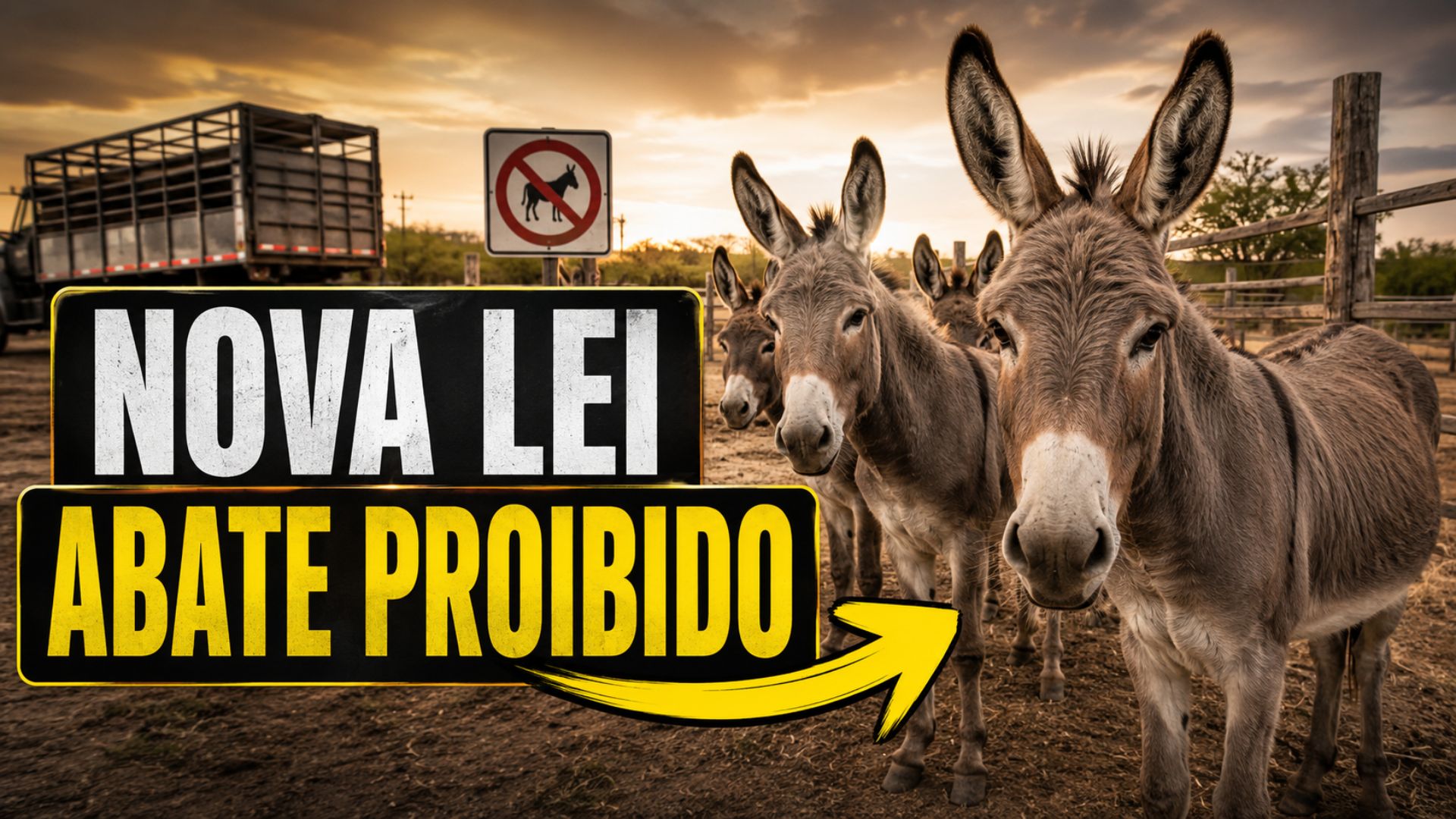

Bill under consideration in the Senate reignites debate on the slaughter of donkeys in Brazil, amid warnings about the risk of extinction, skin export to China, traceability failures, and possible health threats related to the transport and confinement of these animals.
The Bill 2,613/2026, under consideration in the Federal Senate, proposes prohibiting the slaughter of donkeys throughout the national territory, with exceptions only for sanitary necessity situations, such as the control of infectious diseases.
The proposal originated from a legislative suggestion presented by the National Forum for Animal Protection and Defense and began to proceed as a bill after analysis by the Commission on Human Rights and Participatory Legislation.
Amid warnings about the rapid decline of the donkey population, the bill also addresses the export of skins to China and possible health impacts related to the transport, confinement, and slaughter of these animals.
-
Scottish Village with 15 Wooden Tiny Homes Provides Shelter for the Homeless: Each Unit Includes a Private Door, Kitchen, Bathroom, and Living Room in a £3 Million Project

-
Brazil’s Superior Court rules banks like Caixa, Banco do Brasil, and Santander not liable for compensation in fake customer service scams.
-
Using plastic from just 6 ocean-recovered bottles, a 25-year-old engineer creates a bionic prosthetic in 24 hours in a country where 95% of amputees have never had access to a new leg.
-
Scientists Discover Monkey Laughter Resembles Human Laughter from 15 Million Years Ago, Investigating Links to Language Origins





According to the proposal, commercial slaughter would no longer be allowed in the country, while the exception would be restricted to situations related to public health and duly justified for sanitary reasons.
Filed on May 26, 2026, the text had a deadline for the submission of amendments between May 27 and June 2, according to the official Senate processing page.
After this period, the matter was sent to the Commission on Agriculture and Agrarian Reform, where it has been awaiting the appointment of a rapporteur since June 3, 2026.
As the proposal is still under consideration in Congress, the prohibition is not in effect, and the bill needs to be reviewed by the relevant committees before advancing to the next stages of the legislative process.
Donkey slaughter under Senate scrutiny
The initiative originated from Legislative Suggestion 9/2025, presented by the National Forum for Animal Protection and Defense through the e-Citizenship Portal.
After reaching the Commission on Human Rights, the proposal received a favorable opinion from Senator Fabiano Contarato, from PT of Espírito Santo, and began to proceed as a bill.
In defending the measure, Contarato stated in the opinion that the proposal seeks to preserve the species in the face of the risk of extinction, promote animal welfare, and reduce health risks associated with poor transport and slaughter conditions.
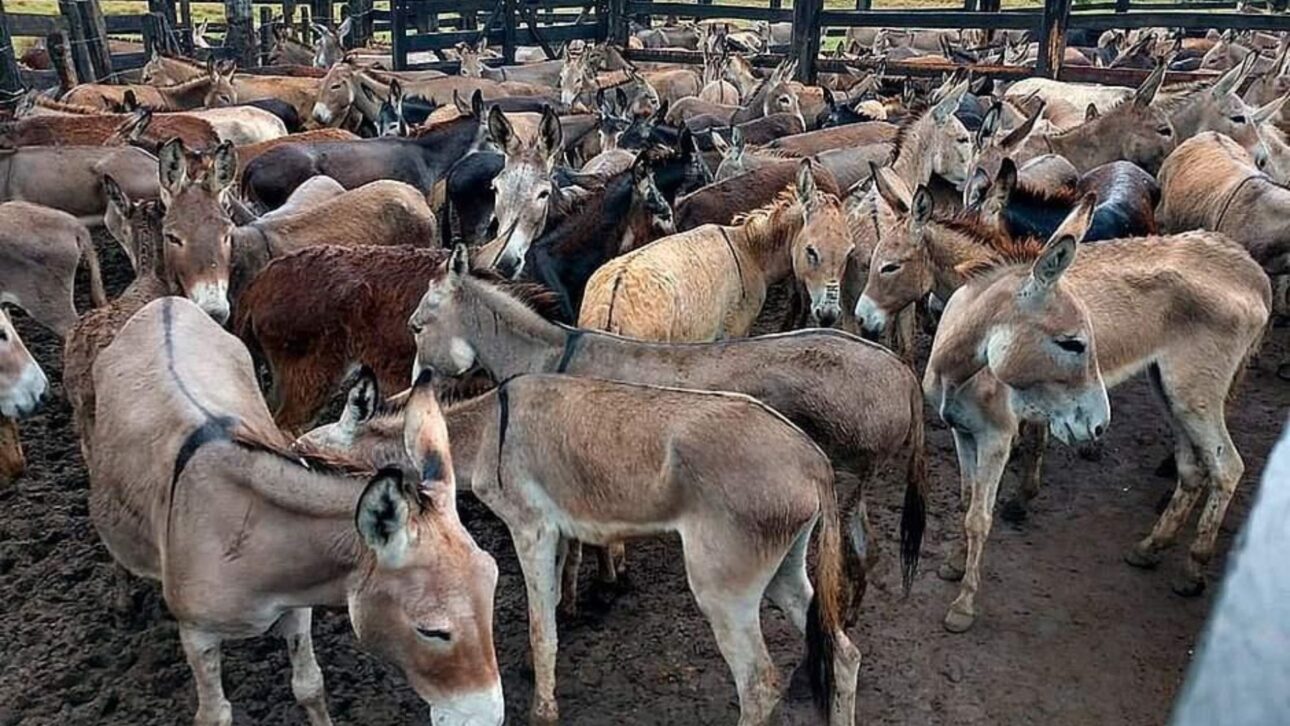
For the senator, the initiative is also related to public health and the sustainability of Brazilian agribusiness, without representing significant losses to the national economy.
In the evaluation of the National Forum for Animal Protection and Defense, the way some donkeys are captured, transported, confined, and traded can compromise biosecurity.
The entity states that the poor traceability of these animals creates health vulnerabilities and can affect other equines, such as horses, in addition to posing a risk to the image of the agricultural sector.
Among the central points of the justification is the concern about the spread of diseases in a chain marked, according to the authors of the suggestion, by control and inspection failures.
According to the Senate Agency, the authors of the suggestion cite risks linked to the spread of glanders, a zoonosis that can affect animals and humans.
Skin export to China drives discussion
Another point cited by the entity involves the commercial destination of the slaughtered animals, especially in a chain focused on skin export to the Chinese market.
According to the National Forum for Animal Protection and Defense, donkeys have been bought or captured, transported over long distances, and confined on farms with little or no traceability before slaughter.
After slaughter, the skin is exported to China, where it is used in the production of ejiao, a product associated by the entity with supposed medicinal properties without scientific proof presented in the justification.
The meat is also mentioned as an item destined for Vietnam or eventually consumed in Brazil in the form of charque or jabá.
Although the destination of the skins is a relevant part of the discussion, the central argument of the project is linked to the continuation of slaughter under the conditions described by the forum.
In this evaluation, maintaining the practice could lead to a drastic decline in the donkey population in Brazil, especially given the lack of control over origin, transport, and confinement.
For this reason, the entity advocates for the immediate prohibition as a way to preserve the species, protect public health, and avoid sanitary problems associated with the slaughter chain.


Donkey is cited as historical and cultural heritage
Besides the sanitary and environmental debate, the project also highlights the historical role of the donkey in Brazil, especially in regions where the animal was essential for rural activities and transportation.
The justification recalls that the animals, also called asses, donkeys, or burros, were brought from Africa hundreds of years ago and were important in transporting water, food, building materials, and people.
In the semi-arid regions, especially in the Northeast, the donkey became associated with the resilience of the sertanejo and rural life, also becoming a cultural reference in music and popular manifestations.
Based on this trajectory, the National Forum for Animal Protection and Defense argues that the animal has become part of Brazil’s historical and cultural heritage.
This cultural link appears as a reinforcement to the proposal, but does not replace the sanitary and species preservation arguments presented during the Senate’s proceedings.
In the evaluation sent to the Legislature, large-scale slaughter, combined with the lack of control over origin, transportation, and confinement, makes the chain vulnerable and requires a legislative response.
Processing of PL 2.613/2026 in the Senate
With the closing of the amendment period, the official Senate page reports that no changes were submitted to the Board.
After this stage, the matter was dispatched for analysis by the Committee on Agriculture and Agrarian Reform and, subsequently, should proceed to the Environment Committee.
Until the conclusion of the proceedings, the slaughter of donkeys is not prohibited by the new proposal, which still needs to be discussed and receive opinions in the committees.
Only after completing the necessary legislative steps can the PL advance to possible final approval and sanction, if it gains sufficient support in Congress.
The discussion brings together animal preservation, public health, international trade, and cultural memory in an attempt to create a national rule to prevent the donkey from continuing to be commercially slaughtered in Brazil, except in justified sanitary situations.


