






 Portuguese
  Spanish


In Maputo, Mozambique, engineer Marta Uetela, 25 years old, created BioMec and developed a prosthesis made from ocean plastic: with the material from just 6 bottles taken from the sea, she assembles a new leg in 24 hours in a country where the majority of amputees have never had access to a prosthesis.
Some people see a bottle floating in the sea and think of trash. Engineer Marta Uetela sees a new leg. At 25 years old, in Mozambique, she created BioMec, a company that takes plastic discarded in the ocean and transforms it into prostheses for those who have lost a limb. With the material from just 6 bottles taken from the sea, BioMec assembles a prosthesis made from ocean plastic in 24 hours, in a country where the overwhelming majority of amputees have never had access to one.
The project was highlighted by the platform What Design Can Do, which gathers design solutions against waste. According to the initiative, BioMec produces the prosthesis in 24 hours, compared to more than a thousand hours by the traditional method, and has the capacity to make 20 prostheses per month. Instead of polluting the beach, the plastic becomes mobility for people who were walking without options in Mozambique.
From 6 sea bottles to a new leg in 24 hours
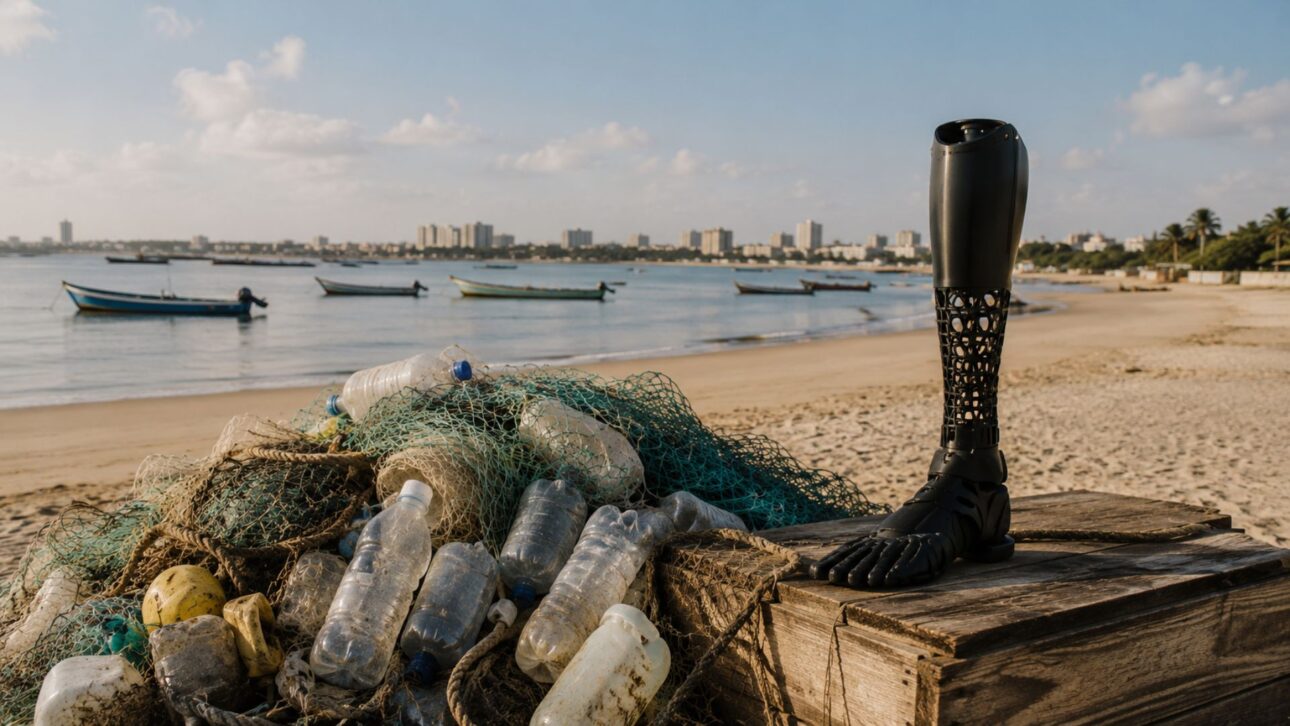
To assemble a below-knee leg prosthesis, BioMec uses the plastic from just 6 bottles or about 250 grams of discarded fishing net from the ocean.
-
Scottish Village with 15 Wooden Tiny Homes Provides Shelter for the Homeless: Each Unit Includes a Private Door, Kitchen, Bathroom, and Living Room in a £3 Million Project

-
Brazil bans donkey slaughter to prevent extinction and address health risks amid rising demand for hides in China.
-
Brazil’s Superior Court rules banks like Caixa, Banco do Brasil, and Santander not liable for compensation in fake customer service scams.
-
Scientists Discover Monkey Laughter Resembles Human Laughter from 15 Million Years Ago, Investigating Links to Language Origins





It’s little material for a huge result: giving someone back the ability to walk.
And the speed is the second shock.
While the traditional process of manufacturing a prosthesis can take more than a thousand hours, the prosthesis made from ocean plastic by BioMec is ready in 24 hours.
The difference changes everything for those who wait.
Instead of months of waiting, the patient can receive the piece in a single day, at a pace that no conventional method achieves in that reality.
And it can be scaled.
With the capacity to produce 20 prostheses per month, BioMec transforms a laboratory idea into something that serves a real queue of people.
Little plastic, little time, big impact.
Who is Marta Uetela and how BioMec was born
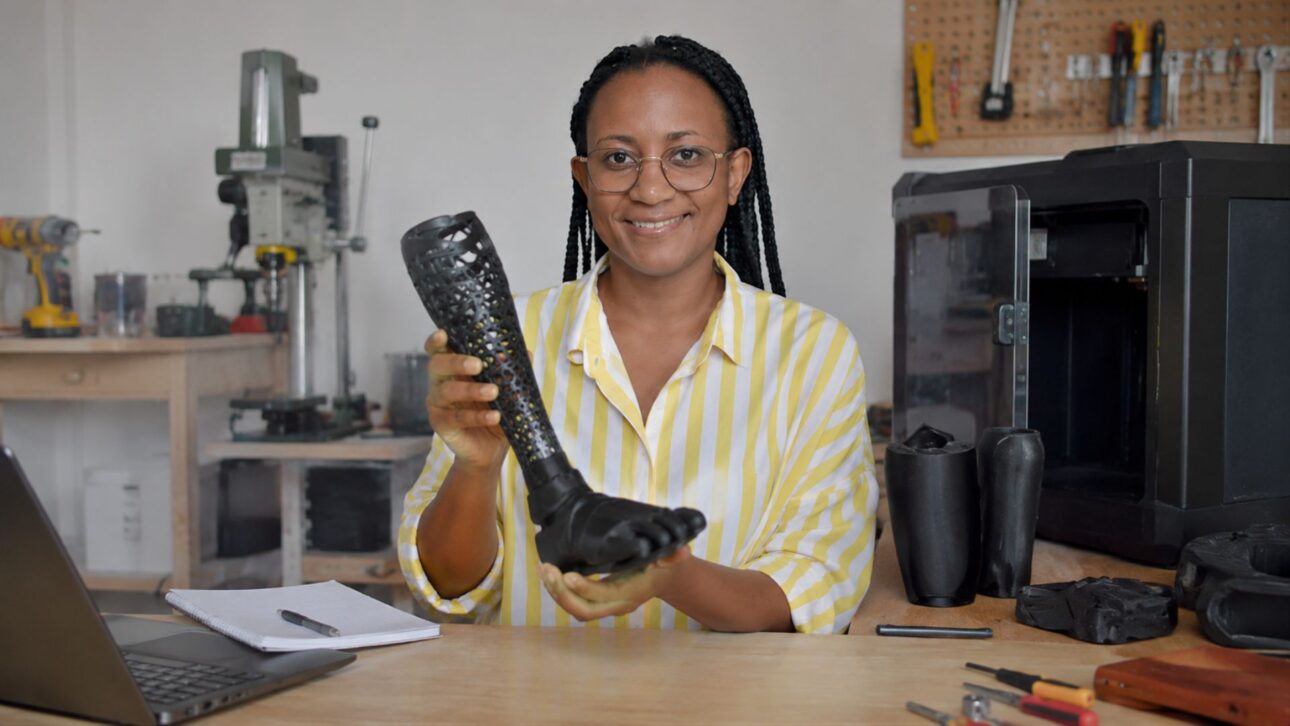
Marta Uetela was 25 years old when she founded BioMec, bringing together a team of students and recent graduates in engineering, medicine, chemistry, and design.
The idea was not born in a classroom, but from the pain of seeing a friend struggle to get a prosthesis after an accident.
It was this episode that sparked the idea.
Upon researching the problem, Marta Uetela discovered that the lack of access to prostheses was enormous in Mozambique, and decided to tackle two crises at once: ocean waste and mobility.
The engineer already had a knack for entrepreneurship.
Before BioMec, Marta Uetela had created another business focused on housing, showing that her problem-solving design vein came from earlier.
The prosthesis was the next leap.
Combining engineering, sustainability, and purpose, Marta Uetela established a company that is now recognized well beyond Mozambique.
The drama: most amputees without prosthesis in Mozambique
To understand the size of the solution, one must see the size of the gap.
In Mozambique, the vast majority of amputees have never had access to a prosthesis, whether due to high cost, long waits, or lack of healthcare services.
Without a prosthesis, the loss of a limb also becomes a loss of autonomy, work, and daily independence.
The numbers vary according to the source.
What Design Can Do itself mentions 95% of the amputee population without access, while other surveys about BioMec cite around 90%, but in any scenario the conclusion is the same: almost no one can get one.
It’s a bottleneck that condemns people to immobility.
When a prosthesis is expensive and takes more than a thousand hours to be ready, it simply doesn’t reach most amputees in a poor country.
This is exactly the gap that BioMec aims to fill.
Bringing an affordable and quick prosthesis to those who never had one is what drives the work in Mozambique.
Technology steps in where the system has failed.
How ocean plastic becomes a prosthesis
The trick is to combine two problems and come up with a solution.
BioMec collects PET bottles and abandoned fishing nets, known as ghost waste, which suffocate the sea, and uses this material as raw material.
Treated and molded, the material becomes the structure of a custom-made ocean plastic prosthesis for each patient.
The technology is not just recycling.
The company developed a system that improves compatibility between the stump and the prosthesis, increasing user comfort, a detail often missing in cheap solutions.
Comfort, here, is a central issue.
An uncomfortable prosthesis ends up abandoned in a drawer, so making an ocean plastic prosthesis that people actually want to use is part of the engineering challenge.
And the cycle closes.
Each piece produced is less plastic in the sea and one more person standing, in a rare meeting between environment and health.
Waste that becomes mobility.
The fishing community that becomes a partner
BioMec’s model is smart because it spreads the gain.
The plastic doesn’t fall from the sky: it’s the local beach fishing community itself that collects and exchanges the ghost nets for some return.
Thus, fishermen earn extra income and environmental awareness, and BioMec secures the raw material it needs.
It’s a virtuous circle.
The most polluted beach in Maputo stops being just a problem and becomes a supplier, with the goal of recycling at least 20% of the discarded plastic there.
Everyone wins.
The sea becomes cleaner, the community profits, amputees receive prostheses, and BioMec grows, all from the same waste.
It’s true circular economy.
Instead of relying on endless donations, the business sustains itself by turning waste into value for various ends.
Sustainability that pays for itself.
From the Beach of Maputo to the Queen’s Recognition
Marta Uetela’s work did not go unnoticed.
BioMec received the Commonwealth Points of Light, an award given by the then Queen Elizabeth II to young social leaders, according to Points of Light itself.
Receiving such recognition puts a startup born on a beach in Maputo on the world map of social innovation.
And it wasn’t the only trophy.
BioMec was also among the top three startups in Africa by ClimateLaunchPad and reached the final stages of other international innovation awards.
The impact numbers accompany the fame.
The company has already produced over 700 prostheses for people in countries like Mozambique, South Africa, and Angola, taking the ocean plastic prosthesis beyond borders.
From a local problem to a regional reference.
What started with 6 bottles and a friend without a leg turned into an operation that changes lives in more than one country.
What the Case of BioMec Shows
The biggest lesson is to unite problems that seemed separate.
Marta Uetela showed that the waste that kills the ocean can become the leg that restores life to an amputee, in a single stroke of engineering and creativity.
Where there was a floating bottle and people without mobility, today there is a low-cost prosthesis ready in 24 hours.
Of course, it’s important to keep your feet on the ground.
BioMec is an award-winning and promising initiative, but it still operates on the scale of hundreds of prostheses, and bringing the solution to all amputees in Mozambique and Africa requires a lot of investment and time.
Even so, the direction is clear.
Proving that a prosthesis made from ocean plastic can be fast, cheap, and dignified is the kind of innovation that tackles inequality and pollution at the same time.
From the beach of Maputo to three countries, BioMec transformed what everyone throws away into a second chance to walk.
And showed that sometimes the most powerful technology is the one that arises by looking at the problem no one else sees.
And you, did you imagine that the plastic from just 6 bottles taken from the sea could become a prosthesis ready in 24 hours? Tell us in the comments what you think of this type of innovation that cleans the ocean and restores mobility to amputees.


