






 Portuguese
  Spanish


Inaugurated in April 2026 in Rutherglen, near Glasgow, the Harriet Gardens village is the second by Social Bite in Scotland. There are 15 wooden nest houses, each with its own door, kitchen, bathroom, and living room, in a £3 million social housing project to accommodate people experiencing homelessness.
Taking someone off the street is not just about giving them a mattress in a crowded shelter. It’s about giving back a door that locks, a kitchen, a bathroom, and a space of their own. It was with this idea that the Scottish organization Social Bite inaugurated, in April 2026, an entire village of social housing made of small wooden houses, named Harriet Gardens, in the city of Rutherglen, near Glasgow, Scotland. The information is on the website of Social Bite itself.
There are 15 nest houses, each a complete miniature home, built to accommodate people experiencing homelessness with dignity. The project cost £3 million and is not limited to the properties: it comes with a community center, 24-hour professional support, and a plan for each resident to rebuild their own life. It is social housing designed as a bridge back to autonomy, not as a people warehouse.
An entire village to take people off the street
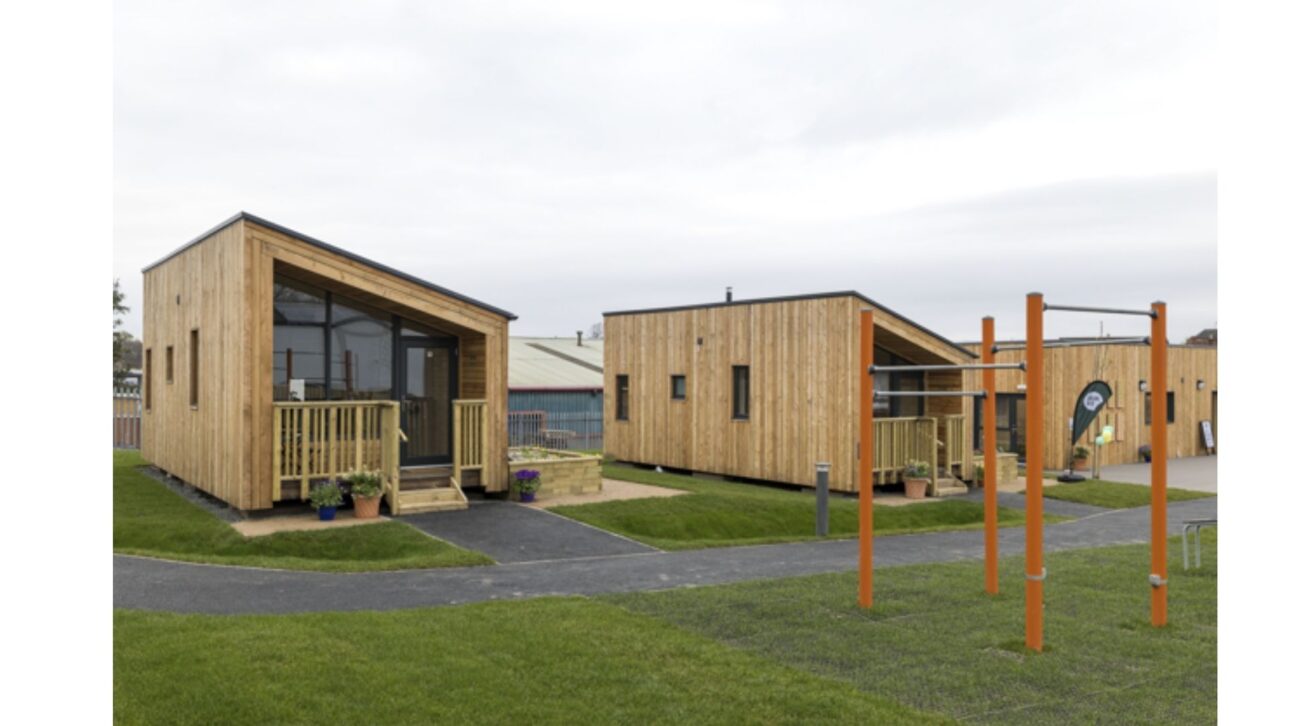
The project has a name, address, and history. Called Harriet Gardens, or South Lanarkshire Village, the village is located in Rutherglen, on the outskirts of Glasgow, and was set up in partnership with the local council of South Lanarkshire.
-
Brazil bans donkey slaughter to prevent extinction and address health risks amid rising demand for hides in China.

-
Brazil’s Superior Court rules banks like Caixa, Banco do Brasil, and Santander not liable for compensation in fake customer service scams.
-
Using plastic from just 6 ocean-recovered bottles, a 25-year-old engineer creates a bionic prosthetic in 24 hours in a country where 95% of amputees have never had access to a new leg.
-
Scientists Discover Monkey Laughter Resembles Human Laughter from 15 Million Years Ago, Investigating Links to Language Origins





It is the second village by Social Bite in Scotland, after the first one, opened in 2018 on the Granton waterfront in Edinburgh, which has already helped more than 100 residents over the years.
The logic behind it is transitional social housing. Instead of stacking people experiencing homelessness in a collective shelter, Social Bite offers each one a private space within an organized community.
The village has streets, shared green areas, and a neighborhood atmosphere, precisely to restore the sense of belonging that street life takes away.
This model matters because it tackles the root of the problem. Getting off the street is just the first step, and the hardest part is usually what comes next.
By bringing together home, community, and support in the same place, the Scottish village aims to ensure that the transition through social housing ends in a stable life, not a return to the starting point.
The 15 Wooden Nest Houses
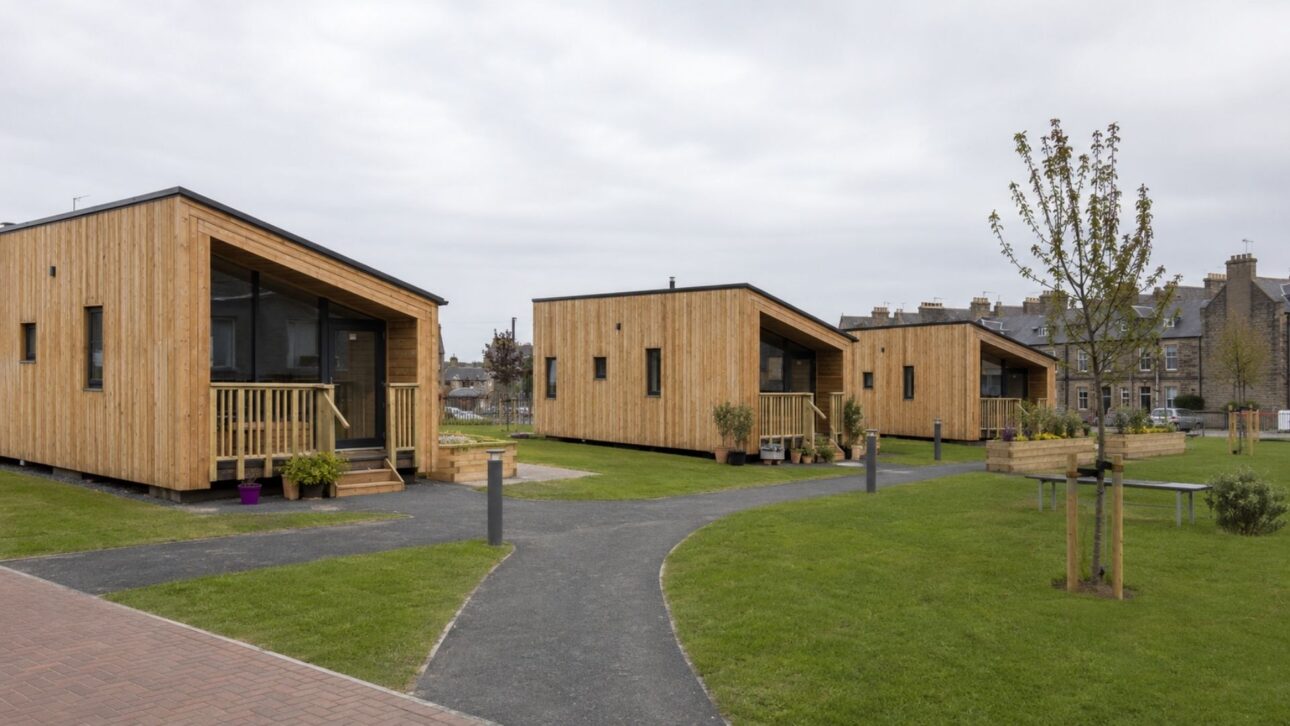
The heart of the village is the houses. Each one is a nest house, a compact and energy-efficient model, built in wood by the company Ecosystems Technologies.
It’s not a makeshift or improvised container: it’s a wooden house designed to be cozy, warm in the Scottish winter, and cheap to maintain.
The choice of material has a local touch. Both the houses and the community center were built with cross-laminated timber of Scottish origin, known as CLT, a wood construction technology that is gaining worldwide popularity for being fast, sustainable, and durable.
Each wooden house was positioned around common green areas, creating that neighborhood feeling.
There are 15 of these units in total, and together they form the village. The individual wooden house solves privacy, and the set solves isolation, two problems that often go hand in hand in the life of someone who was on the street.
It’s this combination that differentiates well-done social housing from a simple row of shacks.
See What’s Inside Each House
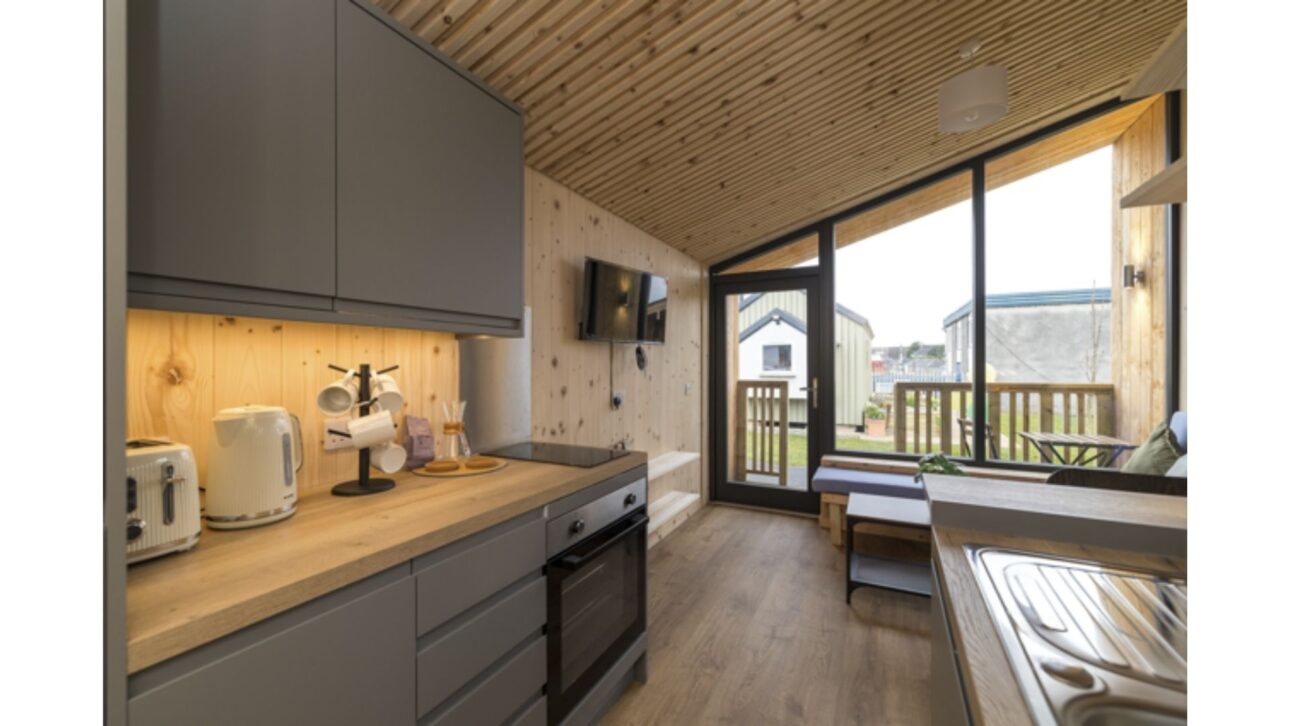
Here’s what changes the life of those who arrive. Each nest house is self-sufficient, with its own front door, kitchen, bathroom, and a living room.
It may seem basic, but for someone who has been sleeping on the street, having their own rooms, with a key to the door, is a turnaround in dignity.
The difference compared to a common shelter lies precisely in this detail. In a collective shelter, there’s a lack of privacy, a lack of autonomy, and an abundance of tension.
In the Social Bite wooden house, the resident cooks what they want, takes a bath in their own house, and closes the door at the end of the day, regaining control over the routine that the street had taken away.
That is why the project insists on the house format, not a room. A social housing with its own kitchen and living room treats the resident as an adult responsible for their own life, not as a number on a waiting list.
What is inside each nest-house is, at its core, the chance to feel human again.
£3 million and what it represents per house
The investment shows the scale of the project. The entire village cost £3 million, covering the 15 houses plus the community center and infrastructure.
In simple terms, this amounts to about £200,000 per house, a cost that reflects the quality of the wooden construction and the package of services that accompany each unit.
It is not money thrown away, but an investment with social return. Keeping a person homeless is expensive for the State, between health, security, and emergency assistance.
Providing stable social housing, with support to rebuild life, usually costs less in the long run than letting the chronic problem linger on the streets.
The community center is an essential part of this calculation. There are the shared kitchens, spaces for group activities, therapeutic support, and social areas.
It is where the village stops being just a cluster of houses and becomes, in fact, a community, adding to what is inside each wooden house the best of communal life.
Not just a roof: 24-hour support
The physical structure is half the solution. The other half is human support. The day-to-day operation of the village is managed by the Salvation Army, with a team on-site 24 hours a day to provide all kinds of support to residents, from practical to emotional.
The organization itself summarizes the role of this team. The support includes “practical help, emotional support, and guidance with daily challenges,” according to Social Bite.
Residents usually live in the village for about 6 to 12 months, with a weekly schedule of activities and opportunities to learn skills, do volunteer work, and move towards employment.
This is the detail that separates effective social housing from one that merely postpones the problem. Providing a house without support rarely suffices for those carrying years of homelessness.
By combining the wooden house with intensive support, Social Bite bets that the homeless people served there will leave the village ready for permanent housing.
The model that dialogues with Brazil
The Scottish experience directly connects with what Brazil is trying to do. São Paulo, for example, maintains the Vila Reencontro network, with housing modules and social support for homeless people, in the same logic of offering privacy and support before permanent housing. The name changes, the country changes, the principle remains the same.
The case of Social Bite reinforces some principles that apply to any city. Individual homes instead of beds in a warehouse, community instead of isolation, professional support instead of abandonment.
These ingredients appear in successful social housing projects, from Scotland to Brazil, and the village of Rutherglen is yet another living proof of this.
In the end, the message of Harriet Gardens is simple and powerful. Getting people off the streets is possible when housing is treated as a right and a new beginning.
Fifteen wooden houses, each with a door, kitchen, bathroom, and living room, have shown in Scotland that dignity and efficiency can reside in the same place.
The Social Bite village proves that quality social housing, with individual wooden houses and 24-hour support, can take homeless people off the streets and give them back a life with a door, kitchen, and future. It cost £3 million, but delivered something difficult to measure in money: dignity.
And you, do you think Brazilian cities should invest in house villages like this to tackle homelessness? Share in the comments if you believe this model would work in your city and what else would make a difference.


