Portuguese
  Spanish


In Rio Branco, Acre, Rodney Paiva Ramos gathers Brazil nut shells and wood discarded by carpentries and, with the brand Cores da Mata, shows that forest residue becomes income: these are necklaces worth up to R$ 2,000 that have already reached MASP and take Acre’s craftsmanship to London.
Some people look at the forest floor and see dirt. Rodney Paiva Ramos looks and sees jewelry. In Rio Branco, Acre, she collects fallen Brazil nut shells and gathers wood that the city’s carpentries throw away, transforming this waste into necklaces that can cost up to R$ 2,000. With the brand Cores da Mata, the artisan has become living proof that forest residue turns into income, not rubbish.
The story was told by Agência Acre, which showed how her work gained international value. The pieces from Cores da Mata have been sold at the MASP store in São Paulo since 2017, and today they cross the ocean to be sold even in London. From discarded seed to museum accessory, the journey of Rodney’s Acre craftsmanship is enviable to many brands.
From Brazil nut shell and discarded wood to a R$ 2,000 necklace
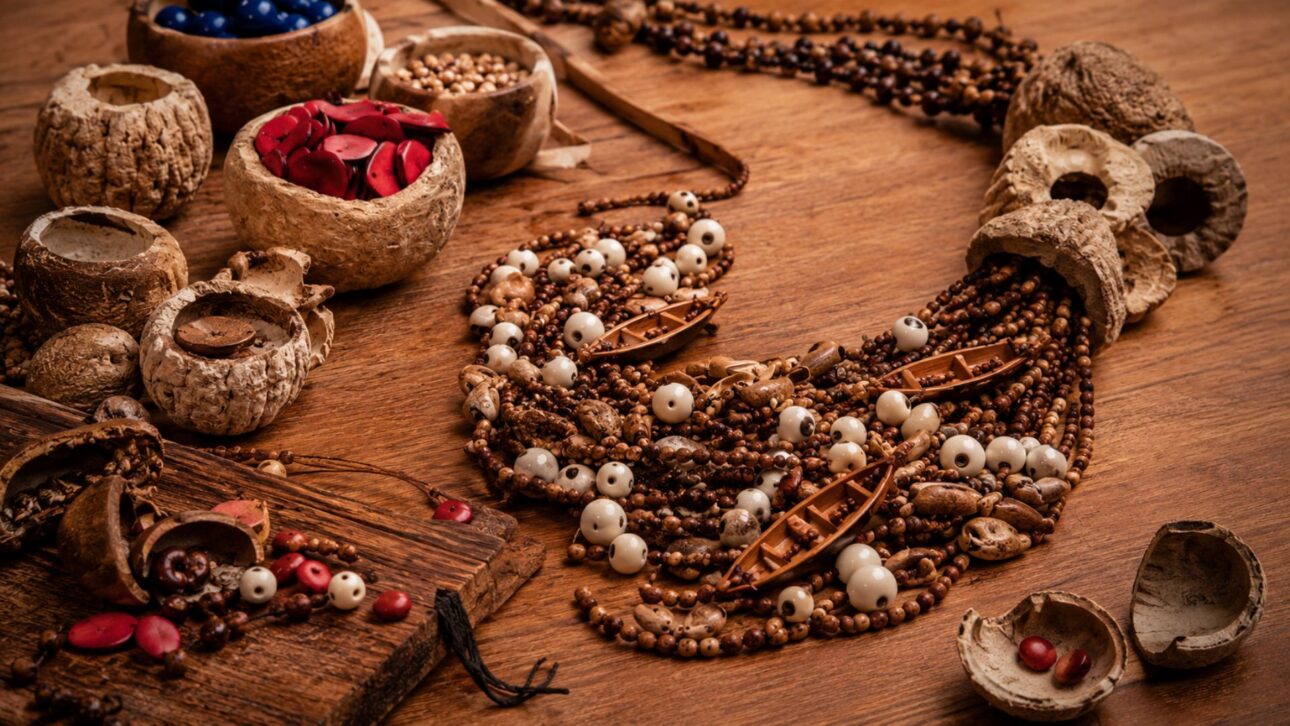
Rodney Paiva Ramos works with Amazon seeds, such as açaí, jarina, and paxiubão, in addition to Brazil nut shells and pieces of wood discarded by carpentries in Rio Branco.
-
Retired Engineer Transforms Boeing 727 into a 99 m² Home in the Brazilian Forest

-
European Country Achieves 100% Glass Recycling and 52% Municipal Waste Recovery, Highlighting Brazil’s Challenges Despite Selective Collection in 60.5% of Cities
-
Facing extreme heat, floods, and disappearing fertile soil, Pakistan launches a “10 Billion Tree Tsunami” in three years to combat desertification, protect rivers, create green jobs, and make reforestation a national survival priority.

-
Cape Verde’s World Cup Surprise: Betting on Electric Cars, a 5 MW Solar Plant, and an Ambitious Plan to Transform Energy for 600,000 Residents


None of this would have value on its own, but assembled it becomes bio-jewelry: necklaces, bracelets, and earrings that embody the essence of the forest.
The most impressive piece is a decorative necklace.
During the pandemic, Rodney began producing wall and table necklaces that reach up to three meters in length and cost up to R$ 2,000 each.
The bet was so successful that it increased the brand’s revenue by 30%.
It’s proof that design weighs more than material.
A hedgehog that would rot on the forest floor becomes, in the right hands, a R$ 2,000 object hanging on a chic wall.
The value is in the idea, not in the cost of the raw material.
How forest residue becomes income
The secret of the business is a simple and intelligent mechanism.
The repurposed wood comes from carpentries, and the seeds are collected by forest residents, who earn extra income by gathering and selling this raw material.
This is how forest residue becomes income at more than one point in the chain, not just for the artisan, but also for the families living in the forest.
The logistics are impressive.
To reach Rio Branco, some of the seeds travel by boat and taxi and can take up to three days coming from isolated communities, in a true treasure hunt of what the forest offers for free.
Each stage adds value to what was discarded.
What starts as a fallen hedgehog or rejected wood ends as an exported bio-jewel, and at each step, the forest residue becomes income for someone.
It’s circular economy born in the Amazon.
Instead of cutting down forest to generate money, the model of Cores da Mata shows that it’s possible to profit while keeping the forest standing.
Sustainability that fits in your pocket.
Who is Rodney Paiva Ramos and the brand Cores da Mata
Behind the pieces, there is a story of more than two decades.
Rodney Paiva Ramos entered the craft world somewhat by chance, in 2004, through courses offered in Rio Branco by Fundação Bradesco and Sebrae Acre.
What was a course turned into a profession, and the profession became a recognized brand inside and outside Brazil.
The brand’s name has an award-winning origin.
In 2012, a necklace named Cores da Mata took 2nd place in the UNESCO excellence award, at an art school in Montevideo, and ended up giving the name to the entire business.
The artisan found her language there.
Each piece of Cores da Mata seeks to translate the colors, textures, and seeds of the Amazon into something that can be worn or hung on the wall.
It’s the identity of the forest transformed into a product.
And it’s this authenticity that makes museum curators and international stores want her work.
From the Interior of Acre to the MASP Store
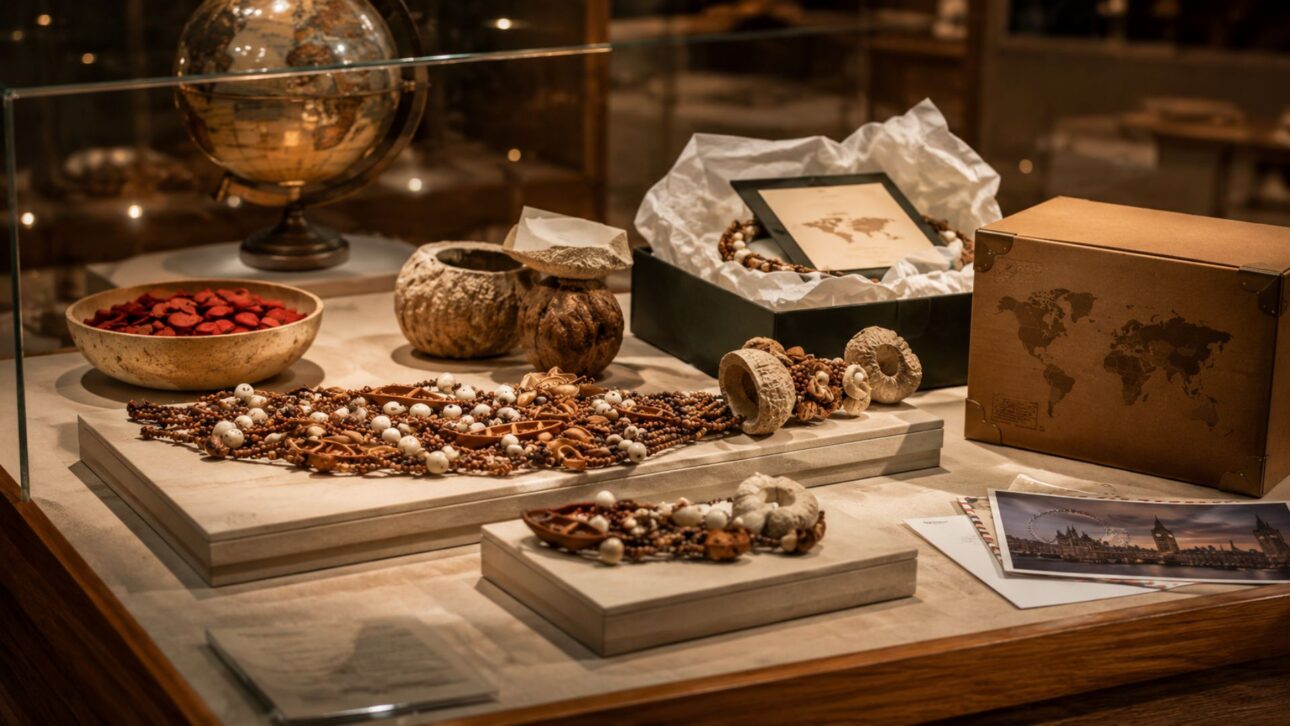
Since 2017, pieces from Cores da Mata have been sold at the MASP store, the São Paulo Museum of Art, on Avenida Paulista, according to the MASP store itself.
Being in the MASP showcase places Acrean craftsmanship side by side with nationally renowned design and art.
It’s not just any store.
MASP selects objects made by artisan communities, and the entry of Cores da Mata into this team is a testament to quality and originality.
For a brand born in Rio Branco, it’s quite a leap.
Selling at MASP meant taking Acrean craftsmanship out of the regional circuit and placing it in one of the most bustling cultural spots in Brazil.
The forest now has an address on Paulista.
And it was from this showcase that the world began to notice Rodney’s work.
From Rio Branco to London and the World
From Paulista, the next step was crossing borders.
Today, the bio-jewels of Cores da Mata are sold in London, at the Treasures of Brazil store, bringing the residue of the Acrean forest to the shop windows of the United Kingdom.
A necklace made from a chestnut husk collected in Acre can now end up around the neck of a customer in the heart of London.
And it doesn’t stop in England.
Rodney’s work has already been showcased at the Expoartesanías fair in Colombia in 2024, and at the Artisan Export Journey in Portugal in 2025.
The next stop could be France.
The artisan from Rio Branco is one of the finalists to represent Brazil in an export journey to Paris, scheduled for 2026.
From forest seed to stamped passport, Cores da Mata has become an export case.
Few businesses from Rio Branco have come this far.
R$ 1.2 Million and the Strength of Acrean Craftsmanship
Rodney’s case is the visible tip of a growing sector.
In 2025, Acrean craftsmanship as a whole moved around R$ 1.2 million, with brands like Cores da Mata leading the way towards the international market.
It’s important to clarify: this R$ 1.2 million is the result of the entire Acrean craftsmanship sector, not the individual revenue of Rodney’s brand.
Even so, its impact is significant.
As one of the most well-known showcases in the state, Cores da Mata helps demonstrate that Acrean craftsmanship can be sophisticated, sustainable, and profitable at the same time.
The message goes beyond income.
Every real that comes in from a bio-jewel made from waste is an incentive to keep the forest standing, instead of replacing it with deforestation.
It’s the bioeconomy working in practice.
When forest waste becomes income, conserving the forest ceases to be a sacrifice and becomes good business for Acrean craftsmanship.
What the case of Cores da Mata shows
The biggest lesson is about seeing value where others see waste.
Rodney Paiva Ramos took what the forest and the sawmills of Rio Branco discarded and built a brand that sells at MASP and exports to London.
Where there was a fallen hedgehog and rejected wood, today there is a bio-jewel worth up to R$ 2,000 and income for several families.
Of course, it’s important to stay grounded.
The R$ 1.2 million is from the entire Acrean sector, and reaching MASP and London is the result of more than twenty years of work and awards, so it’s not an overnight success.
Even so, the example inspires.
Showing that forest waste turns into income, with design and sustainability, is the kind of story that values the Amazon without needing to cut down a tree.
From the forest floor to the showcase in London, Cores da Mata proved that Acrean craftsmanship has a place in the global market.
And that the forest, standing, can be worth much more than it seems.
And you, did you imagine that a discarded Brazil nut hedgehog could become a R$ 2,000 necklace sold at MASP and in London? Tell us in the comments what you think of this type of craftsmanship that transforms forest waste into income.