Portuguese
  Spanish


The Superintendency of Archaeology of Chieti and Pescara confirmed burials from the 5th and 4th centuries BC in the industrial zone of Punta Penna. The photovoltaic project was not canceled and had its perimeter adjusted, while the Ministry of Culture of Italy finances at least another year of excavations and restorations.
The discovery was made public on May 23, 2026, when the city hall of Vasto and the press of the Abruzzo region, in central southern Italy, confirmed that the archaeological surveys required before the construction of a parking lot covered by solar panels had found an intact pre-Roman necropolis. The land is located in the industrial zone of Punta Penna, in the northern part of the municipality of Vasto, about 70 kilometers from Pescara, facing the Adriatic Sea.
The find only happened because the Italian preventive archaeology law requires surveys before such works. According to the local portal Zonalocale, the Superintendency of Archaeology, Fine Arts and Landscape of the provinces of Chieti and Pescara required, back in 2024, that the company responsible for the photovoltaic project hire prior archaeological investigations as a condition to release the license. It was during these preliminary operations, conducted by archaeologist Giuseppina Mazzella under the direct supervision of the agency, that the first graves appeared underground, among the warehouses of the industrial district.
Varied graves and a bronze belt pointing to the local elite
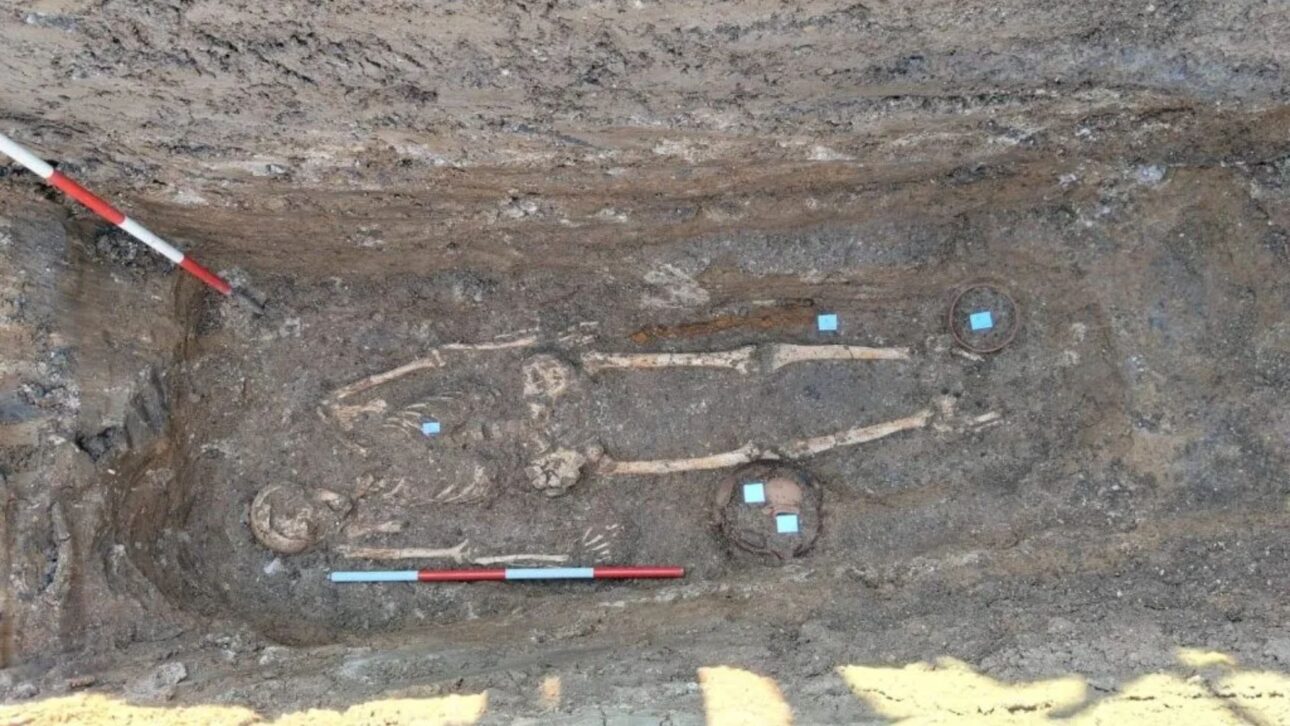
The Environmental Advisor of the Vasto city hall, Gabriele Barisano, detailed to the newspaper Chiaro Quotidiano that the site gathers about 100 graves, which would make it one of the largest necropolises ever found in the territory, where previous finds were much smaller.
-
Coastal City in Rio de Janeiro Faces Slow Destruction as Sea Claims 500 Homes and Businesses

-
48-Year-Old Woman Wins Million-Dollar Prize, Gifts Neighbor First International Trip as Thanks for Years of Support

-
Women Once Mocked for Collecting Trash Form Group to Turn Organic Waste into Compost, Generate Daily Income, and Improve Market Cleanliness in One of the World’s Lowest GDP per Capita Countries
-
Archaeologists Uncover 40,000 Roman Bronze and Copper Coins from the 3rd Century in Fire-Destroyed French Neighborhood


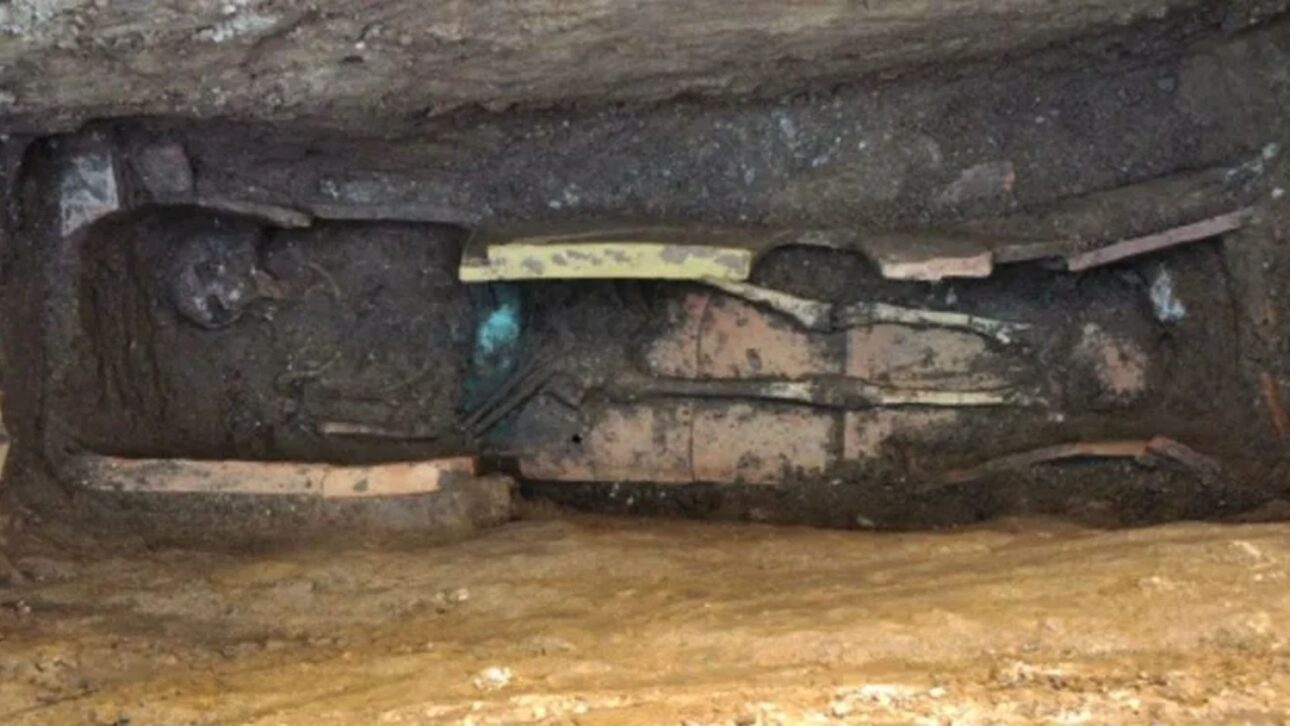
The types of burial vary from simple pits dug in the ground to more elaborate structures.
According to the regional newspaper Sardegna Oggi, which reproduced information from the Superintendency, archaeologists identified graves filled with stones, burials on tile beds, and a brick box tomb containing a bronze belt, an object interpreted as a probable sign of the deceased’s high social status.
Iron elements and ceramic pieces also appear alongside the human remains, in good condition according to Zonalocale.
Near the tombs, researchers also found a masonry structure whose function remains unknown.
According to the Superintendency, the material collected on the surface suggests that the site was not abandoned after the pre-Roman era and continued to be frequented during the Hellenistic and Roman periods, adding an extra layer of scientific interest to the site.
Who were the Frentani that occupied the coast of Abruzzo before the Roman expansion
According to the heritage-specialized site Stile Arte, Vasto corresponds to the ancient Histonium, one of the main Frentani centers, and at that time the region occupied a strategic position on the Adriatic trade routes, in contact with Greek and Mediterranean influences.
For archaeologists, cemeteries from this period are invaluable because they preserve social information that settlements do not always maintain.
The Superintendency’s statement says that the new context opens an important opportunity to deepen the understanding of the occupation dynamics and funerary rituals of the Italic communities of southern Abruzzo, a region already known in scientific literature for traces of ancient habitation.
The construction of the 900 kW photovoltaic parking lot continues with an adjusted perimeter
The project that motivated the excavations is a solar parking lot with 900 kW of power, just under 1 megawatt, with about 200 free and video-monitored spaces.
According to Zonalocale, the initiative belongs to the company Comunità Energetiche, a company based in Terni, in the Umbria region, and the energy generated by the panels is expected to supply companies in the Punta Penna industrial area, with an estimated savings of 30% on the electricity bill, a number that is a projection of the project and not a verified result.
The discovery did not cancel the project.
The councilor Gabriele Barisano declared to Chiaro Quotidiano that the goal remains to build the parking lot under the photovoltaic modules and that the city hall is studying transforming it into an intermodal point with bicycles and electric vans, as it is close to the Punta Aderci nature reserve.
Meanwhile, the perimeter of the ancient masonry structure was excluded from the installation area of the solar field and parking lot, as reported by the VastoWeb portal based on the Superintendency.
Limits of the find and questions that remain unanswered
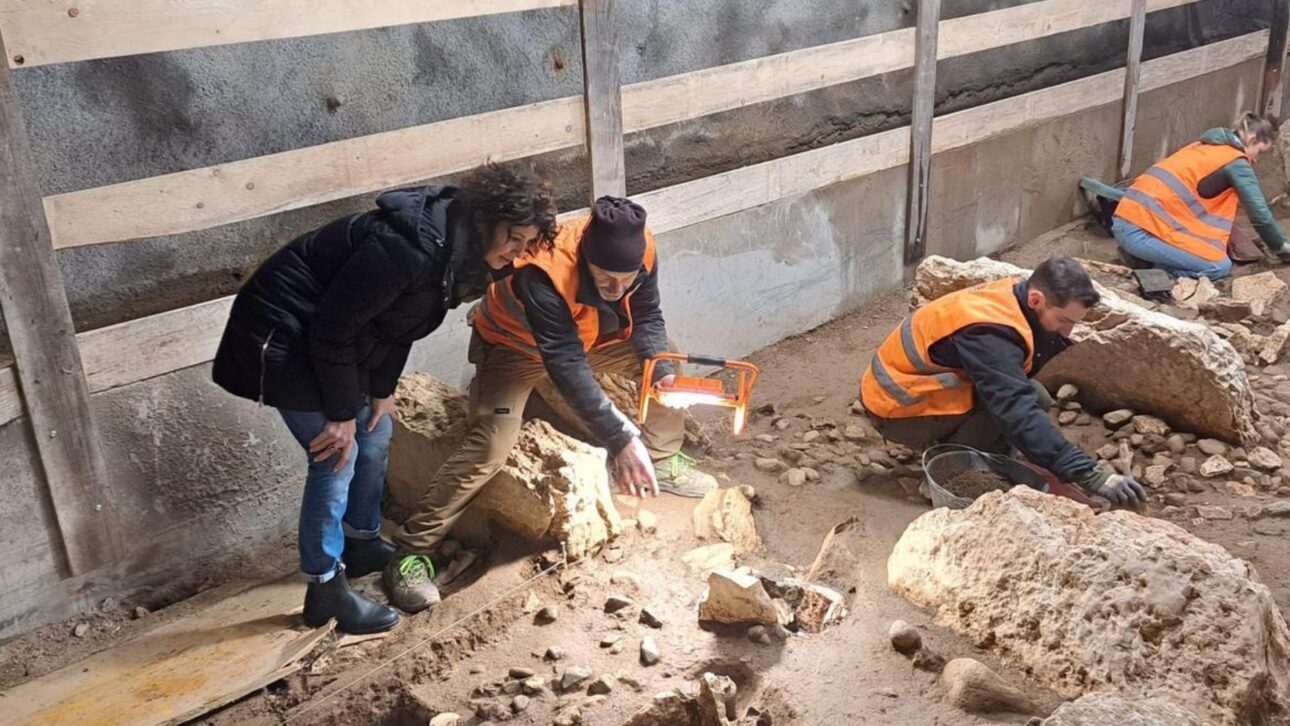
According to VastoWeb, the Superintendency explained that the simple pit graves, without walls or architectural elements, do not allow for musealization on site: once the excavation is completed and the objects and bone remains are removed, only the hole in the ground remains.
Therefore, the site’s enhancement will depend on the restoration of the pieces and laboratory research, a task that the agency itself estimates will take at least another year.
The next stages already have guaranteed funding.
According to the official statement, new investigation campaigns will be funded with direct resources from the Italian Ministry of Culture, while the initial excavations were paid for by the proposing company, as mandated by preventive archaeology legislation.
A selection of the most significant pieces will be destined for the new museological route in the design phase at Palazzo d’Avalos, in Vasto, according to the Superintendency.
The precise dating of the tombs, the identity of the buried, and the function of the masonry structure remain open questions.
When the energy transition meets buried heritage
The case of Vasto shows a little-discussed side effect of the global race for solar energy: the more panels advance over never-excavated lands, the more the subsoil reveals surprises.
In Italy, the legal obligation for preliminary surveys transformed a common construction site into one of the most relevant archaeological finds in the recent history of the region, without jeopardizing the clean energy project, which will proceed in an adjusted area.
And you, do you think renewable energy projects should completely stop in the face of an archaeological find, or is perimeter adjustment the balanced solution? Leave your opinion in the comments and join the conversation, always with respect for different opinions.