






 Portuguese
  Spanish


Continuous strip of mangroves between Pará and Maranhão places Brazil at the center of global discussions on coastal protection, biodiversity, and climate, covering 679 kilometers in length and about 9 thousand km² of vegetation adapted to tides, sediments, and environmental extremes.
An almost continuous strip of mangroves follows the Brazilian Amazon coast and, in the stretch between Pará and Maranhão, forms the largest belt of this ecosystem in uninterrupted extension ever described.
Surveys by public agencies and recent reports based on field research indicate 679 kilometers of coastline with dominant mangrove coverage in this region.
This “corridor” of tidal forests draws attention for its size and, above all, for the practical role it plays on the coast.
-
Brazilian Government Offers Free New ID Cards Without Appointment for Four Days, Including Night and Saturday Services for Citizens Aged 14 and Up.

-
Brazil’s Longest Train Journey Resumes: 664 km Overnight Trip Connecting Two States, 13-Hour Duration, Tickets at $17, Ends Near Beaches
-
Brastemp Unveils Revolutionary Appliance That Cleans Clothes and Phones, Uses Soap Monthly, Smooths Wrinkles, and Eliminates 100% of Dust Mites and 99.9% of Bacteria
-
Brazilian City Provides 296 Apartments Worth $62.9 Million to Families Living in High-Risk Areas, Ending Over 20 Years of Waiting for Decent Housing


Mangroves reduce wave energy, hinder erosion advancement, and cushion the height of swells and storms, functioning as a natural barrier in areas where water advances and recedes daily.
Amazon coast and the formation of the largest continuous mangrove belt
The dynamics of the coastal Amazon combine wide tides, voluminous rivers, and constantly shifting sediments, creating a transitional environment with brackish water and unstable soil.
In this scenario, mangrove species have adapted to frequent flooding and salinity variations, with exposed roots and structures capable of breathing even in waterlogged terrains.

Although the Pará–Maranhão stretch concentrates the idea of continuity, the mangrove landscape connects to other Amazonian areas, including portions of Amapá.
The magazine Ciência Hoje describes that, adding the distribution through Amapá, Pará, and Maranhão, the occupied area reaches about 9 thousand km² and accounts for approximately 70% of Brazil’s mangroves.
Biodiversity, artisanal fishing, and traditional communities
The relevance of the belt is not limited to biodiversity, even though it is remarkable and documented by research and environmental institutions.
Mangroves function as nurseries, offering shelter and food to fish, crustaceans, and mollusks in early life stages, which is reflected in artisanal fishing and estuarine food chains.
Moreover, coastal communities depend on the mangrove for extractive activities, shellfish gathering, and small-scale fishing, in routines guided by the tide.
The Chico Mendes Institute for Biodiversity Conservation describes the presence of conservation units and community-use areas in this section, including extractive reserves where access to resources occurs under specific rules.
Protection against erosion, storm surges, and extreme weather

On a coast marked by bays, islands, channels, and inlets, the continuity of mangroves amplifies the cumulative protective effect along the coastline.
By dissipating the force of water before it reaches more vulnerable areas, the trees and their roots help stabilize banks and reduce soil loss, especially during storm surges and storms.
The United Nations Environment Programme describes mangroves as a form of “natural defense” for the coast, associating the ecosystem with environmental services that directly connect to the safety of populations living near the sea.
In practice, the logic is simple: when the mangrove is intact, the coastline tends to withstand repeated impacts better.
Scientific evidence and the role of blue carbon
Scientific literature indicates that the ability to attenuate waves depends on the width of the forest, the density of the trees, and the characteristics of the terrain and water.
A study published in the journal Scientific Reports, from the Nature group, gathers evidence that mangroves reduce wave energy and decrease coastal flooding risks, reinforcing the role of this ecosystem as natural infrastructure.
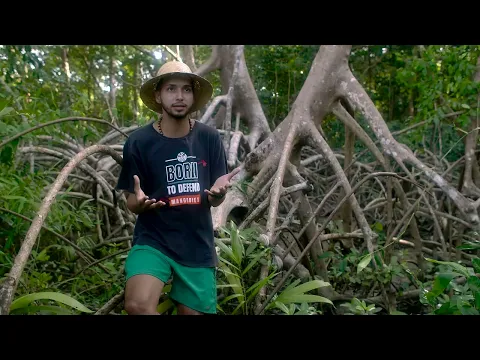

In the Amazon belt, researchers also observe variations in the size of the trees and the structure of the forest as rainfall, salinity, and local physical conditions change.
Available reviews in Brazilian academic databases describe differences in floristic composition and dynamics along the coast, alternating dense sections with more open areas, without losing the continuity of the system.
International organizations and scientific articles describe the ecosystem as relevant for climate regulation, while also emphasizing its value in protecting exposed coasts.
Mangroves capture and store carbon over time, especially in coastal sediments, a characteristic associated with the term “blue carbon.”
Environmental management and conservation challenges in the coastal Amazon
The size of the belt amplifies the complexity of environmental management, because monitoring a vast area requires constant presence, reliable data, and coordination between different levels of government.
Reports from Agência Brasil on educational projects and research initiatives highlight activities that bring students, communities, and the daily life of the mangrove closer, focusing on local knowledge and fieldwork.

At the same time, ICMBio has been associating the region with governance and conservation strategies on a larger scale, including in international discussions on wetland protection.
In institutional communications, the agency describes the belt as a reference for policies that articulate sustainable use, monitoring, and the participation of traditional populations in the care of the territory.
Despite being described as the world’s largest continuous belt, the Amazonian section often appears less in the national imagination than other coastal landscapes.
Even so, the area concentrates debates on conservation, research, environmental education, and community protection, in a region where the tide dictates the rhythm and the ecosystem defines boundaries.
What is often lacking is not relevance, but visibility and continuity of investment in science and management to understand changes and respond to pressures that may compromise the mangrove’s environmental services.
On a coast that coexists with erosion, high tides, and climatic extremes, the Amazonian belt remains a concrete reference for nature-based solutions.


