






 Portuguese
  Spanish


Without producing its own chips, the country has already stopped factories when supply dried up, and now bets on a university microfactory to change this dependence
Brazil discovered, in the worst way, how much it depends on a tiny product it doesn’t manufacture: the chip. Semiconductors are inside everything, from cars to cell phones, tractors to refrigerators, and the country buys practically all of them from abroad. When the global supply stalls, the national industry simply stops.
The cost of this dependence is high. Brazil consumes close to US$ 50 billion in chips embedded in electronic devices per year, and almost none of this is produced here. Now, universities, companies, and the government are rushing to change this scenario and finally put the country on the world map of semiconductors.
US$ 50 billion in chips imported per year
The extent of the dependence is alarming. According to the Jornal da USP, Brazil consumed around US$ 50 billion in chips within electronic devices in 2025, practically all imported.
-
As 5G Expands in Brazil, Huawei and Samsung Compete for Billions in 6G Patents, Promising 100x Faster Network by 2030 with Remote Surgeries and Autonomous Drones

-
Brazil Launches First Commercial Rocket from Alcântara, Enters Space Market

-
Butantan’s Dengue Vaccine Becomes World’s First Single-Dose Solution, Prevents 100% of Hospitalizations
-
UN Warns AI Data Centers Could Consume 9.3 Trillion Liters of Water Annually


Buying everything from abroad leaves the country at the mercy of distant crises. A trade dispute between powers, an earthquake in Taiwan, or a pandemic can cut off supply overnight. Depending 100% on imported chips is like building an entire house on land that belongs to someone else, and this fragility has been exposed in recent years.
When chips are missing, the country stops
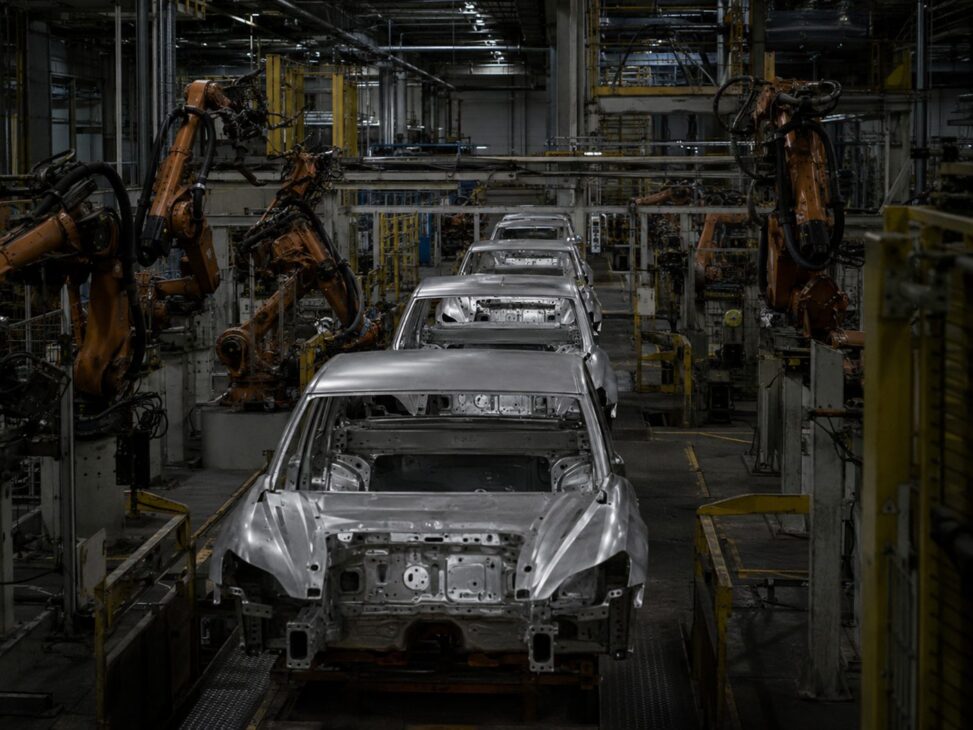
The theory turned into painful reality. According to Jornal da USP, during the pandemic 80% of Brazilian companies that depend on chips reported a shortage of the component, and about 300,000 workers were temporarily unable to work due to the scarcity.
And it was not an isolated case. According to Jornal da USP, in October 2025, a new trade dispute between the West and China once again halted the supply of automotive chips. Every time the world sneezes in the semiconductor market, the Brazilian industry catches pneumonia, and it is precisely this recurring risk that has triggered the alert to produce domestically.
The USP microfactory that bets on being different
The most creative response came from the university. Jornal da USP details the PocketFab project, a chip microfactory developed at the Polytechnic School of USP, under the coordination of Professor Marcelo Zuffo, with the capacity to produce 60 million chips per year.
The first versions are expected in April 2026, and the focus is on chiplets, essential components for artificial intelligence supercomputers and even quantum chips. Instead of trying to copy the Asian giants, Brazil bets on smaller and flexible factories, a David versus Goliath move in the semiconductor world.
Why a small factory can succeed
The logic behind the microfactory is clever. Setting up a traditional mega chip factory, according to Jornal da USP, costs between US$ 2 billion and US$ 10 billion, an investment that Brazil would hardly afford from scratch against competitors decades ahead.
The microfactory reverses this logic. It is cheaper, flexible, and capable of producing various types of chips on a small scale, serving niches such as automotive, aerospace, energy, and agribusiness. Fighting where it is possible to win, and not where others are already giants, is the most realistic strategy for the country, which has the project supported by institutions like SENAI and FIESP.
The semiconductor market aiming for US$ 15 billion
The economic potential justifies the race. According to Gazeta do Povo, the Brazilian semiconductor market earned about US$ 1 billion in 2024 in the packaging and testing stage, and is projected to reach US$ 15 billion by 2033, according to the industry association.
This segment already employs about 2,500 people and processed more than 200 million chips. The projected leap shows there is plenty of room to grow. Going from US$ 1 billion to US$ 15 billion in less than a decade is the kind of opportunity that few sectors offer, and explains the interest of foreign companies in investing here.
CEITEC and chips for electric cars
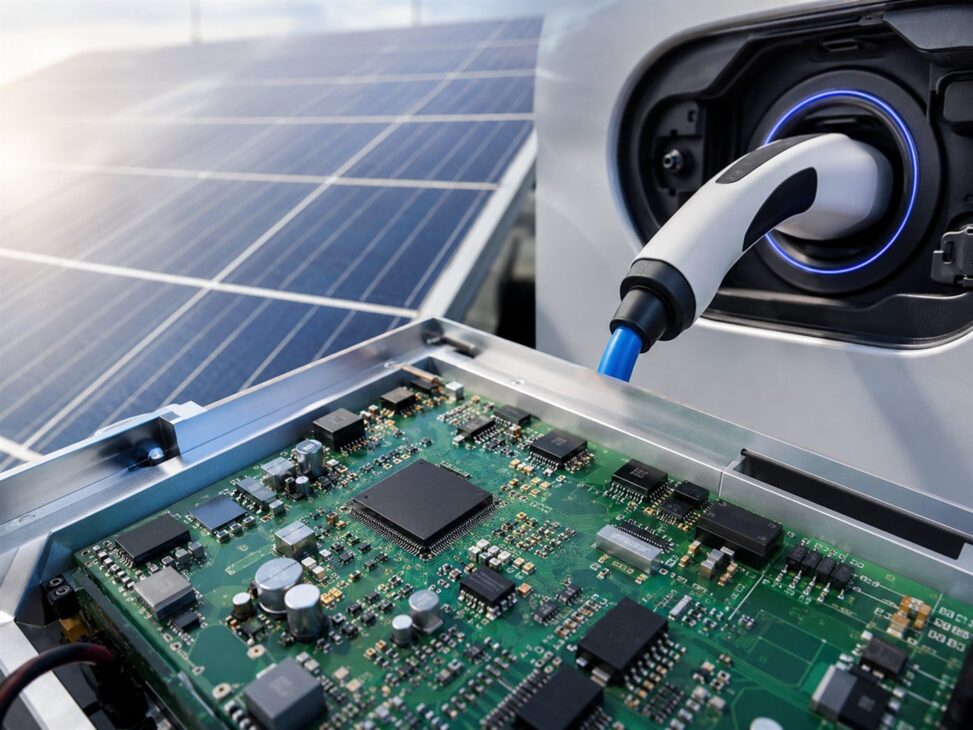
The national industry has an old piece in this game. Gazeta do Povo notes that the CEITEC factory is being revitalized to produce power chips, precisely those used in solar panels and electric vehicles, aligning national production with the energy transition.
This focus is strategic. Instead of competing for the most advanced computer chips, where the delay is enormous, Brazil targets components related to clean energy, a market in full expansion. Betting on energy transition chips is finding an entry point where the country has demand and vocation, instead of competing on equal terms with Taiwan.
40 years of delay to recover
The dose of realism is also in the numbers. Gazeta do Povo points out that Brazil is about 40 years behind in the most noble stages, the design and manufacture of chips, compared to leaders like Taiwan, South Korea, and China. Recovering this time does not happen overnight.
There is also foreign money coming in, such as the R$ 650 million investment from Zilia in units in São Paulo and Manaus. Attracting foreign manufacturers and training people at home at the same time is the only way to shorten four decades of distance, and this combination has just begun to take shape now.
Why this is strategic for Brazil
At the core, the race for semiconductors is a matter of sovereignty. A country that does not manufacture chips becomes vulnerable to embargoes, crises, and the whims of powers, just as Brazil did when assembly lines stopped. Producing at least part of what it consumes reduces this risk.
The question that remains is whether Brazil will keep the momentum to sustain this long-term bet or if it will give up halfway, as has happened before. Did you know that almost all the chips in the devices in your home come from abroad, and that missing one of them can stop an entire factory in Brazil?


