






 Portuguese
  Spanish


Developed and produced entirely in Brazil, the Butantan-DV was approved by Anvisa and promises to change the fight against a disease that killed more than a thousand people in the country in 2025
Brazil has just taken a historic step against the disease that haunts it most in the summer. The dengue vaccine developed by the Butantan Institute, named Butantan-DV, was approved by Anvisa and became the first dengue vaccine in the world to work in a single dose, a feature that can greatly facilitate mass vaccination.
The Brazilian dengue vaccine is not only pioneering but also 100% national: it was researched, developed, and is being produced on Brazilian soil. The efficacy numbers are impressive, with total protection against the most severe cases, and the expectation is that it will reach the population for free through the public health system.
The first dengue vaccine in the world in a single dose
The great advantage of the immunizer lies in its simplicity. According to the Butantan Institute, the Butantan-DV is the first dengue vaccine in the world applied in a single dose, approved for people aged 12 to 59 years.
-
As 5G Expands in Brazil, Huawei and Samsung Compete for Billions in 6G Patents, Promising 100x Faster Network by 2030 with Remote Surgeries and Autonomous Drones

-
Brazil Launches First Commercial Rocket from Alcântara, Enters Space Market

-
UN Warns AI Data Centers Could Consume 9.3 Trillion Liters of Water Annually

-
End of Concrete? Company Launches Carbon-Negative Building Material That Replaces Up to 30% of Cement in Concrete


The difference seems small, but it is enormous in practice. Other available vaccines require two doses with an interval between them, which causes many people to abandon the schedule halfway. One dose means more people protected with fewer visits to the clinic, which is crucial to immunize a country the size of Brazil quickly and cheaply.
74.7% efficacy and 100% against hospitalizations

The clinical results support the enthusiasm. According to the Butantan Institute, the vaccine showed 74.7% overall efficacy, 91.6% protection against severe dengue and with warning signs, and an impressive 100% efficacy against hospitalizations due to the disease.
These numbers show that, even when it does not completely prevent infection, the vaccine prevents the case from progressing to a dangerous scenario. No vaccinated individuals needed hospitalization in the studies. Eliminating hospitalizations is the result that matters most for a healthcare system that teeters on the brink of collapse during dengue epidemics, relieving overcrowded hospitals every summer.
Protection against the four serotypes
A technical detail makes all the difference in the case of dengue. The disease has four different serotypes, and catching one of them does not protect against the others, which makes the virus so difficult to combat. According to the Butantan Institute, the efficacy data refers to serotypes DENV-1 and DENV-2.
The good news is that the body’s response to serotypes DENV-3 and DENV-4 was also robust, which allows us to conclude that the vaccine offers protection for all four types of the virus. Covering all serotypes is the holy grail of any dengue vaccine, and it is precisely where previous vaccines have stumbled.
100% produced in Brazil
The industrial aspect is as important as the scientific one. According to Agência Brasil, the Butantan-DV is the first dengue vaccine with 100% national production, developed with an investment of around R$ 130 million from BNDES and the Ministry of Health in the research phases.
Producing the vaccine domestically is a matter of sovereignty. In an emergency, a country that relies on imported vaccines is at the end of the global queue. Mastering the entire chain, from research to factory, frees Brazil from depending on the goodwill of foreign suppliers, as painfully experienced during the pandemic. The Minister of Health, Alexandre Padilha, summarized: it is a 100% Brazilian vaccine, with broad protection and a single dose.
More than one million doses already ready
Production did not wait for approval. Even before the registration, the Butantan Institute had already started manufacturing the vaccine in its industrial park, with more than one million doses ready for distribution.
To increase supply, the institute signed an agreement with the Chinese company WuXi, which should allow the delivery of about 30 million doses in the second half of 2026. This volume is what enables a true national campaign. Having doses in stock even before approval is what avoids the classic vaccine bottleneck, where approval arrives, but the product takes time to appear.
Anvisa’s approval and arrival at SUS
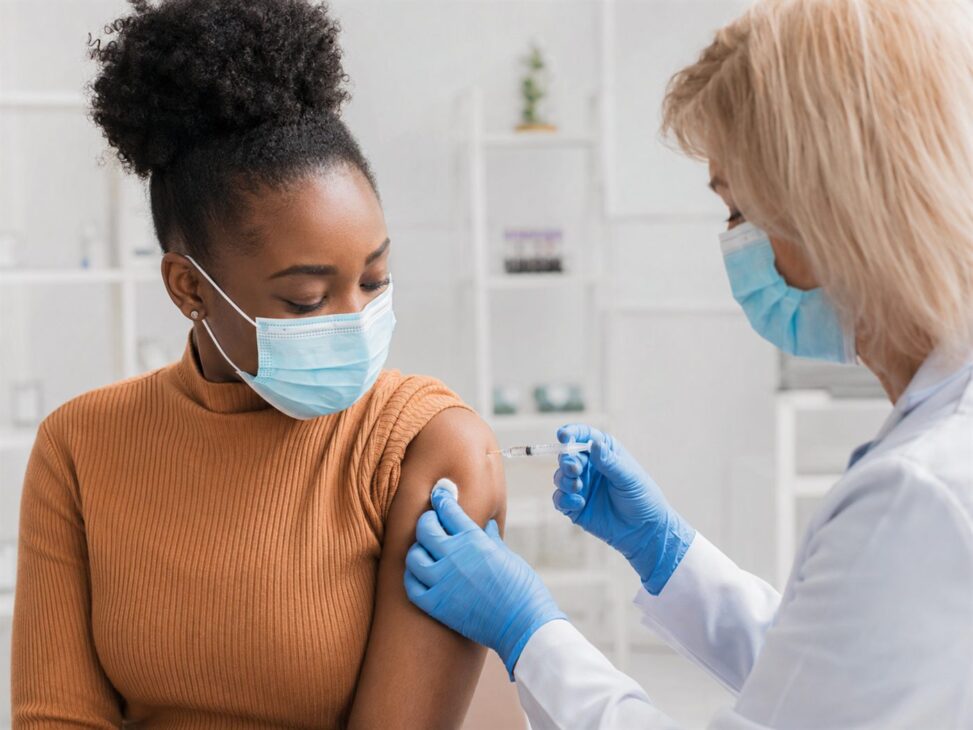
The official stamp came at the end of 2025. Anvisa approved the vaccine registration on November 26, 2025, allowing its use in the population. The next step is incorporation into the National Immunization Program, so it can be distributed for free by the SUS.
According to Agência Brasil, application should begin in 2026, with free distribution through the public network. Offering the vaccine for free is what transforms a scientific achievement into real public health, bringing protection to those who need it most and could not afford it in the private network.
Why this matters in a country that lives with dengue
The size of the problem explains the celebration. Agência Brasil points out that, in 2025 alone, Brazil recorded about 866,000 cases and 1,108 deaths from dengue. The disease has exploded again in recent years, pressured by the climate and uncontrolled urbanization.
Against this scenario, a national vaccine, with a single application that eliminates hospitalizations, is a powerful weapon. It does not replace the fight against the mosquito, but adds a layer of protection that was missing. Combining vaccine, mosquito control, and sanitation is the only way to tackle a disease that returns strongly every year, and now the country has this additional tool at hand.
What still needs to be defined
Not everything is resolved. The Ministry of Health still needs to define details such as the priority age group and the exact vaccination schedule in the SUS. The logistics of administering millions of doses in a continental country is, by itself, a huge challenge.
The question remains whether Brazil will be able to turn this laboratory achievement into a campaign that actually reaches the arms of the population in time for the next summer. Would you take a national single-dose vaccine to protect yourself from dengue once and for all?


