






 Portuguese
  Spanish


The expansion of the Tesc pier reached 50% completion with the conclusion of the driving of steel piles in the sea, supplied by ArcelorMittal. The next phases include the concreting of slabs and the installation of equipment, and the project is expected to double the terminal’s berthing capacity.
The expansion of the Tesc berthing pier in São Francisco do Sul reached 50% completion, with the conclusion of the driving of steel piles in the sea, in an offshore project. According to information released by the NSC Total portal, the port terminal structures will support the expansion of the berth where ships dock.
The expansion of the pier, with an investment of R$ 100 million, is the first phase of the terminal’s modernization plan and is expected to increase Tesc’s capacity, with the possibility of docking two ships simultaneously upon completion of the works, scheduled for October. Approximately 770 tons of steel piles are being supplied by ArcelorMittal Projects, and the next phases, according to the terminal, will be the construction of the superstructure, the extension of the loading belt, and the installation of equipment.
The driving of steel piles in the sea
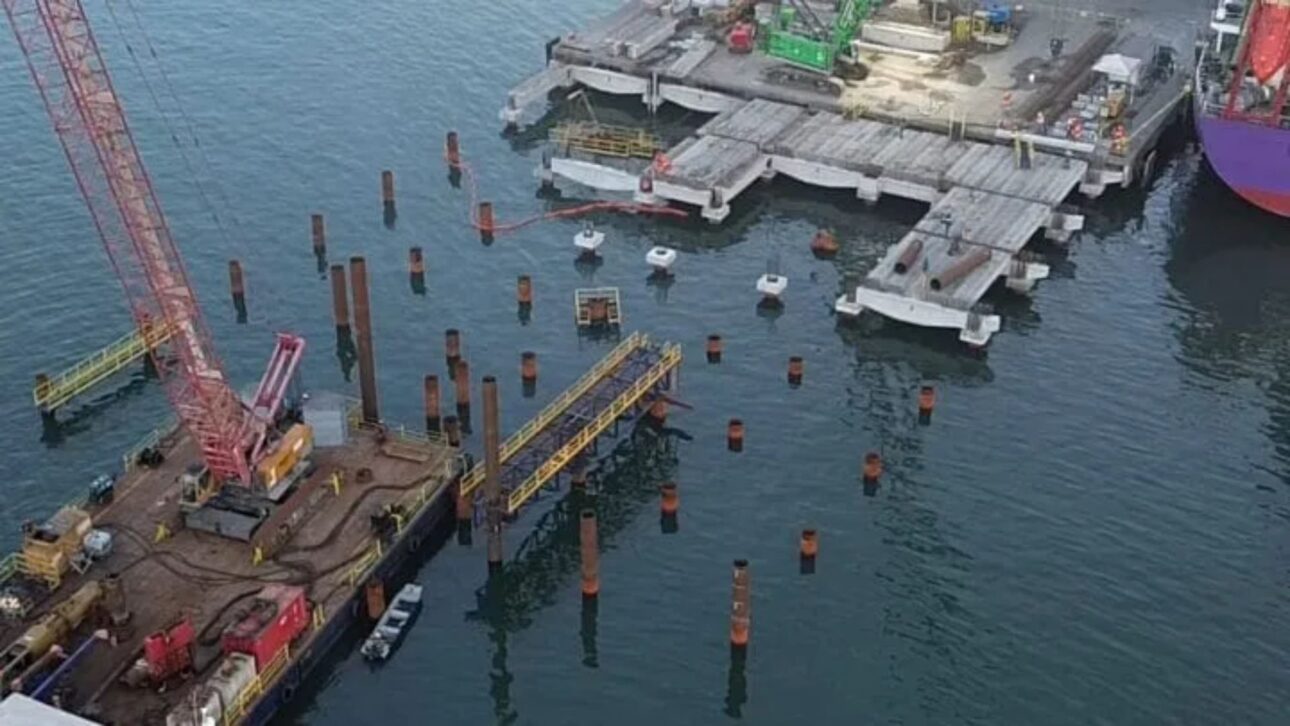
The expansion of the Tesc berthing pier in São Francisco do Sul reached 50% completion, with the conclusion of the driving of steel piles in the sea, in an offshore project.
-
Expanded Polystyrene Gains Ground as a Lightweight Alternative to Traditional Masonry in Construction

-
Abandoned Brazilian Coastal Stadium, Once Hosting Major Soccer Matches, to Be Demolished for $10 Million NASCAR-Inspired Racetrack

-
Brazil’s First Immersed Tunnel to Connect Santos and Guarujá in 2 Minutes at a Cost of $1.2 Billion

-
British Asphalt May Soften in 40°C Heatwaves, While Indian Roads Withstand Harsh Heat with Tougher Materials, Highlighting Engineering Challenges Amid Climate Change


According to the port terminal, these structures will support the expansion of the berth where ships dock.
With the foundation stage completed, the next phases, according to the terminal, will be the construction of the superstructure, through the concreting of slabs, the extension of the loading belt, and the installation of equipment.
The driving of steel piles was the most delicate part, as it was done in open sea, alongside the terminal’s routine.
The project that doubles Tesc’s capacity
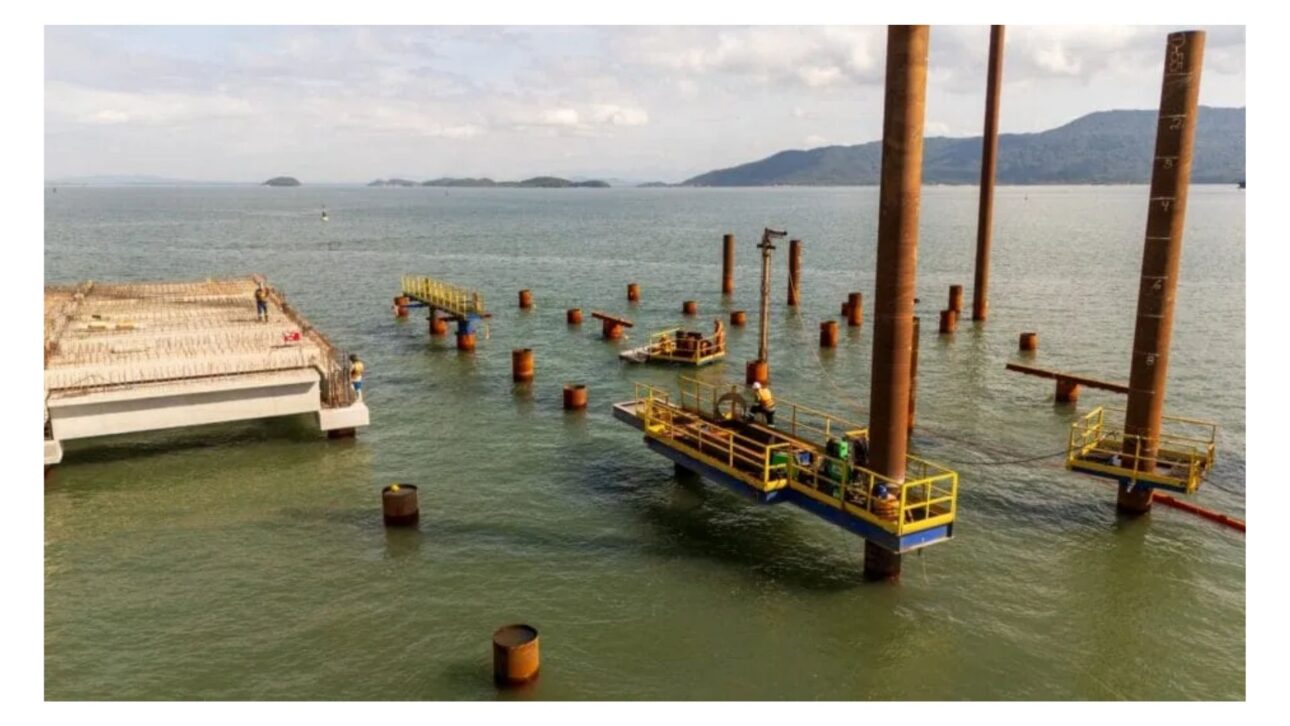
The pier expansion, with an investment of R$ 100 million, will increase Tesc’s capacity, allowing two ships to dock simultaneously upon the completion of the works, scheduled for October.
The combination of a larger pier, supported by steel piles, with the deepening of the external channel of Babitonga Bay will allow operations with larger cargo ships.
With this, the terminal intends to receive larger vessels and operate two berths simultaneously, a gain that directly depends on the structure built over the steel piles driven into the sea.
The pier expansion is the first phase of the modernization and capacity expansion plan of the port terminal.
The challenge of building without stopping operations
According to Giliano Costa, Director of Strategic Projects at ME Solaris, carrying out an offshore project in parallel with terminal operations is always a challenge, but the team managed to complete the entire foundation stage without impacting the docking and undocking of ships at the berth.
ME Solaris is the main shareholder of the terminal and is controlled by the Oman Investment Authority, and it was under this management that the driving of the steel piles advanced.
“Carrying out an offshore project in parallel with terminal operations is always a challenge,” says Giliano Costa, Director of Strategic Projects at ME Solaris.
The driving of the steel piles into the sea, therefore, was done without interrupting the arrival and departure of cargo ships, which, according to the company, was the main technical challenge of the stage.
Keeping the terminal operational during an offshore construction reduces the financial impact of the project, as the port continues to generate revenue.
ArcelorMittal’s steel piles and the next phase
The tubular steel piles used in the pier expansion are being supplied by ArcelorMittal Projects, a unit of ArcelorMittal specialized in steel solutions for infrastructure, with about 770 tons of structural tubes applied in the works.
The choice of steel tubes relates to the need for resistance in a marine and saline environment.
Beyond the pier, the project for the second phase of the expansion is in the process of environmental licensing, with construction expected to start in the second half of the year, and the investment, estimated at over R$ 500 million, includes the construction of a new warehouse, two silos, and three truck tippers.
Tesc operates in the handling of vegetable grains, fertilizers, steel products, bulk solids, general cargo, and project cargo, an operation that the steel piles of the new pier aim to expand.
Tesc, in São Francisco do Sul, completed the driving of 770 tons of steel piles into the sea without stopping operations and reached 50% of the pier expansion, of R$ 100 million, which, according to the terminal, should allow the docking of two ships at the same time from October, combined with the deepening of the Babitonga Bay channel for larger vessels.
Supplied by ArcelorMittal Projects and managed by ME Solaris, the main shareholder controlled by the Oman Investment Authority, the pier is the first phase of a larger plan, estimated at over R$ 500 million, which includes a new warehouse, two silos, and three truck tippers, with the second phase still in environmental licensing.
By building on the steel piles without interrupting the routine of the cargo ships, the Santa Catarina terminal bets on increasing its capacity to receive larger ships.
And you, what did you think of the expansion of Tesc in São Francisco do Sul, with the steel piles driven into the sea without stopping operations? Do you believe that the ports of Santa Catarina can continue to grow to receive larger ships? Share your opinion and exchange ideas with other readers about ports and infrastructure.


