






 Portuguese
  Spanish


A UN study reveals the hidden cost of artificial intelligence: beyond energy, the AI race will drink water and occupy land on a scale hard to imagine
Artificial intelligence has a cost that almost no one sees when typing a command on their phone. Behind every chatbot response is a gigantic physical structure of data centers that consume energy and, most importantly, a lot of water to stay cool. And this consumption is about to explode.
A new United Nations study projects that AI data centers could consume 9.3 trillion liters of water per year by 2030, a volume capable of meeting the basic domestic needs of 1.3 billion people. The AI revolution, it turns out, is much thirstier than imagined.
9.3 trillion liters of water per year
The number that opens the report is alarming. According to UN News, based on a study by the Institute for Water, Environment and Health of the United Nations University, the water consumption of AI-powered data centers could reach 9.3 trillion liters annually by the end of the decade.
-
As 5G Expands in Brazil, Huawei and Samsung Compete for Billions in 6G Patents, Promising 100x Faster Network by 2030 with Remote Surgeries and Autonomous Drones

-
Brazil Launches First Commercial Rocket from Alcântara, Enters Space Market

-
Butantan’s Dengue Vaccine Becomes World’s First Single-Dose Solution, Prevents 100% of Hospitalizations
-
End of Concrete? Company Launches Carbon-Negative Building Material That Replaces Up to 30% of Cement in Concrete


This volume is not abstract. The UN itself compares: it could supply the domestic water needs of 1.3 billion people, equivalent to the entire population of Sub-Saharan Africa, for an entire year. Comparing machine consumption with the thirst of an entire continent is what makes the data so shocking, and shows that AI has entered the competition for an increasingly scarce resource.
Why does artificial intelligence drink so much water
The natural question is: what is all this water for? The answer lies in heat. The servers running AI models get very hot, and the most common way to cool them is with water, which circulates and evaporates to lower the temperature of the equipment.
The more powerful the model and the more people use it, the more servers are running, more heat, and more water evaporated. Every conversation with a chatbot has, at the end, a bit of water turning into vapor to cool machines, and the sum of billions of daily uses turns an invisible expense into a concrete environmental problem.
Training a single AI drank 1 billion liters
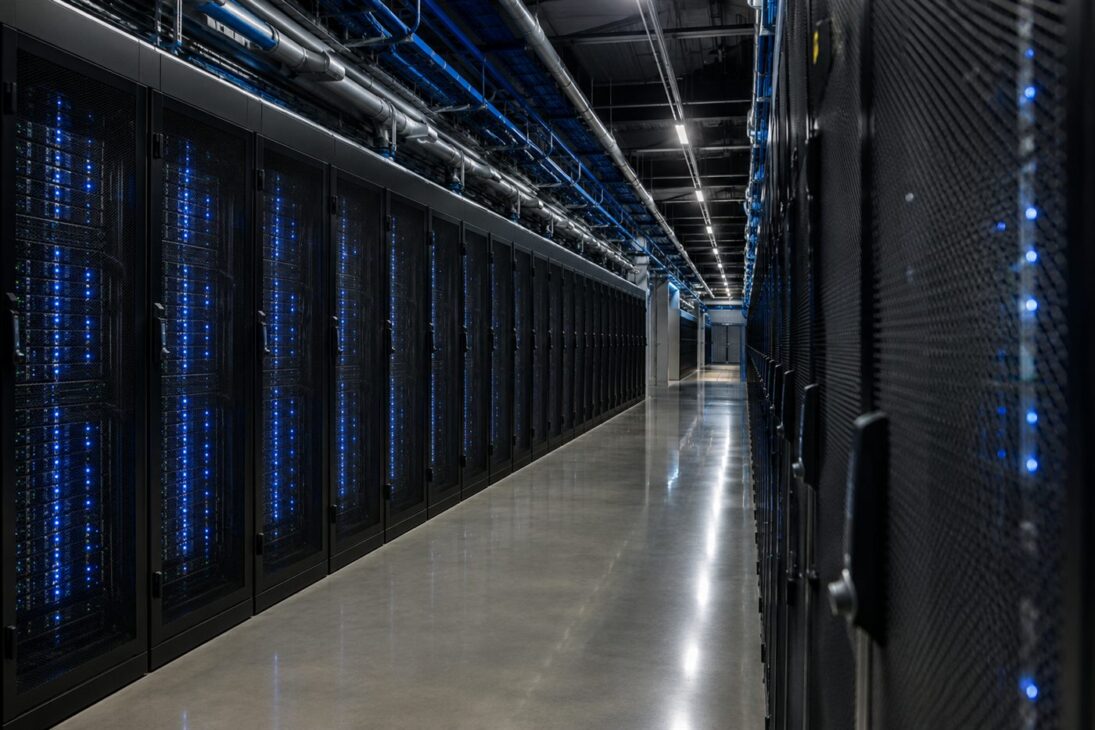
An example from the study illustrates the scale of consumption. According to UN News, just training a large model, ChatGPT-5, consumed about 100 gigawatt-hours of electricity, 1 billion liters of water, and occupied 1.5 square kilometers, an area equivalent to 215 football fields.
And that’s just the training of one model. Once ready, it continues to consume resources with each use. Spending 1 billion liters of water just to teach a machine to converse is the kind of number that repositions the debate on AI, shifting the focus from just energy to placing water at the center of the discussion.
What Surprised Scientists the Most
The most troubling discovery of the study is counterintuitive. The lead author, Dr. Miriam Aczel, summarized the finding in a phrase quoted by Revista Movimento: choices that seem more eco-friendly from a carbon perspective often end up being worse for water or soil.
This means that looking only at carbon emissions is misleading. A solution that reduces carbon can, at the same time, use more water or occupy more land. Solving one environmental problem by creating another is the trap that the study exposes, and the message is that the AI footprint needs to be measured on multiple fronts, not just carbon.
Data Centers Will Consume 945 TWh by 2030
Water is only half of the equation. UN News points out that the electricity demand of data centers is expected to jump from 448 terawatt-hours in 2025 to 945 terawatt-hours by 2030, nearly triple the combined consumption of Pakistan, Bangladesh, and Nigeria, countries that together have over 650 million inhabitants.
If data centers were a country, they would already be among the largest energy consumers on the planet. This energy consumption pressures grids, raises electricity bills, and competes for clean generation. When the infrastructure of a technology consumes more than entire nations, the impact ceases to be a technical detail and becomes an energy policy issue, affecting the whole society.
It’s Not Just Carbon: Water, Soil, and Electronic Waste
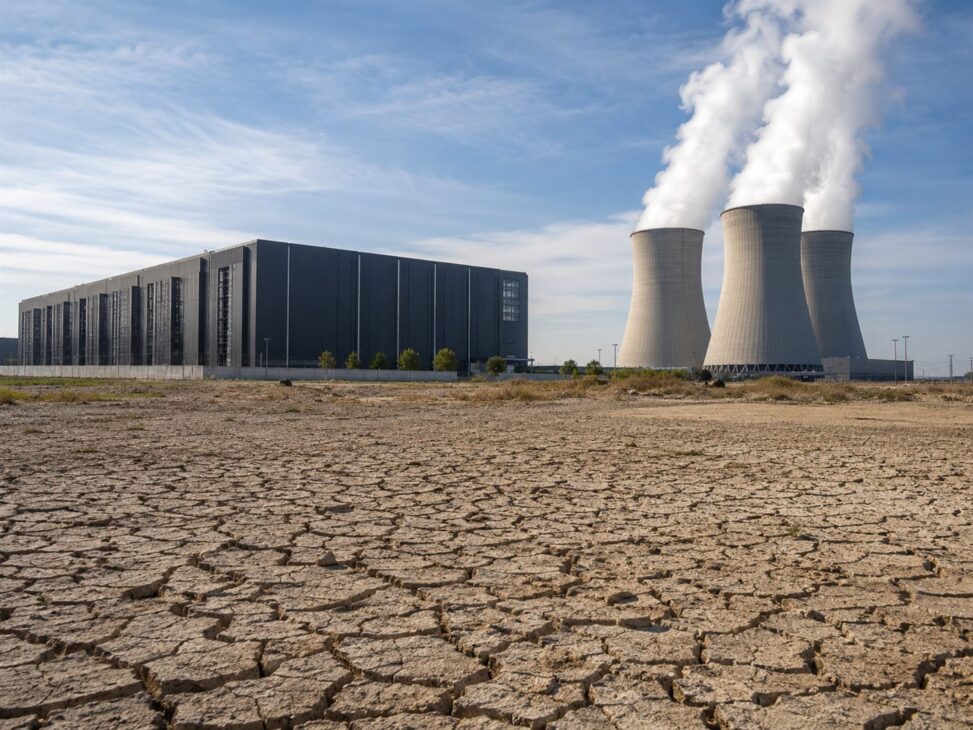
The study adds up several forgotten impacts. Besides water and energy, the expansion of AI is expected to generate enormous emissions and occupy a lot of territory. The water footprint goes hand in hand with land use and the mountain of electronic waste these devices produce when they become obsolete.
All this usually stays out of the debate, which tends to focus only on carbon. Measuring only part of the damage is what makes AI seem cleaner than it really is, and the work of the United Nations University serves precisely to open eyes to the total cost of this infrastructure before it grows even more.
Why this matters for Brazil
The warning is especially relevant for Brazil, which has been offering incentives to attract large data centers to the country, looking for jobs and investments. The advantage of clean and abundant energy is real, but the other side of the equation, water consumption, rarely enters the promotion of these projects.
In a country that already faces water crises in various regions, installing structures that consume billions of liters requires planning. Attracting technology without considering the impact on water can exchange today’s problem for another tomorrow, and it is this balance that the UN study helps to bring to the decision table.
The hidden cost of the AI revolution
The picture the study paints is of a powerful technology, but with an environmental cost that had been going unnoticed. Artificial intelligence will change the economy and work, that is certain, but the price of this includes water, energy, and land in volumes that are only now beginning to be seriously measured.
The question remains whether the world will be able to grow in AI without drying up rivers and overloading power grids. Did you imagine that each conversation with an artificial intelligence robot helps to evaporate, far away, a part of the water that could supply cities?


