






 Portuguese
  Spanish


After decades of waiting, the country conducted the first commercial launch on national soil and proved the rare advantage of having a base almost on the equator line
Brazil officially joined the select club of countries that launch commercial rockets. In December 2025, the Alcântara base in Maranhão was the stage for the first commercial launch of a space vehicle from Brazilian territory, a milestone awaited for decades that could transform the country into a hub for the satellite market.
The Maranhão base has an ace that few places in the world offer: it is only two degrees south latitude, practically on the equator line. This position reduces fuel consumption of rockets and is exactly what makes Brazil so coveted by space companies worldwide.
The 1st commercial rocket launched on Brazilian soil
The historic feat took place at the end of 2025. According to the Ministry of Science, Technology and Innovation, the first commercial flight used the Hanbit-Nano rocket from the South Korean company Innospace, in an operation dubbed Spaceward 2025.
-
As 5G Expands in Brazil, Huawei and Samsung Compete for Billions in 6G Patents, Promising 100x Faster Network by 2030 with Remote Surgeries and Autonomous Drones

-
Butantan’s Dengue Vaccine Becomes World’s First Single-Dose Solution, Prevents 100% of Hospitalizations

-
UN Warns AI Data Centers Could Consume 9.3 Trillion Liters of Water Annually

-
End of Concrete? Company Launches Carbon-Negative Building Material That Replaces Up to 30% of Cement in Concrete


It was the first time a commercial rocket took off from national territory, opening the doors to a new industry in the country. The president of the Brazilian Space Agency, Marco Antonio Chamon, described the moment as historic for Brazil’s space program. Getting off the ground and finally putting a commercial rocket in the air is the kind of milestone that changes a country’s status on the space map, and Brazil has just crossed that line.
The advantage of being almost on the equator line
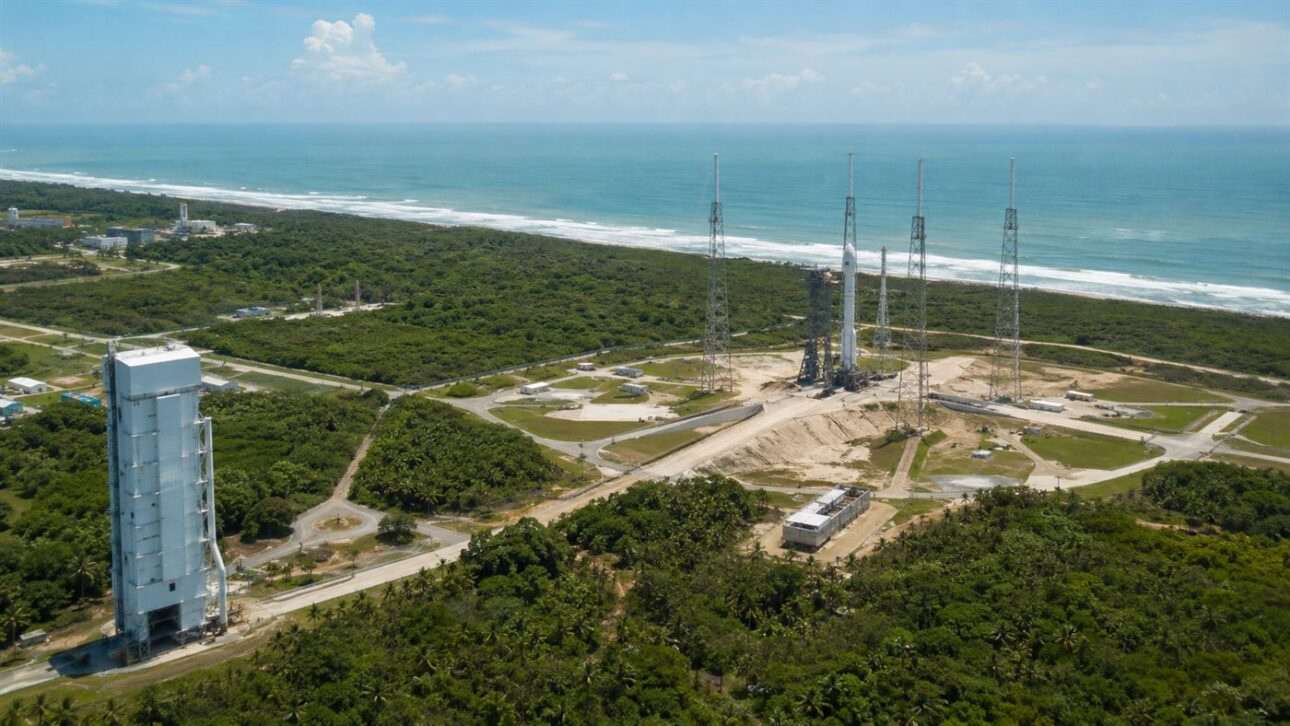
The great differential of the base is pure physics. According to the Brazilian Space Agency, the launch center is about two degrees south latitude, one of the closest positions to the equator among all bases on the planet.
Near the equator, the Earth’s rotation is faster and gives an extra “boost” to the rocket, saving fuel to put the same payload into orbit. In practice, this means launching cheaper or carrying more weight. Every kilogram of fuel saved turns into money saved or additional payload, and that’s why Brazilian geography has become a coveted strategic asset for the space industry.
8 payloads, 7 of them Brazilian
The first flight already carried national science. According to the Ministry of Science, Technology, and Innovation, the Hanbit-Nano carried eight payloads in total, seven of which were Brazilian, totaling about 18 kilograms towards an altitude of approximately 500 kilometers.
Among the payloads were the FloripaSat-2A and 2B satellites, from the Federal University of Santa Catarina, and the Pion-BR2, from the Federal University of Maranhão in partnership with a startup. Seeing technology from Brazilian universities onboard the first commercial rocket shows that the country is not just a landing strip, it is also a producer of space science, forming people and companies in the sector.
Why the Alcântara base is worth gold
The geographic advantage is not a technical detail, it’s a business model. Bases farther from the equator, like those in the United States and Europe, expend more energy to overcome inertia and reach certain orbits. The equatorial position gives Brazil savings that translate directly into price competitiveness.
Add to this the open ocean to the east, ideal for safe launches, and the base offers rare conditions. Having the perfect geography for rockets is like having an open-pit gold mine, but for the 21st century, a natural resource that other countries cannot replicate and that Brazil needs to learn to commercially exploit.
How Brazil entered the launch market
The path to this point was long and bureaucratic. According to AEB, Innospace was selected through a public call for proposals launched in 2020, and signed a contract with the Air Force Command in 2022, opening the door for commercial operation.
This model, of opening the base to private foreign and national companies, is what makes the market turn. Instead of relying solely on state programs, the country starts selling a service. Transforming a military base into a commercial platform is the key turning point that was missing, and it was this that unlocked Brazil’s entry into the global rocket business.
The Hanbit-Nano rocket and its dimensions
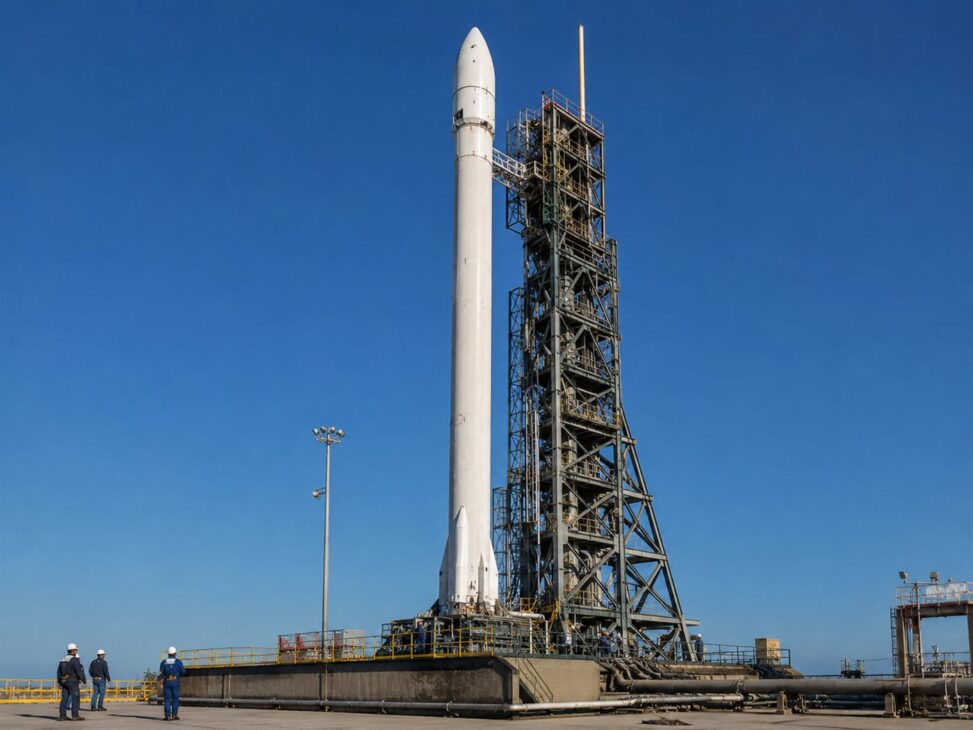
The vehicle that made history is modest in size but has a huge role. According to AEB, the Hanbit-Nano is a two-stage rocket with hybrid propulsion, about 21.9 meters long and capable of carrying up to 90 kilograms of cargo.
Small rockets like this are the current market bet, aimed at the thousands of mini-satellites that companies want to place in low orbit for internet, weather, and monitoring. The future of space is not just for giant rockets, it’s also for small and cheap ones, and it’s precisely in this niche that the Alcântara base can shine.
The economic potential of space for Brazil
The space market continues to grow, driven by the explosion of communication and Earth observation satellites. Each launch moves a chain of services, qualified jobs, and cutting-edge technology. For Brazil, entering this game means attracting investment and retaining brains that today go abroad.
The equatorial advantage is the calling card, but it’s just the beginning. Having the best address in the world for launching rockets only matters if the country builds the industry around it, with companies, suppliers, and workforce capable of turning geography into real economy.
What is still needed to become a space power
The first launch was a victory, but the road is long. More companies need to be attracted, the base’s infrastructure expanded, and a national industrial chain of rockets and satellites created. Other equatorial countries also want this share, and competition will increase.
The question that remains is whether Brazil will take advantage of this window and turn the Alcântara base into a true space hub, or if the first launch will just become a pretty picture. Did you know that Brazil has one of the best places in the world to launch rockets, thanks to being almost on the equator?


