






 Portuguese
  Spanish


Created by the Central Bank, the instant transfer system exploded, broke daily records, and became a digital payment model observed worldwide
In a few years, Pix went from a novelty to the absolute protagonist of the Brazilian economy. The instant payment system created by the Central Bank closed 2025 moving the unthinkable figure of R$ 35.36 trillion, consolidating itself as the Brazilian’s preferred way to pay, receive, and transfer money.
The system’s growth is so rapid that it is astonishing. There were 79.8 billion transactions in 2025, a jump of 33.6% over the previous year, and daily records showing an entire country abandoning cash and cards in favor of the cell phone. It officially became Brazil’s main way to pay.
R$ 35.36 trillion in a single year
The number that defines the size of the phenomenon is gigantic. According to Gazeta do Povo, the system moved R$ 35.36 trillion in 2025, compared to R$ 26.24 trillion in 2024, a growth of 33.6% both in value and in the number of operations.
-
Nubank Reaches 131 Million Customers and Reports Record Profit of $2.87 Billion in 2025

-
Brazil Holds 95% of the World’s Niobium and Exported $2.1 Billion Worth in 2024

-
Embraer Hits Record $31 Billion in Orders, Largest Backlog in Its History
-
In 20 Years, Brazil Transformed from Cotton Importer to World’s Largest Exporter


To get an idea, this value is several times larger than Brazil’s GDP in a year. The money circulates so many times through the system that the total moved far exceeds everything the country produces. When a payment system moves multiple GDPs in a year, it has ceased to be an option and has become the backbone of the economy, and that is exactly what happened with Pix.
The main means of payment in the country
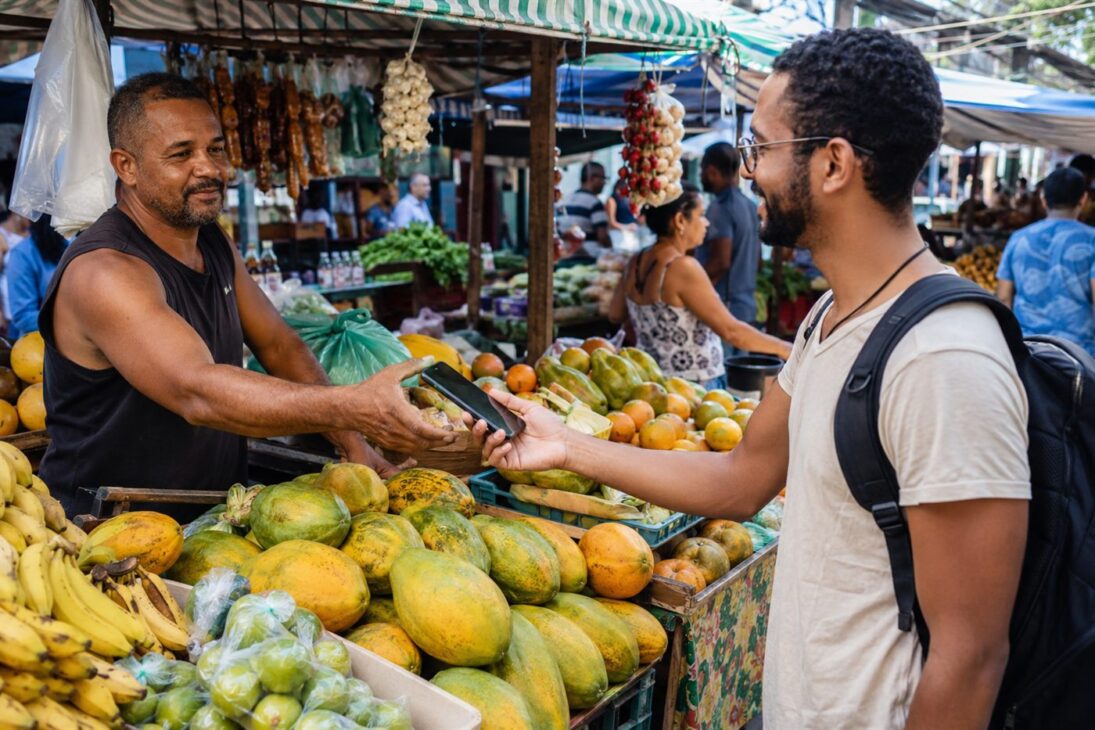
The adoption is massive. According to Agência Brasil, in November 2025 the system already had 178.9 million users, being 162.3 million individuals and 16.6 million companies.
This means that practically every adult Brazilian uses the system. Gazeta do Povo confirms that the system has established itself as the main payment method in the country, ahead of cash and credit cards. When almost the entire population adopts the same tool in a few years, the payment habit of an entire country changes irreversibly, and cards and cash lose ground every month.
313 million transactions in a single day
The daily records are impressive. According to Agência Brasil, on December 5, 2025, the system recorded 313.3 million transactions in 24 hours, moving R$ 179.9 billion in a single day, the highest mark in the system’s history.
And the records keep coming. A few days earlier, on Black Friday, November 28, the system had already reached 297.4 million operations. Breaking its own record again and again is the clearest sign of a habit that continues to grow, fueled by purchases, salaries, and bill payments that have fully migrated to mobile phones.
How Pix conquered Brazilians
The success was not by chance, it was by design. Pix was born with three advantages that cards and old transfers did not have: it is free for individuals, it is instantaneous, and it operates 24 hours a day, every day, including weekends and holidays.
Add to this the simplicity of the key, which can be the CPF, phone number, or a random code, and the system became unbeatable in practicality. Removing the friction and cost of payment is what made Brazilians abandon bank queues and change, adopting the mobile phone as a wallet. It was the combination of free, fast, and simple that unlocked everything.
A public digital infrastructure
An important point differentiates the system from private solutions: it is state-owned. The system was created and is operated by the monetary authority, as a public infrastructure, not as a product of a specific bank. This ensures it works across all institutions, without tying the user to a brand.
The Central Bank itself summarizes the significance of this. For the monetary authority, the result is another demonstration of the importance of Pix as a public digital infrastructure for the functioning of the national economy. It is this neutrality that allowed universal adoption, something difficult to achieve when the system belongs to a single company.
The Brazilian model that draws the world’s attention
The Brazilian case has become an international reference. Several countries that still rely on expensive cards and slow transfers look to the Brazilian case as an example of how a central bank can offer instant and free payment on a national scale. Brazil, rarely seen as a leader in technology, exported an idea.
This leadership is symbolic. It shows that cutting-edge financial innovation can originate in a developing country and serve as a model for rich economies. Having created a payment standard that the world wants to copy is a rare victory for Brazilian technology, and it puts the Central Bank on the global map of financial innovation.
The downside: scams and hacker attacks

Not everything is rosy numbers. The ease of Pix also became a target for crime. According to Gazeta do Povo, frauds related to the system totaled R$ 6.5 billion in 2024, an increase of 80% compared to the previous year, and in 2025 the country suffered the largest hacker attack against institutions linked to the system, with an estimated diversion of R$ 800 million.
This is the price of such a large and fast system: it also attracts sophisticated scammers and digital criminals. The more central a payment system becomes, the more it becomes a target, and protecting the system from fraud and attacks is now one of the biggest challenges for the regulator and banks.
A system that will still grow
Pix is far from stopping. New features, such as installment payments and international modalities, are on the way and should further expand the system’s reach. The trend is that cash and cards will lose space with each passing year.
The question that remains is whether Brazil will be able to keep Pix secure and free as it grows, without scams and attacks undermining public confidence. Do you remember the last time you paid for something in cash, or has Pix already taken over your wallet too?


