Portuguese
  Spanish


The country received more international visitors than in any other year in history and easily surpassed the national target, in a leap that positions tourism as an economic engine
Brazil has just experienced the best tourism year in its history. The country received 9.3 million foreign tourists in 2025, the highest number ever recorded, easily surpassing the previous record and transforming hotels, restaurants, and attractions from north to south into engines of income and employment generation.
The record of foreign tourists represents a 37% jump compared to 2024, a year that had already set a record. More than just a nice number, the result shows that Brazil is back on the international traveler’s radar, driven by competitive prices, more flights, and more aggressive promotion of the country abroad.
9.3 million foreign tourists, historic record
The number that opens the report is impressive. According to the Social Communication Secretariat of the federal government, Brazil closed 2025 with 9,287,196 foreign tourist arrivals, the highest volume in the entire historical series.
-
Brazil’s Grupo Boticário Earned $7.5 Billion in 2025, Now World’s Largest Beauty Retail Network

-
Scientists Warn Extraterrestrial Life May Have Left Clues on Other Planets, But Humans Might Be Missing Them in Space Missions

-
Brazil Uses Four Times More Bio-inputs Than the Global Average, Market Surpasses $1 Billion
-
Brazilian Bacteria Converts Plastic Waste into High-Quality Bioplastic


The previous record, of about 6.7 million visitors, was from 2024. In other words, the country not only broke its own record but jumped a huge step in just one year. Growing 37% over a year that had already been a record is the kind of leap that changes the level of an entire sector, and that’s what Brazilian tourism delivered.
The national target easily surpassed
The result was far from just reasonable. According to Secom, the target of the National Tourism Plan for 2025 was 6.9 million international arrivals, and the country exceeded this goal by 34.6%, receiving far more visitors than the government itself projected.
Exceeding an official target by such a large margin is rare in the public sector. It shows that the pent-up demand to travel to Brazil was greater than imagined. When reality exceeds the target by more than a third, the planning underestimated the strength of the destination, and international tourism in Brazil proved to have greater potential than expected.
Argentina leads the invasion of hermanos
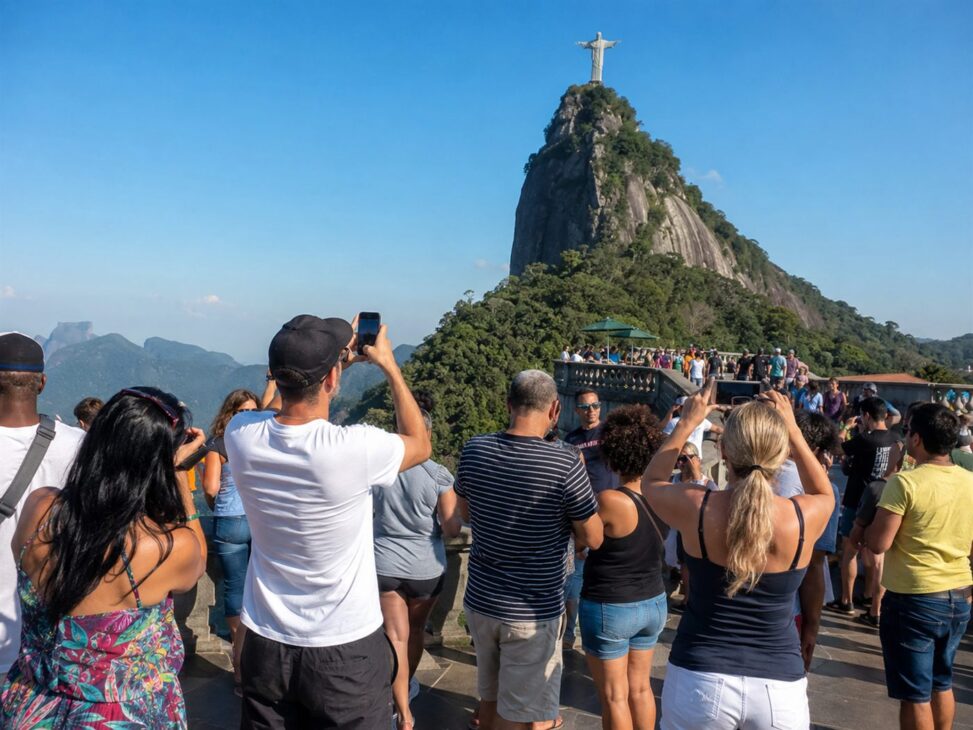
When looking at where the tourists come from, a neighbor dominates. According to Secom, Argentina was the largest source country, with 3,386,823 tourists sent to Brazil, followed by Chile, with about 800,000, and the United States, with around 760,000.
European countries, combined, sent more than 1.2 million visitors. The Argentine leadership is not surprising, due to the proximity and the passion of the “hermanos” for Brazilian beaches. Having a neighbor that alone sends more than 3 million tourists is quite an asset for national tourism, and shows the importance of maintaining good relations and flights with South America.
Where foreigners enter the most
The entry point also has a defined address. According to Secom, São Paulo leads with 2.75 million international arrivals, followed by Rio de Janeiro, with about 2.2 million, and Rio Grande do Sul, with more than 1.5 million.
This concentration shows the importance of major airports and the southern border in the flow of visitors. São Paulo functions as the country’s major air hub, distributing tourists to other destinations. Knowing where foreigners enter is essential for planning infrastructure and expanding the air network, precisely where demand is already higher.
The Rio de Janeiro that reemerged as a destination
The capital of Rio de Janeiro experienced quite a turnaround. According to Agência Brasil, Rio de Janeiro received almost 2 million international tourists by November 2025, an increase of 45.9% compared to the previous year.
This growth above the national average is symbolic because Rio is the country’s postcard abroad. The recovery involved the reopening of Galeão Airport as an entry point. When Brazil’s main image-destination grows by almost 46%, the entire country gains in exposure, because it is Rio that appears in the photos that go around the world.
The air network that grew 16%
None of this would happen without airplanes. Agência Brasil points out that the Brazilian air network grew 16%, increasing the number of seats and routes available for those who want to reach the country. More flights directly mean more tourists.
The connection between aviation and tourism is total: without a seat, there is no visitor, no matter how beautiful the destination. Expanding the offer of international flights was one of the keys to the record. Flight is the artery of tourism, and it was the increase in the air network that pumped 9 million visitors into the country, connecting Brazil to more cities around the world.
“Tourism can be a solution for the economy”
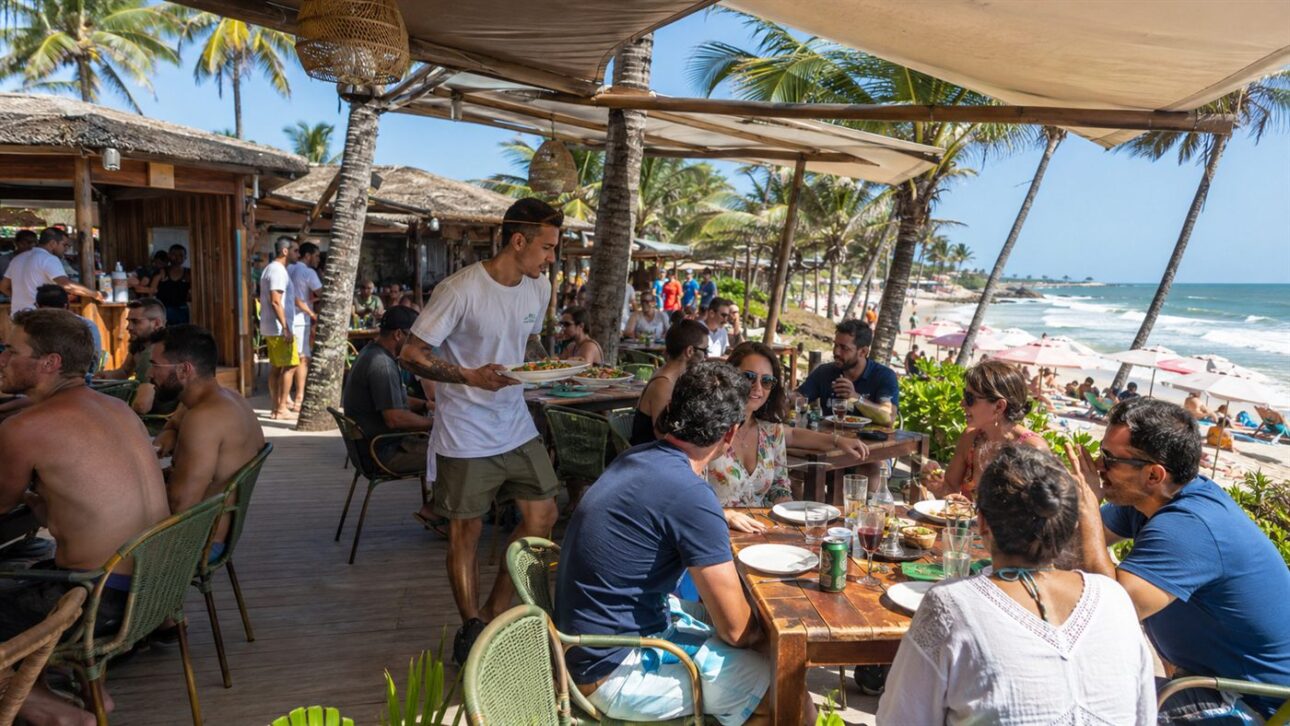
The economic impact is what matters most in the end. The president of Embratur, Marcelo Freixo, summarized the significance of the record to Agência Brasil: the hotels, restaurants, and kiosks generate jobs, and tourism can be a solution for the country’s economy.
The logic is simple and powerful: every tourist who arrives spends on accommodation, food, tours, and transportation, spreading money through a vast chain of small businesses. Tourism is one of the fastest ways to generate jobs and distribute income, because the visitor’s spending goes directly into the pockets of those working on the front lines, from the waiter to the guide.
Why Brazil attracted so many people in 2025
The combination of factors explains the boom. A favorable exchange rate made the country cheaper for foreigners, the air network grew, and the promotion of the destination abroad became stronger. Add to this the fame of the beaches, nature, and culture, and the result was the record.
The question that remains is whether Brazil will be able to turn this exceptional year into a lasting trend by investing in infrastructure and security for visitors. Did you imagine that the country would receive, in a single year, more foreign tourists than the population of many entire countries?